
Mandible (lower jaw)
The mandible is the lower jawbone in jawed vertebrates. This article explains its anatomy, development, evolution, functions, and clinical significance across species, with emphasis on the human dentary.
Overview
The mandible, commonly called the lower jaw, is a primary facial bone present in all jawed vertebrates and plays central roles in feeding, vocalization and facial structure. In humans and other mammals it is a single, U-shaped element called the dentary; in many non-mammalian groups it comprises several bones joined together. The term derives from the Latin mandibula and is used in comparative anatomy, dentistry and evolutionary biology.
Image gallery
10 Images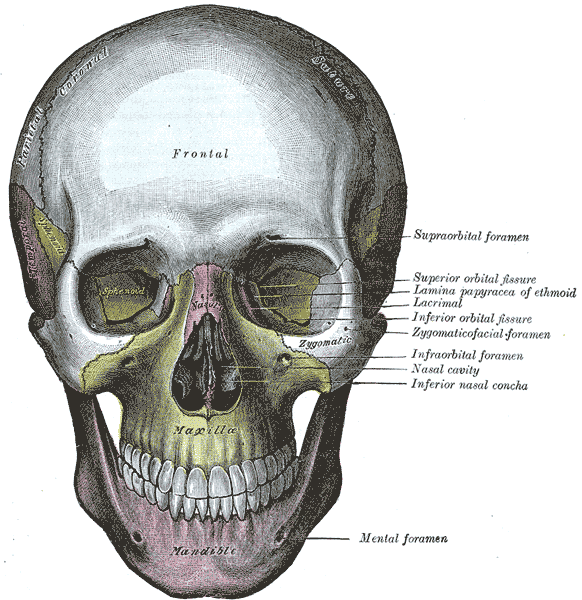



Structure and parts
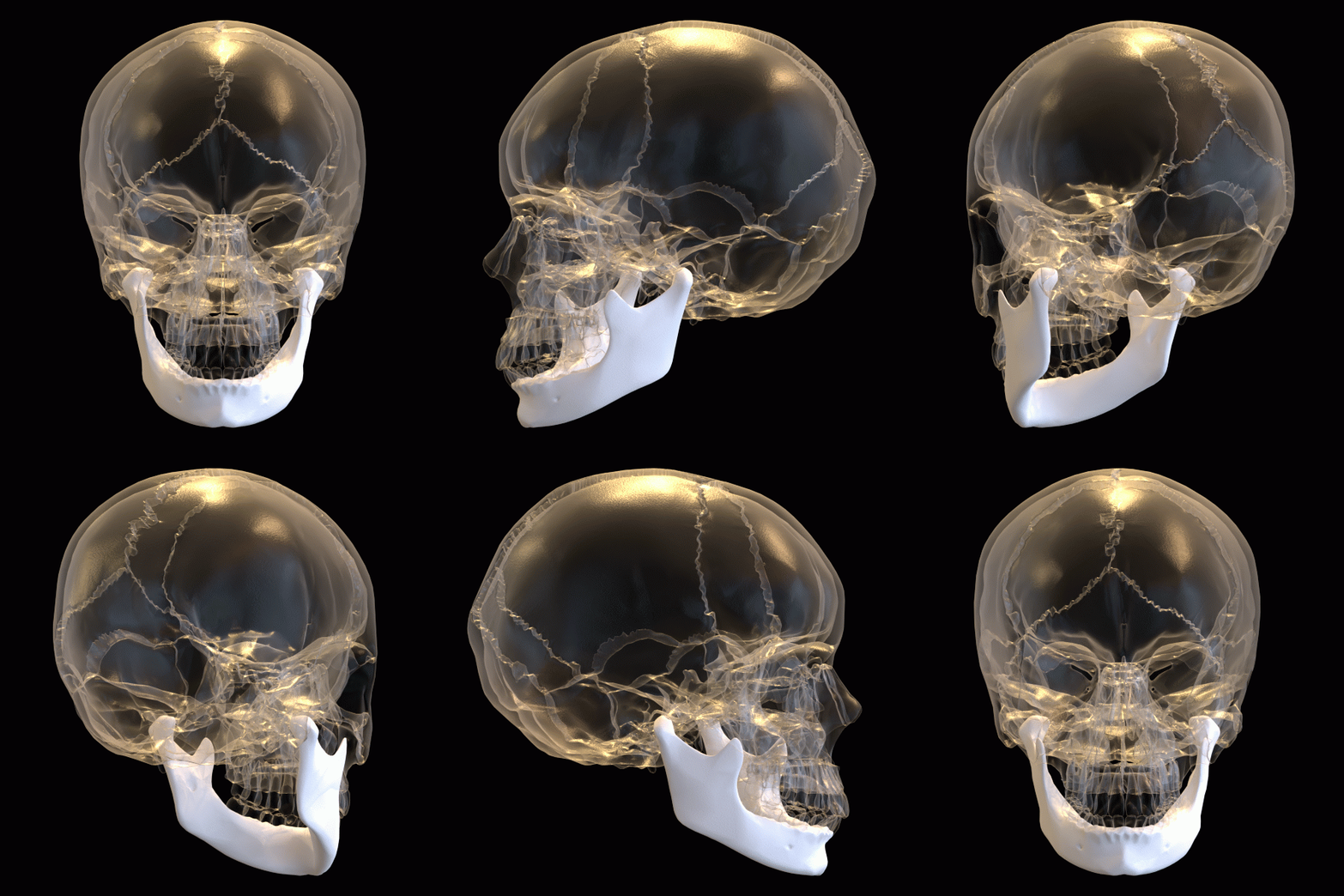
In adult humans the mandible is the largest and strongest bone of the face. Its main components include the horizontal body, two upward-projecting rami, the alveolar process that holds teeth, and two articular areas—the coronoid process for muscle attachment and the condylar process that forms the temporomandibular joint.
- Body: supports the lower teeth and contains the mental foramen.
- Ramus: vertical plates connecting the body to the skull.
- Coronoid process: attachment for the temporalis muscle.
- Condylar process: articulates with the temporal bone to allow jaw movement.
Muscles and movement
Jaw movement is produced by several muscles, chiefly the masseter, temporalis and medial and lateral pterygoids. These muscles enable elevation, depression, protrusion, retraction and lateral grinding movements essential for chewing and speech.
Development and evolution
Embryologically the lower jaw derives from the first pharyngeal (mandibular) arch and is associated with Meckel's cartilage during early development. Over evolutionary time the multi-boned lower jaws of many fishes, reptiles and amphibians became simplified in mammals to a single dentary bone. Some bones that were once part of the ancestral lower jaw were repurposed as middle ear ossicles in mammals, a key innovation in mammalian evolution.
Functions, clinical relevance and examples
The mandible supports teeth, allows mastication and contributes to facial appearance. Clinically it is subject to fractures, temporomandibular joint disorders, developmental anomalies and dental conditions such as impacted third molars. Orthodontics, oral surgery and forensic identification frequently involve analysis of mandibular form and position.
Comparative notes and notable facts
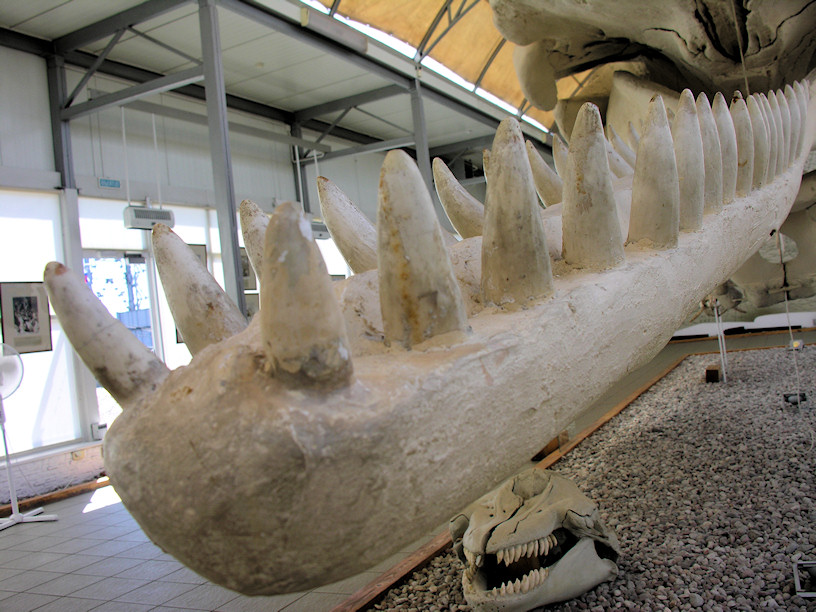
Across vertebrates the composition and number of bones in the lower jaw vary: many bony fishes retain multiple elements, whereas mammals show a single dentary. The evolutionary shift of former jaw bones to elements of the middle ear illustrates how a structural change can generate new functions. For further anatomical and evolutionary details see general references on skeletal anatomy and vertebrate evolution: bone, vertebrates, and overviews of jawed lineages and mammalian traits. For facial anatomy specifically consult resources on the face.
Related articles
Author
AlegsaOnline.com Mandible (lower jaw) Leandro Alegsa
URL: https://en.alegsaonline.com/art/61249
Sources
- syllabus.med.unc.edu : hednk-023