
macOS — Apple's desktop operating system
macOS is Apple’s desktop operating system for Macintosh computers, built on UNIX-derived technologies with an open-source core (Darwin) and a proprietary graphical ecosystem.
Overview
macOS is the desktop operating system created and maintained by Apple Inc. for its family of Macintosh computers. It provides the graphical user environment, system services, application frameworks and platform integration that define the Mac user experience. Apple distributes macOS with its hardware and licenses it for use on Apple machines; installing it on non‑Apple hardware is possible in some cases but conflicts with Apple’s licensing and support policies.
Image gallery
10 Images




Architecture and components
At the core of macOS is an open-source project called Darwin, which combines a Mach-based microkernel with BSD-derived userland utilities. Darwin supplies low-level services such as process management, device drivers and network stacks. On top of Darwin, Apple layers proprietary frameworks, libraries and services that implement the graphical interface, multimedia support, and developer APIs. The platform exposes POSIX-compatible interfaces and modern macOS releases are designed to comply with UNIX standards in areas where certification applies.
History and naming
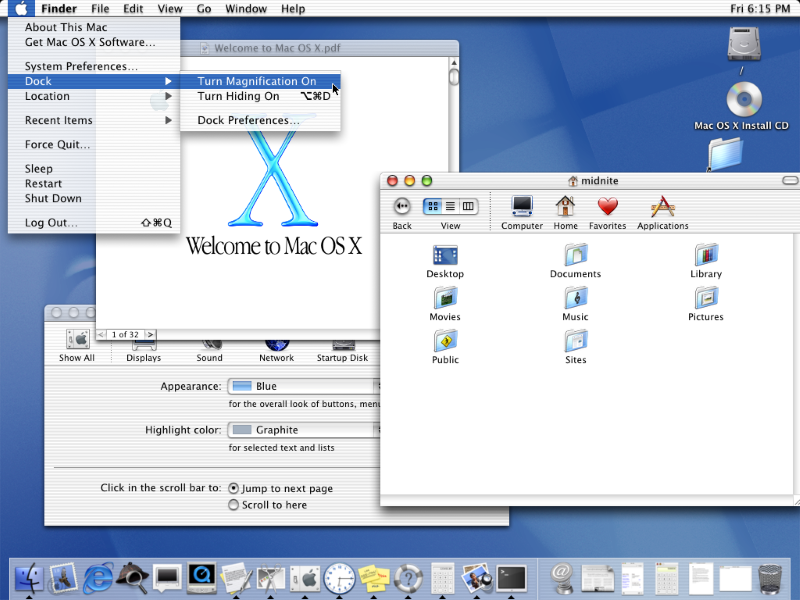
The modern macOS lineage began in 2001 with Mac OS X, a departure from the earlier "classic" Mac OS. The new system drew heavily on technologies developed at NeXT, the company founded by Steve Jobs after he left Apple in 1985. The "X" in Mac OS X represented the Roman numeral ten, reflecting the successor status to Mac OS 9. Over time Apple marketed the system as OS X and later returned to the macOS name to align it with other Apple platforms.
Releases and branding
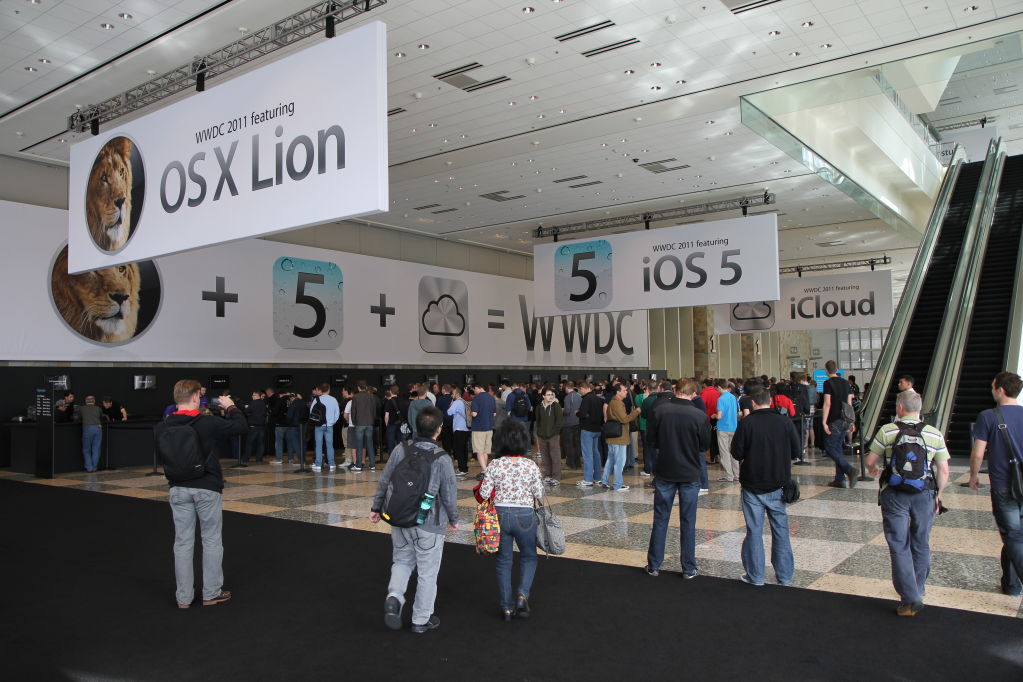
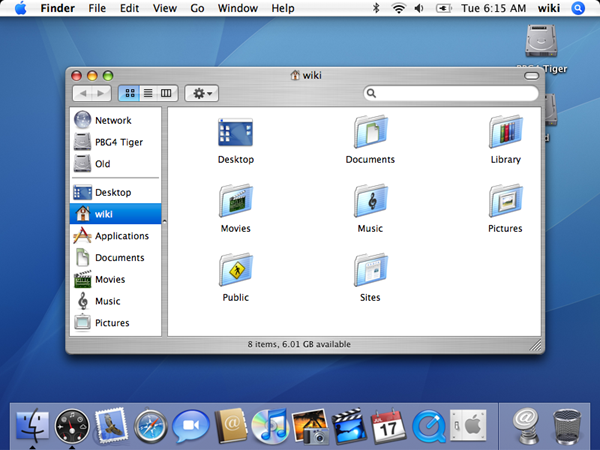
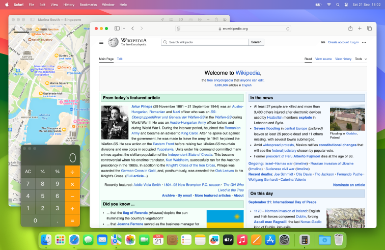
For many years Apple used themed names for releases: early versions were named after large cats, while later releases took names from geographic locations and landmarks in California. The long-standing 10.x version numbering changed when Apple introduced macOS Big Sur, which moved the major version to 11 and accompanied notable visual and under-the-hood changes.
Licensing and "Hackintosh" systems
macOS is shipped as a combination of open-source components and proprietary Apple code. The Darwin core is open source, but the higher-level frameworks and bundled applications are proprietary. Because of Apple’s licensing terms, installing macOS on non‑Apple hardware (often called a "Hackintosh") is unsupported and may violate the license agreement.
Development, distribution and ecosystem
Apple provides developer tools and SDKs so third-party developers can build native applications for macOS. The platform includes a graphical framework for user interfaces, system libraries for multimedia and graphics, and a signed application distribution mechanism via an official app store and direct developer channels. macOS is also designed to interoperate with other Apple products and services for continuity, device synchronization and cloud-based features.
Hardware transitions and compatibility
Throughout its history Apple has overseen major hardware transitions, such as the move from PowerPC processors to Intel x86 chips in the 2000s, and later from Intel to Apple-designed silicon. Each transition introduced compatibility technologies and developer guidance to help software migrate. Apple supports security updates and system feature changes according to its release and update policies.
Security, updates and certification
macOS includes multiple layers of security controls, sandboxing for apps, user permission models and system integrity protections. Apple issues regular updates for security and stability; some macOS releases pursue formal UNIX certification where applicable to ensure compatibility with certain interfaces and standards.
Notable facts
- The modern operating system traces its heritage to NeXT and combines open-source and proprietary elements.
- Darwin, the open-source core, supplies fundamental kernel and userland components but does not by itself provide the full macOS graphical environment.
- Apple names and versioning have evolved; release names have included both animals and California locations.
- macOS is commonly updated with both feature releases and security patches and is tightly integrated with Apple hardware and services.
For authoritative technical documentation, software updates and developer resources, consult Apple’s official channels and platform documentation via the manufacturer and developer portals represented in official materials.
Questions and answers
Q: What is macOS?
A: macOS is an operating system (OS) for computers made by Apple Inc. These are called Macintosh computers, or Macs.
Q: Is it possible to run macOS on other computers than Macs?
A: Yes, people have made macOS run on computers that are not Macs. This is called Hackintosh and violates macOS' license agreement.
Q: How does macOS differ from the "classic" Mac OS?
A: Unlike the first operating system, macOS (since OS X) is based on the UNIX operating system (current versions have UNIX 03 certification) and on technologies developed between 1985 and 1997 at NeXT, a company that Apple co-founder Steve Jobs created after leaving Apple in 1985.
Q: What does the "X" in Mac OS X and OS X stand for?
A: The "X" in Mac OS X and OS X stands for the Roman numeral for the number 10 and is pronounced as such.
Q: What is the core of macOS?
A: The core of macOS is an open source OS called Darwin, but Darwin itself cannot run macOS software.
Q: How are versions of macOs named? A: Versions of macOs are named after kinds of big cats, or California landmarks, and have a version number that starts with 10.
Q: What is the latest version of macOs? A: The latest version of macOs is macOs Big Sur (11.0).
Related articles
Author
AlegsaOnline.com macOS — Apple's desktop operating system Leandro Alegsa
URL: https://en.alegsaonline.com/art/60381
Sources
- developer.apple.com : "What Is the I/O Kit?"
- developer.apple.com : "What's New in Swift" · web.archive.org
- apple.com : "macOS – How to Upgrade – Apple" · web.archive.org
- theverge.com : "Apple officially renames Mac OS X to OS X, drops the 'Mac'"
- opengroup.org : "Mac OS X Version 10.5 on Intel-based Macintosh computers" · web.archive.org
- apple.com : "Apple Unveils Mac OS X"
- apple.com : "Apple Previews Next Version of Mac OS X"
- apple.com : "Apple Previews "Jaguar", the Next Major Release of Mac OS X"
- apple.com : "Apple Preiews Mac OS X "Panther""