
Magnavox Odyssey — the first commercial home video game console
The Magnavox Odyssey (1972) was the first commercial home video game console. It used simple electronic shapes, transparent TV overlays and physical play pieces to simulate multiple games and launched home video gaming.
Overview
The Magnavox Odyssey, released by Magnavox in 1972, is widely recognized as the first commercial home video game console. It did not run software on a microprocessor but used analog electronic circuits to generate a small set of on-screen elements. By combining electronic display elements with removable overlays and physical accessories, the Odyssey offered a range of playable experiences and demonstrated the viability of interactive television entertainment for consumers.
Image gallery
9 Images



Design and hardware
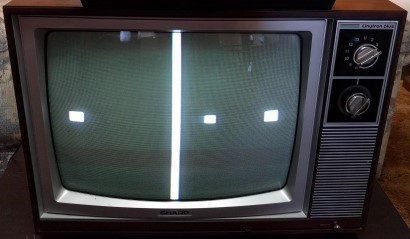
The Odyssey produced simple on-screen shapes—dots, lines and a square—that could be moved or toggled. Player input was provided through two wired controllers with knobs and dials that allowed manipulation of object positions. The system had no internal sound generator and relied on the television for visual presentation. Its internal logic was implemented with discrete circuitry rather than a programmable CPU, and it used game cards that altered internal connections to change how the available elements behaved.
Games, cards and overlays
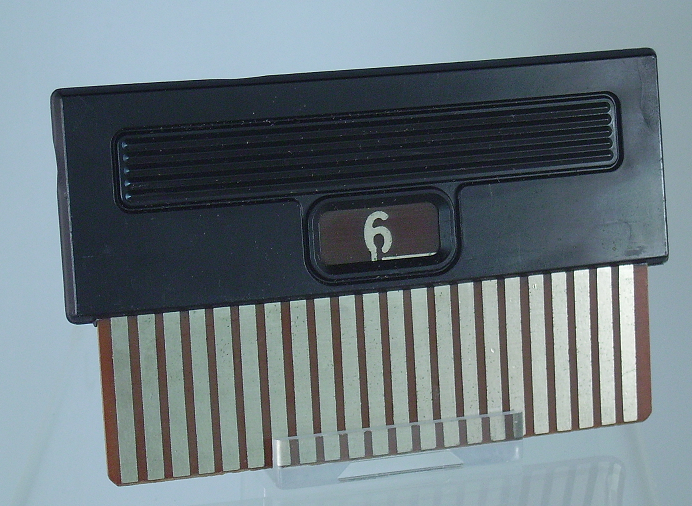
Rather than ROM cartridges, the console used thin plastic game cards that changed wiring paths inside the unit to reconfigure available circuitry. These cards did not contain code; they simply altered connections to produce different behaviors of the same set of visual elements. A key part of the system was transparent plastic overlays that players attached to the television screen to draw courts, boards or backgrounds. The Odyssey package also included physical play components—paper money, cards, tokens and dice—so many titles combined electronic imagery with board‑game style rules and manual bookkeeping.
Typical play and examples
- Players placed an appropriate overlay on the TV to define the playfield.
- They inserted a game card, adjusted controls on the console and used the controllers to move on-screen elements.
- Some games simulated sports or table games such as tennis-like contests, targeting, or simple strategy scenarios; scorekeeping and additional actions were handled with the included physical pieces.
Development and legacy
The Odyssey grew out of research led by engineer Ralph Baer and his team, who developed concepts for interactive television games in the late 1960s. As the first consumer device explicitly marketed as a home video game system, the Odyssey helped create interest in electronic home entertainment and encouraged other firms to enter the market. Magnavox later enforced patents related to the system, resulting in legal actions that shaped early industry relationships and licensing arrangements with other manufacturers.
Historical significance
The technical limitations of the Odyssey make it primitive by later standards, but its hybrid approach—mixing simple electronic displays with overlays and tangible components—shows how designers adapted limited technology to deliver varied gameplay. Its existence established the idea of a dedicated home game console and directly influenced subsequent products and generations of consoles, including later systems in the Magnavox Odyssey line.
How it was used today by collectors
Original Odysseys are now collectible items sought by enthusiasts of video game history. Restored units, original overlays and game cards illustrate early design choices and provide a hands-on view of the technology that sparked the home video game industry. Museums and private collections often display the console to demonstrate the origins of consumer video gaming.
Related articles
Author
AlegsaOnline.com Magnavox Odyssey — the first commercial home video game console Leandro Alegsa
URL: https://en.alegsaonline.com/art/60615