
Magnifying glass
A simple convex lens device used to enlarge the apparent size of nearby objects. Describes design, operation, history, uses, types and how it compares to related optical tools.
A magnifying glass is a single convex lens mounted so a user can hold it between their eye and an object to produce an enlarged, upright virtual image. By bending incoming light rays, the lens increases the angular size of small or distant details so they appear larger to the viewer. The basic principle is the same whether the lens is made of glass or plastic: light refracts at the surfaces and the observer perceives a magnified image when the object is placed within the lens's focal length. For a plain introduction to the optical element itself see lens.
Image gallery
7 Images


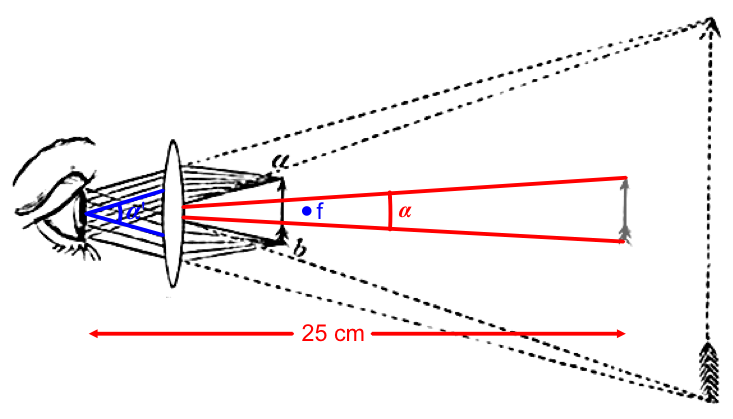

Design and key characteristics
Typical magnifying glasses consist of a convex (outward-curving) lens set in a frame with a handle. Important attributes include magnification (often expressed as 2× to 10× for common handheld models), diameter, focal length and the quality of the material. A short focal length yields higher magnification but requires the lens to be held closer to the object, while a larger diameter gives a wider field of view. Most users must position the lens at the correct distance from the eye and the object for a sharp image; adjusting this spacing brings the object into focus. For more about focusing and working distance see focus.
Types and variations
- Handheld magnifiers: the classic design with a handle and exposed lens.
- Folding or pocket magnifiers: lenses that fold into a case for protection.
- Illuminated magnifiers: incorporate a light source for low-light tasks.
- Loupe and jeweler's magnifiers: small, high-power lenses used without a handle for close inspection.
- Stand magnifiers and desktop versions: fixed supports for hands-free work.
History and development
People have used simple magnifying devices in various forms for many centuries. Early examples include convex "reading stones"—rounded pieces of glass or crystal—used to enlarge text for reading. Over time, improvements in glassmaking and lens grinding increased optical quality and enabled more precise instruments. The magnifying glass also served as a stepping stone in the development of compound optical instruments such as microscopes and telescopes, which combine multiple lenses for greater magnification and resolution; a telescope is an advanced multi-lens application related to the simple magnifier (telescope).
Common uses and importance
Magnifying glasses are used across many fields and everyday situations: inspecting stamps and coins in collecting, examining gemstones and watch components in jewelry and horology, reading small print, examining biological specimens in education, and assisting in forensics and medical examinations. Hobbies and crafts that require fine detail—model making, needlework, electronics—often rely on magnifiers. Philatelists and collectors often use them to study cancellation marks and print details (philately).
Related devices and distinctions
The magnifying glass is distinct from, but related to, other optical devices. A loupe is similar but typically offers higher magnification and is used very close to the eye. Microscopes use multiple lenses and sometimes mirrors to achieve much higher magnification for very small specimens. Binoculars provide magnification separately for each eye and are designed for distant viewing (binoculars), while spectacles or eyeglasses use lenses to correct refractive errors rather than to produce a magnified virtual image (eyeglasses).
Because they are simple, inexpensive and intuitive to use, magnifying glasses remain a common optical aid and educational tool. Their effectiveness depends on lens quality, correct working distance, and the observer’s visual acuity, but their basic function—making small details easier to see—has kept them in widespread use for centuries.
Related articles
Author
AlegsaOnline.com Magnifying glass Leandro Alegsa
URL: https://en.alegsaonline.com/art/60653
Sources
- en.wiktionary.org : convex in English Wiktionary