
M61 Vulcan: 20 mm Gatling-style aircraft cannon
The M61 Vulcan is a six-barrel 20 mm Gatling-style rotary cannon that has been the primary gun for many U.S. combat aircraft since the Cold War, noted for very high rates of fire and airborne installations.
Overview
The M61 Vulcan is a six-barrel, 20 mm Gatling-style rotary cannon developed in the United States for use on high-performance combat aircraft. Its multiple barrels and rotary action allow extremely high volumes of fire while spreading load and heat among the barrels. The weapon has been the principal cannon armament on many United States military fixed-wing aircraft for decades and remains an important short-range air-to-air and air-to-ground gun system.
Image gallery
10 Images






Design and characteristics
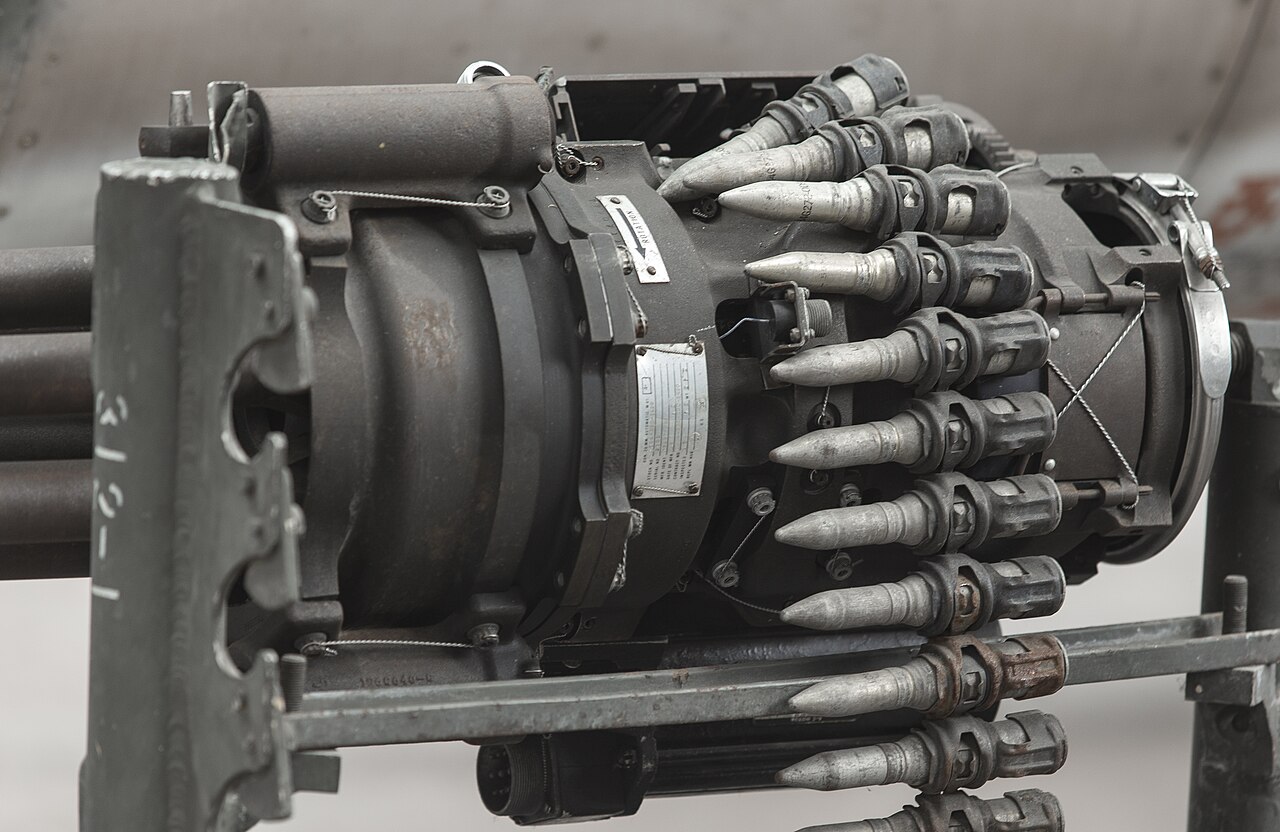
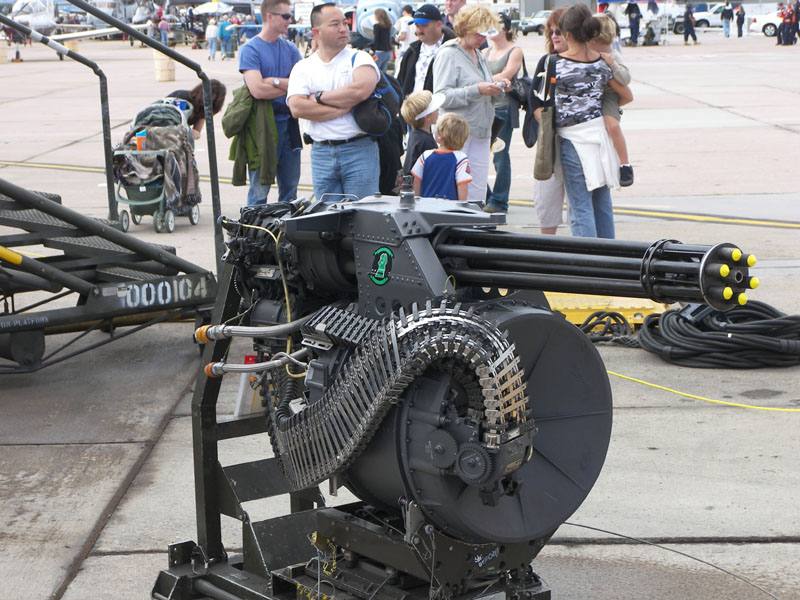
The basic M61 revolves six barrels around a central axis and fires 20×102 mm cartridges. Being a Gatling-style weapon, it relies on barrel rotation to chamber, fire and extract rounds, rather than a single reciprocating mechanism. The drive power can be supplied by external hydraulic, pneumatic or electric systems; it is commonly electrically driven in aircraft installations (hydraulic, pneumatic or electric drive). Cooling is primarily by air and by distributing heat among the barrels.
Typical service rates of fire are very high—standard installations are rated around several thousand rounds per minute, with some variants offering selectable lower or higher rates depending on the aircraft, the ammunition feed, and mission requirements. Feed systems vary between linked-belt and linkless configurations, depending on the platform and aircraft space constraints (six barrels).
History and development
The M61 was designed and produced originally by General Electric as a compact, high-rate-of-fire cannon suited to jet fighters. Over time the basic mechanism was refined into service variants such as the M61A1 and M61A2. Production, support and further development have passed through defense contractors; the design and manufacture have later been handled by companies such as General Electric initially and subsequently by firms including General Dynamics and their successors.
Operational use and examples
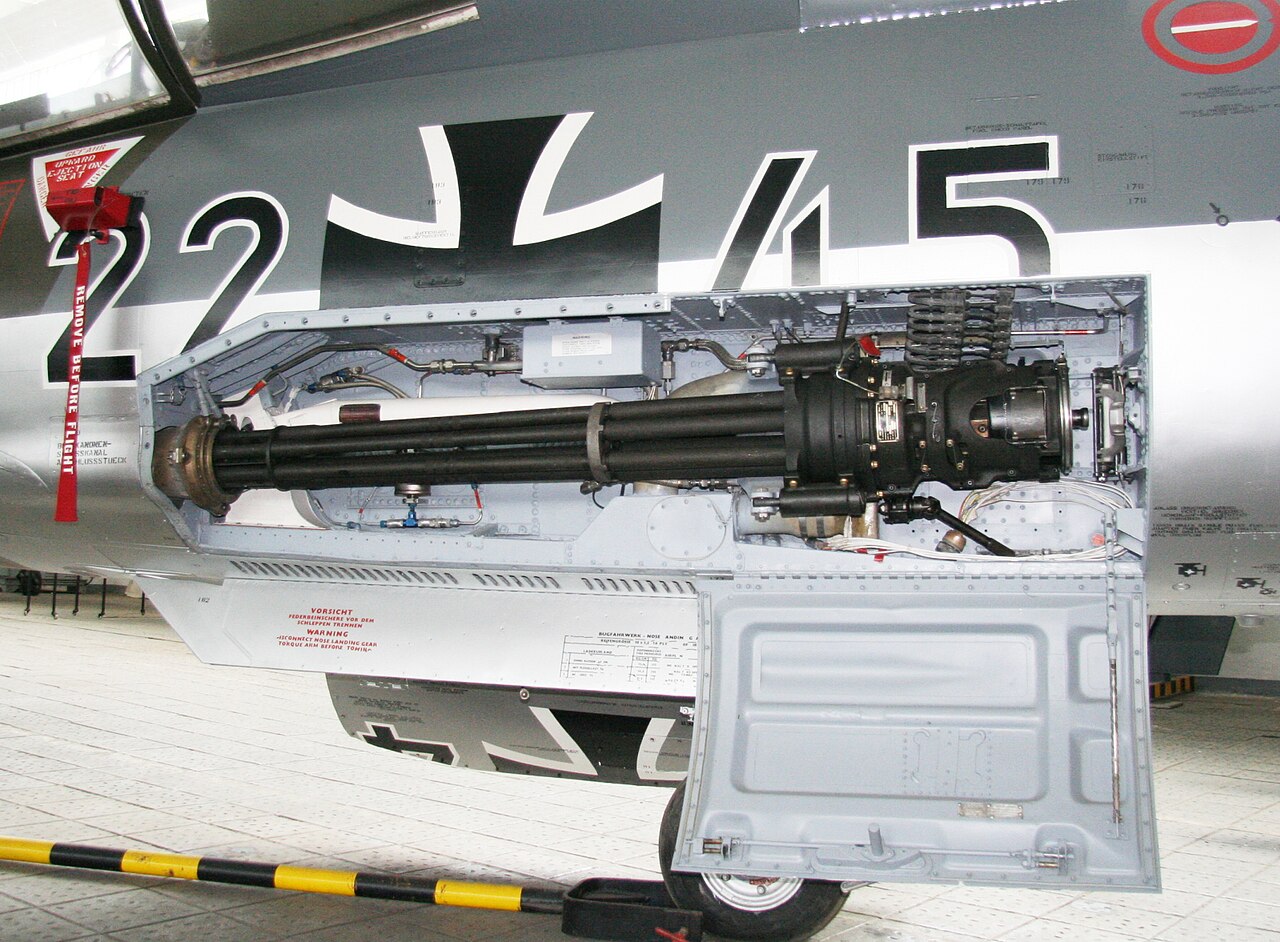
The Vulcan has been fitted in internal gun bays and external gun pods and is used primarily on fighters and attack aircraft. Examples of platforms that have carried M61-family guns include:
- Early and legacy fighters, such as the F-4 series and other Cold War types.
- Modern U.S. fighters like the F-15 and F-16, and carrier aircraft such as the F/A-18—common examples of fighter aircraft installations.
- Variants and derivatives adapted to specific aircraft installations or naval/ground roles where applicable.
Notable traits and distinctions
The Vulcan's defining features are its multi-barrel rotary layout, very high sustained cyclic rates, and reliance on an external power source to achieve rotation and firing. It differs from single-barrel and revolver-type autocannons by trading mechanical simplicity for higher rates of fire and improved barrel life under heavy use. Later developments and related systems include reduced-barrel or modified versions tailored to newer aircraft requirements, but the basic M61 concept remains a benchmark for high-rate airborne cannons.
Despite advances in missiles and sensors, the M61's balance of volume of fire, ammunition size and compact installation continues to make it valuable for close-range engagements, strafing and defensive use on many combat aircraft types.
Hydraulic, pneumatic or electric drive options • Six-barrel construction • Gatling-style operation • U.S. fixed-wing aircraft service • Typical fighter installations • Original manufacturer • Later production and support
Related articles
Author
AlegsaOnline.com M61 Vulcan: 20 mm Gatling-style aircraft cannon Leandro Alegsa
URL: https://en.alegsaonline.com/art/60228
Sources
- wiki.scramble.nl : 'General Dynamics (General Electric) M61 Vulcan', Scramble; The Aviation Magazine
- fas.org : "M61 20mm cannon"