
Gatling gun: the multi‑barrel crank‑operated firearm and its legacy
A 19th‑century multi‑barrel, crank‑driven weapon that pioneered rapid fire. Designed to reduce overheating, used from the American Civil War through colonial conflicts and evolved into modern rotary guns.
Overview
The Gatling gun is an early form of rapid‑fire weapon that uses several rotating barrels to deliver sustained bursts of projectiles. Invented in the 1860s, it combined multiple barrels with a mechanical feed to increase fire rate while avoiding the overheating problems of a single barrel. It is often described as the first practical machine gun, although it is crank‑driven rather than fully automatic.
Image gallery
10 Images

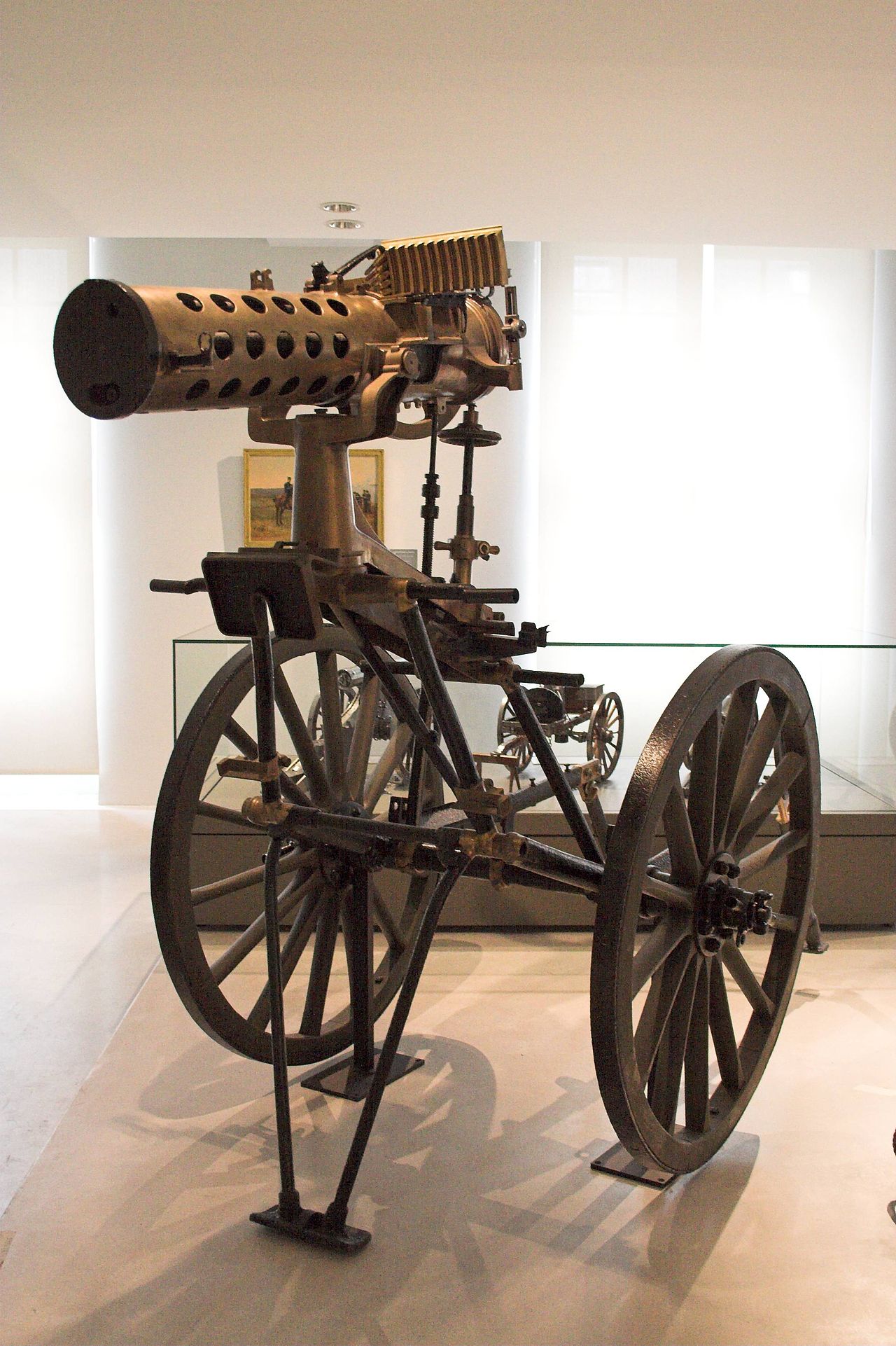
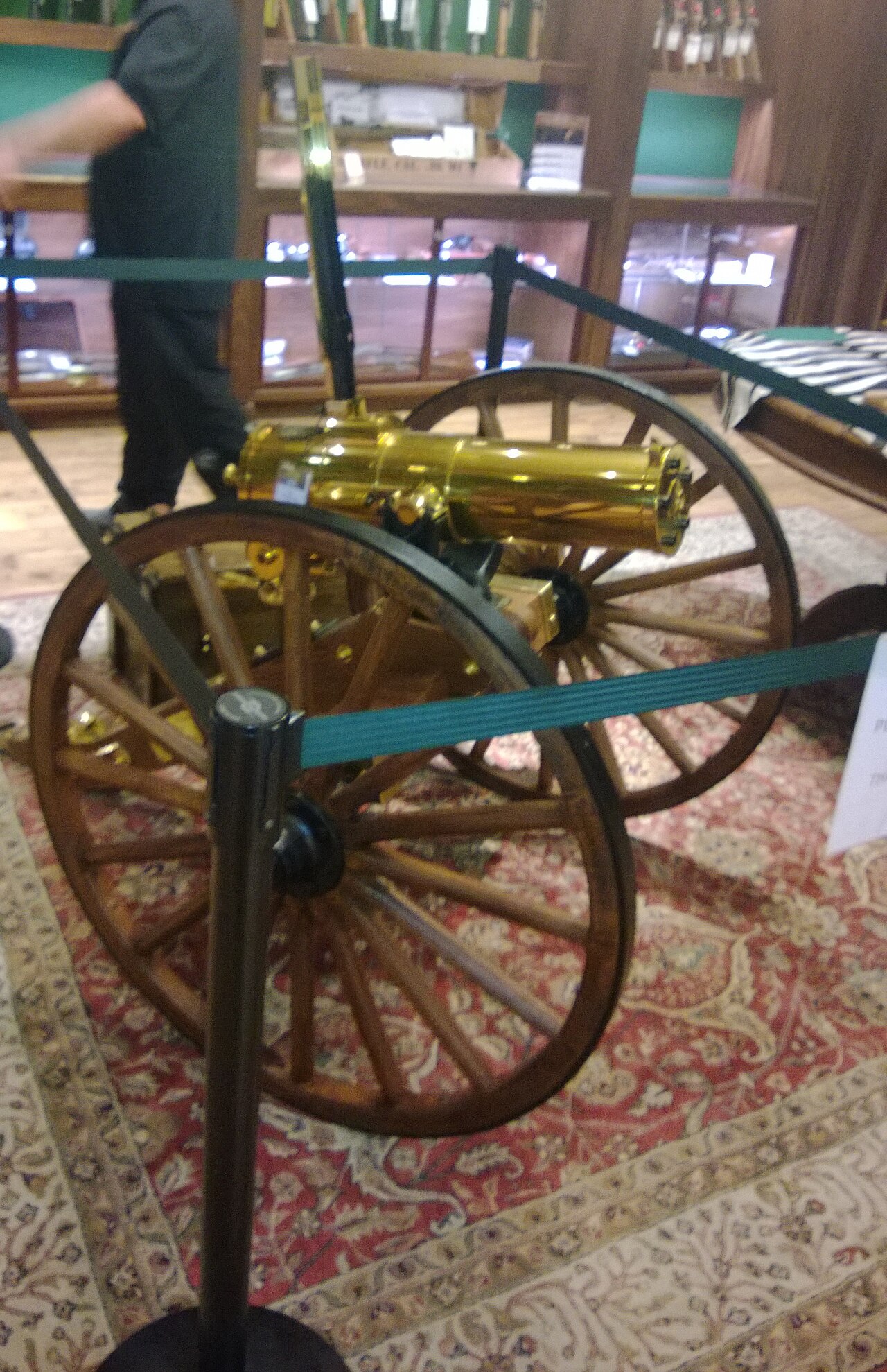


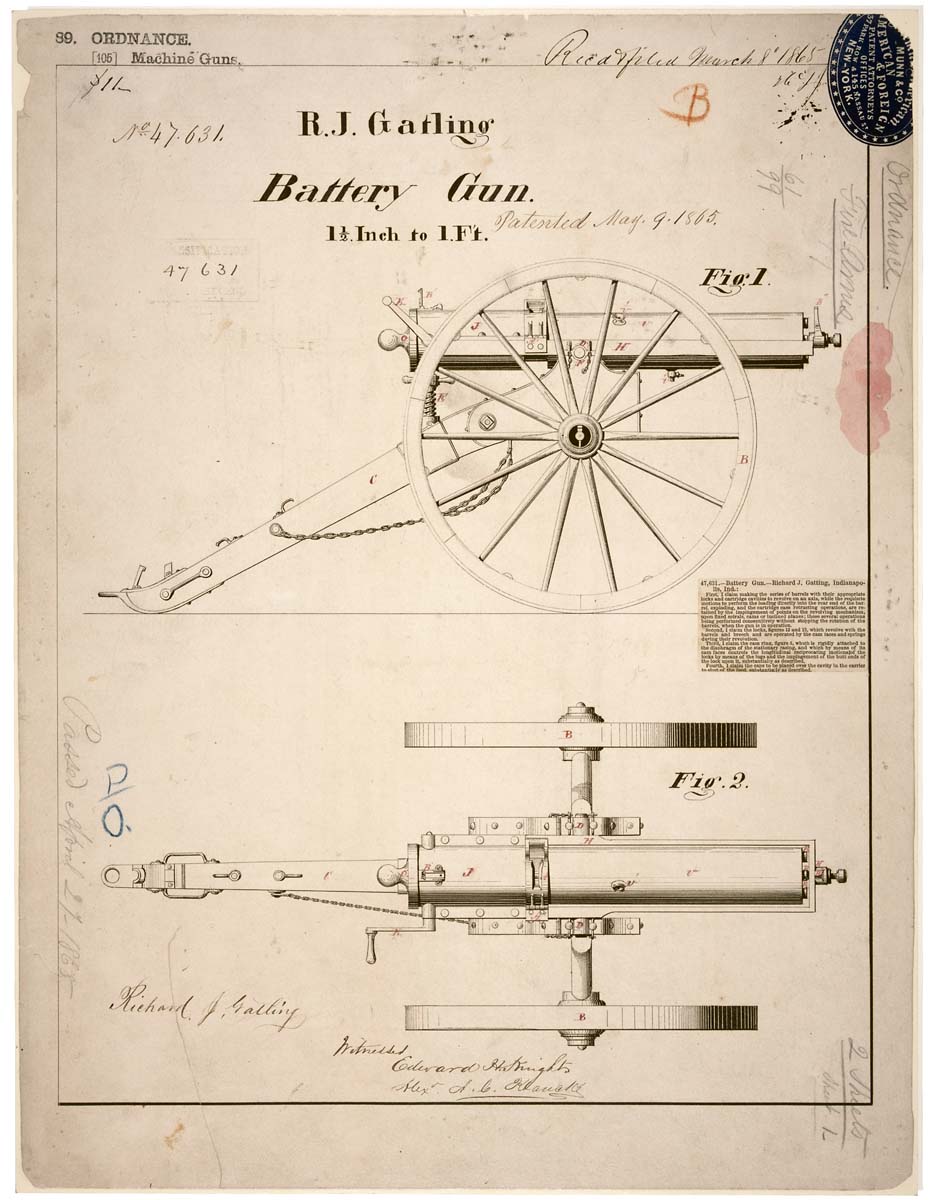
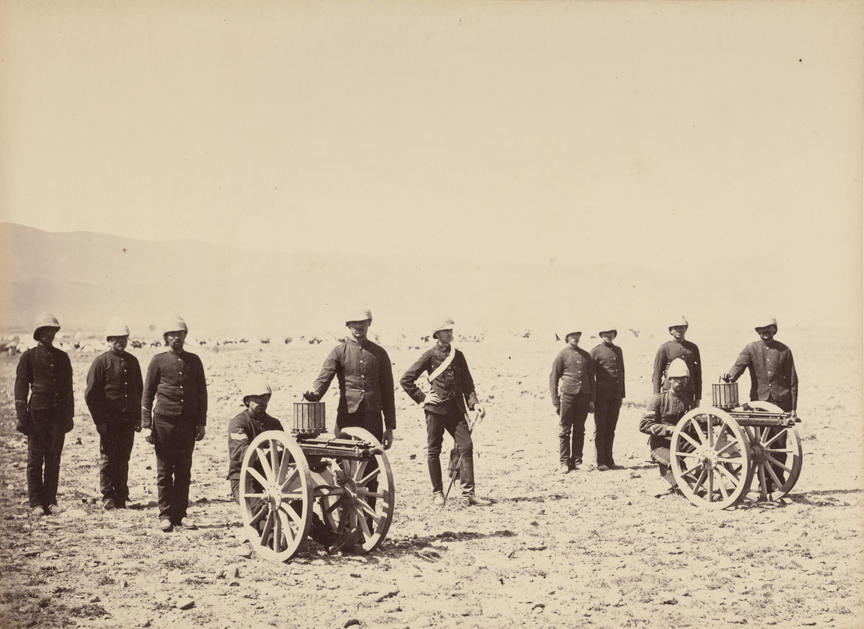
Design and operation
At its core the Gatling gun relies on a cluster of barrels mounted in a circular arrangement around a central axis. Turning a hand crank rotates the barrel assembly and cycles the loading, firing and extraction sequence for each barrel in turn. The multi‑barrel layout gives two main advantages: barrels have time to cool between shots, and the mechanism can achieve a much higher overall rate of fire than contemporary single‑barrel arms. Early models used gravity or hopper feeds and a mechanical firing system; later versions incorporated improved feed mechanisms and mounting systems for field use. The weapon is a type of machine gun, with distinct mechanics from an automatic weapon because it requires continuous manual cranking rather than a single sustained trigger pull. It is sometimes described in relation to the modern Minigun, which applies the same rotating‑barrel principle but uses electric power instead of a crank.
Characteristics and parts
- Barrel cluster: multiple barrels arranged radially to share thermal load and firing duties; see also barrel-focused descriptions.
- Crank and gearbox: the operator turns a crank to index barrels and cycle the action.
- Feed system: early gravity hoppers or magazines that supply cartridges to the breech.
- Mounting: heavy tripods or carriages to absorb recoil and allow aimed fire.
History and combat use
The Gatling gun was developed during the period of the American Civil War and reached early operational use by Union forces, but its bulk, cost and logistical demands limited widespread adoption at that time. During the latter half of the 19th century it saw more frequent deployment in a variety of conflicts around the world. Units fitted Gatling guns were used in colonial campaigns and conventional battles such as the Anglo‑Zulu War and later actions including the Boshin War and the Spanish‑American War, where its ability to deliver concentrated firepower affected tactics and battlefield outcomes. By the turn of the 20th century, advances in recoil‑ and gas‑operated automatic guns reduced reliance on crank‑driven designs.
Legacy and distinctions
The Gatling gun occupies an important place in the history of firearms as a transitional technology between manually fired repeating arms and self‑contained automatic weapons. Its principal legacy is the rotating‑barrel concept, which was later adapted to electrically powered rotary guns that form the basis of some modern aircraft and vehicle weapons. Unlike later automatic designs, the Gatling requires continuous manual input to operate the crank and so is technically distinct from firearms that fire automatically with a held trigger. The design illustrated practical solutions to heat and wear that influenced subsequent gun development.
Examples and notable facts
Surviving Gatling guns appear in museums and historical collections and are often cited in discussions of nineteenth‑century military innovation. Demonstrations and restorations emphasize how the simple mechanical timing of barrel rotation, extraction and firing was an effective engineering answer to the limits of contemporary metallurgy and ammunition practice. For background on related topics, see entries on the Union Army, the evolution of the barrel, and brief histories of early automatic systems such as the Minigun.
Further reading and technical diagrams can be found through specialized historical and arms‑technology resources; introductory overviews often contrast the Gatling approach with later fully automatic weapons to highlight changes in power source, feed design and tactical role.
Questions and answers
Q: What is a Gatling gun?
A: The Gatling gun is a machine gun that has many barrels that fire bullets by turning the barrels around in a circle.
Q: Was the Gatling gun the first machine gun ever made?
A: Yes, it was the first machine gun ever made.
Q: Who first used the Gatling gun and when?
A: The Union Army first used the Gatling gun during the American Civil War.
Q: Why was the Gatling gun not much used during the American Civil War?
A: It was not much used during the American Civil War because it cost a lot of money and was heavy.
Q: In which wars was the Gatling gun used more often during the second half of the 19th century?
A: The Gatling gun was used more often in the Anglo-Zulu War, the Boshin War, and the Spanish-American War.
Q: Why did armies stop using the Gatling gun early in the 20th century?
A: Armies stopped using the Gatling gun early in the 20th century because other machine guns were better.
Q: What is the Minigun and how is it related to the Gatling gun?
A: The Minigun is based on the Gatling gun. The Gatling gun is a machine gun, but it is not called an automatic weapon because a user must continue to crank it instead of merely holding down the trigger.
Author
AlegsaOnline.com Gatling gun: the multi‑barrel crank‑operated firearm and its legacy Leandro Alegsa
URL: https://en.alegsaonline.com/art/37726