
Machine pistol
A compact select-fire handgun capable of fully automatic or burst fire using pistol-caliber ammunition; covers design, history, uses, notable examples, and distinctions from submachine guns.
Overview
A machine pistol is a compact, handgun-style firearm capable of firing multiple rounds with a single trigger action—either continuously in fully automatic mode or in short programmed bursts. These weapons use pistol-caliber ammunition and are normally fed from detachable box magazines. Most models are self-loading: the action cycles automatically to extract the spent case and chamber the next round after each shot.
Image gallery
10 Images




Design and characteristics
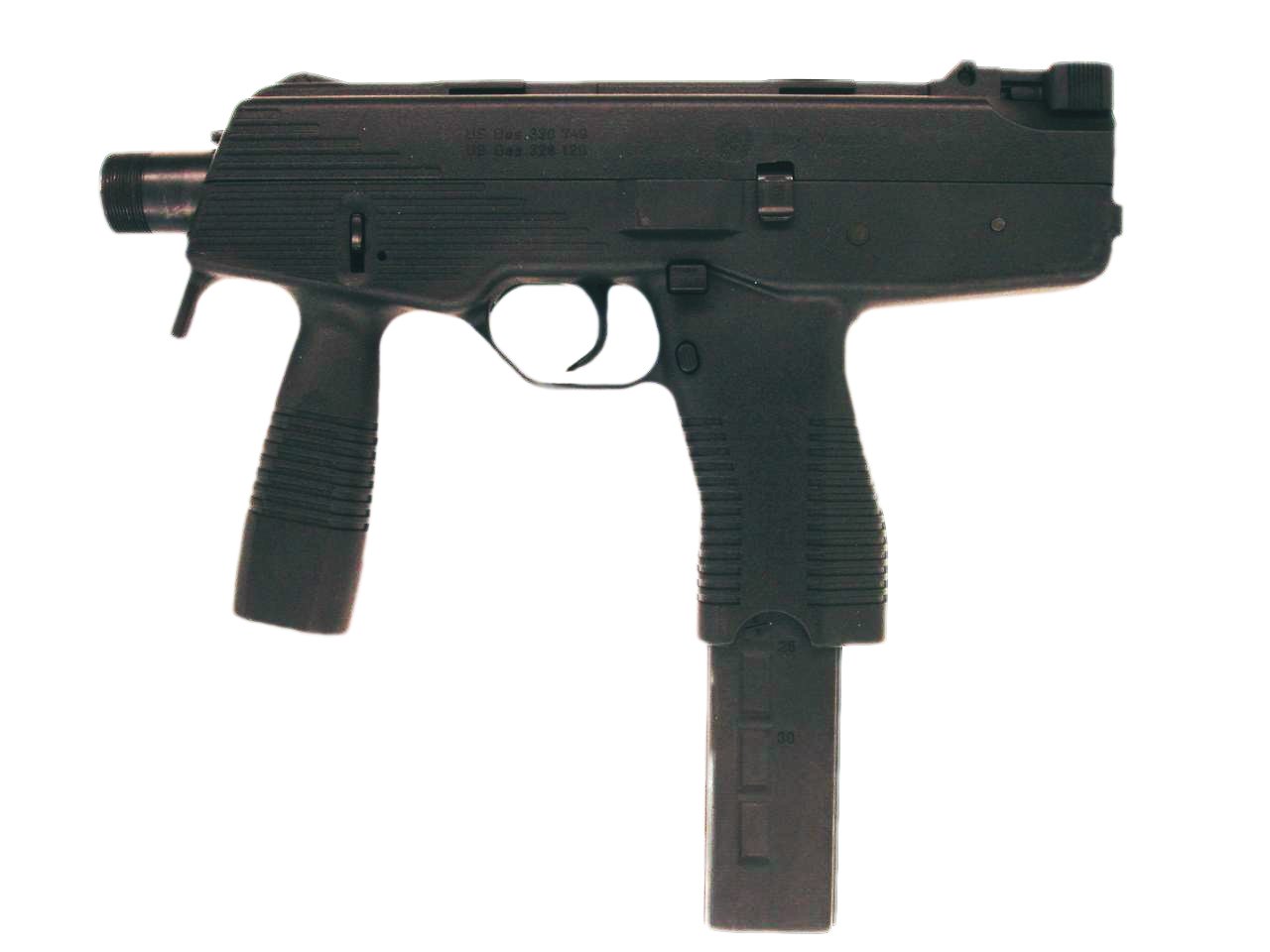
Machine pistols keep the silhouette of a conventional pistol but include a select-fire mechanism to switch between semi-automatic, burst, or full-automatic firing. Their small, lightweight frames combined with high cyclic rates make recoil and muzzle climb the primary handling challenges. Manufacturers and users address these issues through features such as folding or detachable shoulder stocks, compensators and muzzle brakes, foregrips, burst-fire modes, and internal mechanical rate reducers.
History and development
Experiments with rapid-fire handguns date back to the late 19th and early 20th centuries. Early rapid-fire adaptations of service pistols and specialized select-fire handguns were developed for military and police use. Over the 20th century designers refined mechanisms and ergonomics to improve controllability and reliability at short ranges, producing several designs recognized as archetypes of the machine-pistol category.
Uses and operational considerations
Machine pistols have been employed where a compact weapon combining concealability with increased short-range firepower is required: by vehicle crews, bodyguards and close-protection details, special operations teams, and some law-enforcement units. Practical limitations include reduced accuracy in automatic fire, a need for two-handed or braced firing for control, increased ammunition consumption, and legal restrictions on fully automatic weapons in many jurisdictions. Accessories such as extended magazines increase capacity but diminish concealability.
Examples and comparisons
- Mauser C96 M712 — an early Schnellfeuer (rapid-fire) variant derived from a famous early service pistol.
- Stechkin APS — a Soviet-era select-fire pistol offered with a detachable stock to aid control.
- Beretta 93R — a compact pistol configured with a three-round burst mode and a folding foregrip.
- Glock 18 — a select-fire variant of a common service pistol, capable of full-auto fire.
- Heckler & Koch VP70 — a polymer-frame pistol that could fire in burst when used with its stock.
The term "machine pistol" overlaps with other categories. Compact submachine guns and personal defense weapons (PDWs) may appear similar but are typically larger, purpose-built for controllable automatic fire, and often use different cartridges or design philosophies. A practical distinction is that machine pistols are true handgun formats firing standard pistol cartridges, while submachine guns are primarily two-handed weapons optimized for sustained automatic fire.
Notable facts and references
Designers often favor burst-fire settings and mechanical rate-limiters to make automatic fire more controllable. For basic technical background on ammunition and feeding systems consult entries on pistol cartridges and on the role of the detachable magazine in handgun feeding systems.
Questions and answers
Q: What is a machine pistol?
A: A machine pistol is a handgun-style firearm that can fire fully automatic or burst fire.
Q: What does fully automatic mean when referring to a machine pistol?
A: Fully automatic means that the gun will continue to fire very rapidly so long as the trigger is pressed and held.
Q: What does burst fire mean in the context of a machine pistol?
A: Burst fire means that when you pull the trigger, a number of shots determined by the shooter will be fired (for some guns, this is three shots, fired very quickly).
Q: What kind of cartridges do machine pistols fire?
A: Machine pistols fire pistol cartridges.
Q: How are the cartridges fed into a machine pistol?
A: Machine pistols usually have the cartridges fed into the gun with a magazine, which is a rectangular box which holds the cartridges.
Q: How does a machine pistol function?
A: Machine pistols are usually self-loading, which means that the gun automatically loads a new cartridge into the chamber after a shot is fired.
Q: What is the difference between a fully automatic and burst fire machine pistol?
A: A fully automatic machine pistol will continue to fire rapidly as long as the trigger is held, while a burst fire machine pistol will fire a set number of shots when the trigger is pulled.
Related articles
Author
AlegsaOnline.com Machine pistol Leandro Alegsa
URL: https://en.alegsaonline.com/art/60342