
Lysosome: cellular digestive organelle and recycling center
Membrane-bound organelles in eukaryotic cells that contain acid hydrolases to degrade biomolecules, recycle components, and contribute to immunity and disease.
The lysosome is a membrane-bound cell organelle found in most eukaryotic cells that acts as a primary site for intracellular digestion and recycling. Encapsulated by a single lipid bilayer, lysosomes contain a suite of acid-activated hydrolytic enzymes capable of breaking down proteins, nucleic acids, lipids, and complex carbohydrates. Their interior is maintained at an acidic pH that optimizes enzyme activity and isolates potentially harmful reactions from the rest of the cytoplasm. Historically described as 'suicide bags' in older literature, lysosomes are now understood to perform tightly regulated processes that support cell health and metabolism.
Image gallery
4 Images

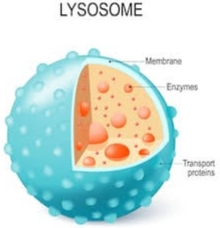


Structure and composition
Lysosomes are variable in size and number depending on cell type and metabolic state. Each organelle contains many different hydrolases — commonly described as more than fifty distinct enzymes — including proteases, nucleases, lipases and glycosidases that degrade proteins, nucleic acids and carbohydrates. The acidic lumen is maintained by proton pumps in the lysosomal membrane. Membrane proteins protect the lipid bilayer from the organelle's own enzymes and help traffic materials into and out of the lysosome.
Biogenesis and pathways
Lysosomal enzymes are synthesized on the rough endoplasmic reticulum, modified in the Golgi apparatus, and delivered to endosomal compartments that mature into functional lysosomes. Cells route material to lysosomes by several routes: endocytosis captures extracellular material, phagocytosis internalizes large particles or pathogens, and autophagy encloses damaged organelles or protein aggregates for degradation. Fusion between autophagosomes or endosomes and lysosomes exposes cargo to degradative enzymes and permits recycling of breakdown products.
Functions and examples
- Degradation and recycling: breaking macromolecules into building blocks that can be reused for biosynthesis and energy.
- Cellular quality control: removal of damaged organelles and protein aggregates via autophagy.
- Immune defense: destruction of pathogens taken up by phagocytic cells and contribution to antigen processing.
- Secretion and signaling: selective release of lysosomal contents and participation in metabolic signaling pathways.
In multicellular organisms, lysosome-like vacuolar compartments exist across groups: in many plant and protist cells a large central vacuole performs similar degradative and storage roles, while in animal cells small lysosomes are the typical form. The lysosome's role has been compared to a cell's digestive system, because it breaks down material from both inside and outside the cell into reusable components.
Medical significance and notable facts
Defects in lysosomal enzymes or in trafficking to the lysosome cause a group of inherited disorders known as lysosomal storage diseases; examples include Tay–Sachs and Gaucher disease. Impaired lysosomal function is also implicated in aging, neurodegeneration, and some metabolic diseases. Modern cell biology continues to reveal regulatory functions for lysosomes beyond degradation, including roles in nutrient sensing and cellular signaling. Research into lysosomal biology informs drug delivery, enzyme replacement therapies, and strategies to manipulate autophagy for health benefits.
For introductory or advanced reading on cellular compartments and lysosomal pathways, follow resources that explain organelle structure, membrane trafficking, and intracellular digestion: cell overview, organelle guide, enzyme catalog, vacuole comparison, cytoplasm context, plant cells, animal cells, digestive analogy, protein degradation, carbohydrate breakdown.
Related articles
Author
AlegsaOnline.com Lysosome: cellular digestive organelle and recycling center Leandro Alegsa
URL: https://en.alegsaonline.com/art/60159