
Mammaliaformes: mammals and their closest extinct relatives
Mammaliaformes groups living mammals and their nearest extinct kin. Covers key traits (teeth, lactation, fur, jaw and ear changes), major fossils, evolutionary history and why this clade matters.
Overview
Mammaliaformes is a name used by paleontologists to describe the branch of synapsid vertebrates that includes living mammals and their closest extinct relatives. Members of this clade share a suite of anatomical and physiological traits that distinguish them from more distant 'mammal-like reptiles' and other early amniotes. The living lineages that fall within Mammaliaformes include monotremes (Monotremata), marsupials (Marsupialia) and eutherians or placental mammals (Placentalia).
Image gallery
10 Images



Defining characteristics
Many features used to diagnose mammaliaforms are visible in the skull, jaws and teeth. One hallmark is the transition to a single lower jaw bone (the dentary) forming a new jaw joint with the squamosal bone, while several earlier bones become reduced and incorporated into the middle ear as tiny ossicles. Teeth show increased specialization: complex molar cusps and occluding surfaces allow precise chewing. Modern mammals are typically diphyodont (one replacement of deciduous by permanent teeth), a pattern that improves occlusion and digestive efficiency.
Other traits associated with the group include evidence for fur or hair, endothermic (warm-blooded) physiology, and lactation (milk production). These soft-tissue characters rarely fossilize, so their presence is inferred from indirect evidence such as integument impressions or anatomical correlates. The combination of dental, cranial and postcranial characters, rather than any single trait, defines the clade.
Evolutionary history
Mammaliaformes emerged from earlier synapsid ancestors during the Triassic and diversified through the Jurassic and Cretaceous. The origin of specialized molars and the shift in jaw and ear anatomy occurred in a mosaic fashion: different lineages acquired complex teeth independently in some cases, and various intermediate jaw configurations are known from fossils. This gradual assembly of mammalian features is a central topic in studies of vertebrate evolution.
Fossil evidence and notable examples
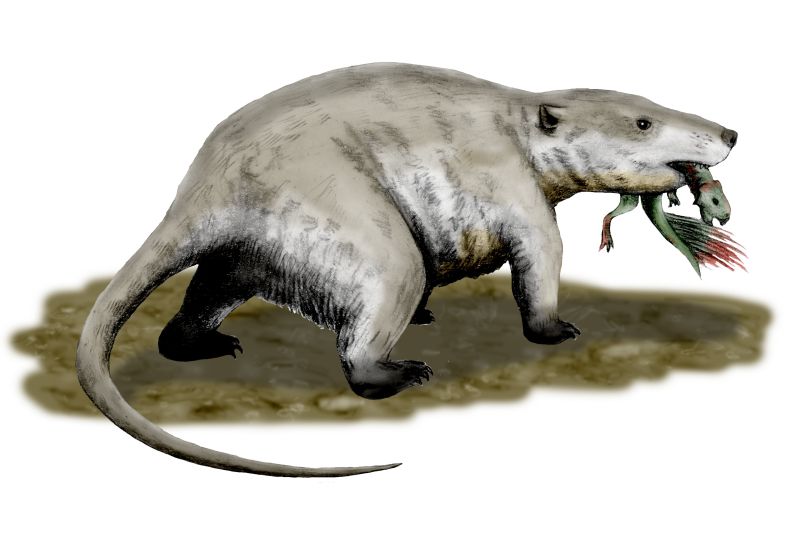
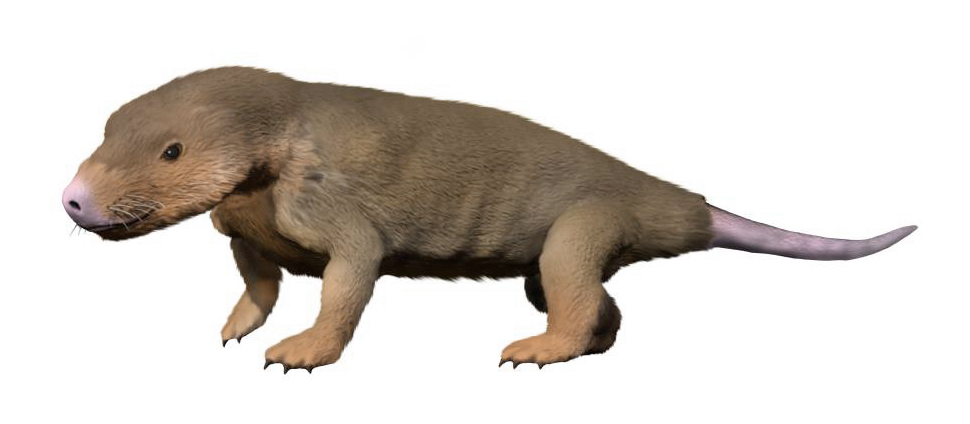
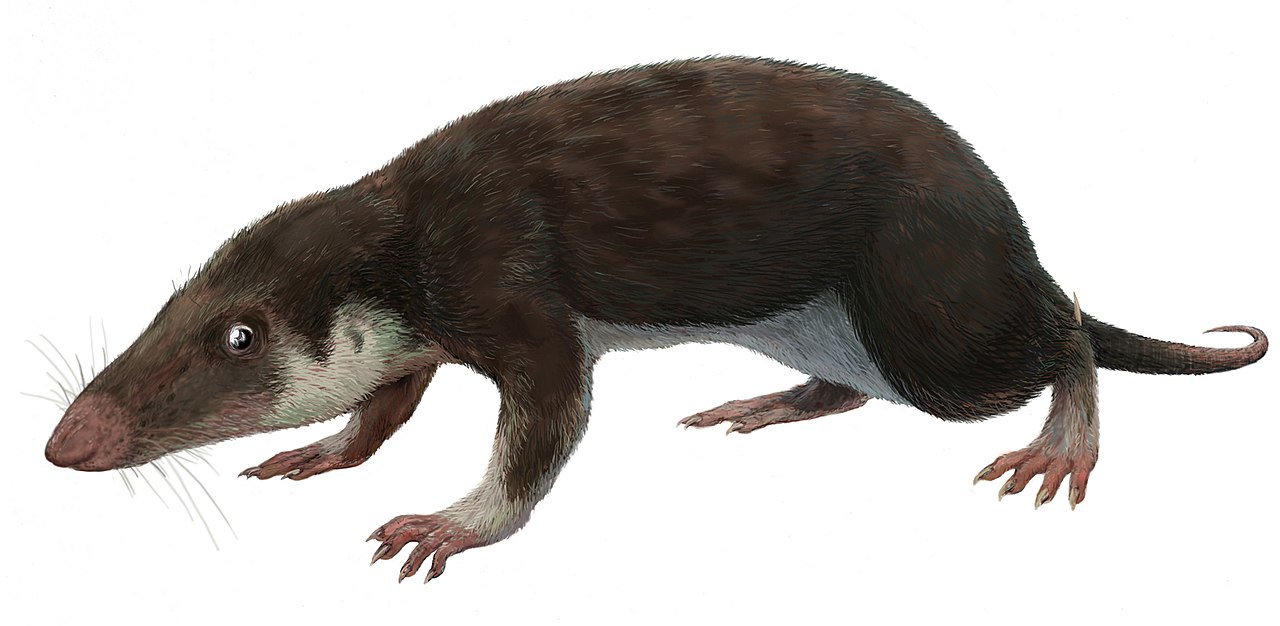
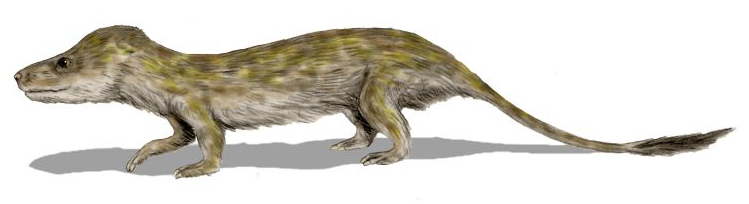
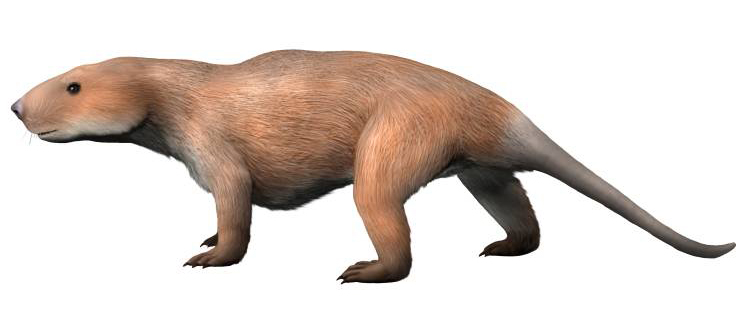
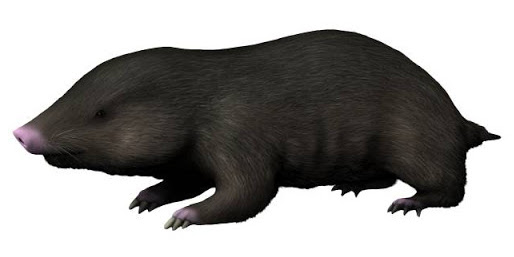
Well-preserved fossils illuminate aspects of early mammaliaform biology. Small, shrew-like forms such as Morganucodon are often cited as early examples showing a mixture of primitive and derived traits. The Middle Jurassic fossil Castorocauda preserves direct evidence of fur and a semi-aquatic lifestyle, demonstrating that some mammaliaforms had complex ecologies and integuments. Other groups, including docodonts and tritylodontids, show how tooth complexity evolved multiple times among relatives of true mammals.
Importance and distinctions
Studying mammaliaforms clarifies how the defining mammal characteristics were assembled and how early members adapted to diverse ecological roles. The clade helps distinguish true mammals (crown group Mammalia) from more distant relatives with mammal-like features. Paleontologists rely on a combination of skeletal details and rare soft-tissue impressions to infer life history traits such as parental care, diet and activity patterns.
Further reading and related topics
- Overview of living mammals
- Extinct relatives of mammals
- Mammalian tooth structure and function
- Examples of convergent evolution in vertebrates
- Biology of lactation
- Fur and integument in vertebrate evolution
- Castorocauda and fossil examples
For readers seeking more detailed taxonomic or anatomical information, consult specialized paleontological reviews and monographs that discuss the subtle skeletal characters used to delimit mammaliaforms and crown-group Mammalia.
Questions and answers
Q: What is Mammaliaformes?
A: Mammaliaformes is a clade that includes the mammals and their closest extinct relatives.
Q: What are the living members of Mammaliaformes?
A: The living members of Mammaliaformes include the monotremes (Monotremata), marsupials (Marsupialia) and the eutherians (Placentalia).
Q: What is unique about the molar teeth of Mammaliaformes?
A: The molar teeth of Mammaliaformes are highly specialized with cusps and flat regions for grinding food.
Q: How many sets of teeth do mammals have?
A: Mammals have one set of baby teeth and one set of adult teeth that fit together precisely.
Q: What are some of the characteristics that characterize Mammaliaformes?
A: Mammaliaformes have lactation (milk) and fur along with other features.
Q: Why are lactation and fur difficult to study in the fossil record?
A: Lactation and fur are difficult to study in the fossil record because they do not fossilize well.
Q: What is the exception to the difficulty in studying lactation and fur in the fossil record?
A: The fossilized remain of Castorocauda lutrasimilis are an exception as they are well preserved and have fur and milk glands.
Related articles
Author
AlegsaOnline.com Mammaliaformes: mammals and their closest extinct relatives Leandro Alegsa
URL: https://en.alegsaonline.com/art/61130
Sources
- species.wikimedia.org : Mammaliaformes
- carnegiemnh.net : "Transformation and diversification in early mammal evolution"
- ui.adsabs.harvard.edu : 2007Natur.450.1011L
- doi.org : 10.1038/nature06277
- pubmed.ncbi.nlm.nih.gov : 18075580
- science.sciencemag.org : science.sciencemag.org/content/311/5764/1123
- ui.adsabs.harvard.edu : 2005Sci...308..103L
- doi.org : 10.1126/science.1108875
- pubmed.ncbi.nlm.nih.gov : 15802602
- nature.com : "A Mesozoic gliding mammal from northeastern China"
- ui.adsabs.harvard.edu : 2006Natur.444..889M
- doi.org : 10.1038/nature05234
- pubmed.ncbi.nlm.nih.gov : 17167478
- doi.org : 10.1007/BF03187223
- dml.cmnh.org : abstract, in English