
Macrophage: tissue phagocyte and immune regulator
Macrophages are versatile immune cells that engulf debris and microbes, present antigens, and regulate inflammation. They arise from monocytes or embryonic precursors and play roles in infection, repair, and disease.
Overview
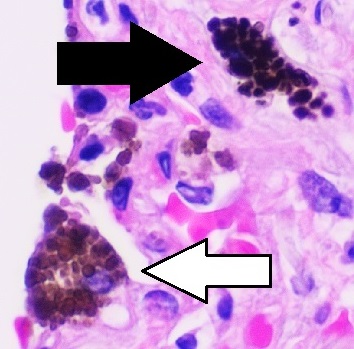
Macrophages are large, long-lived immune cells found throughout the body's tissues. Often described as a type of white blood cell, they are professional scavengers that remove dying cells, debris and microbes. As key components of innate and adaptive immunity in vertebrates, macrophages bridge immediate, nonspecific defenses and longer-term, antigen-specific responses.
Image gallery
7 Images


Origin and major types
Many macrophages develop from circulating monocytes that exit the bloodstream and undergo differentiation in tissues. Some resident populations, such as brain microglia and liver Kupffer cells, arise from embryonic precursors and self-maintain without monocyte input. Macrophage identity is shaped by local signals, so cells in different organs have distinct appearances and functions.
Key functions
- Phagocytosis: Engulfment and digestion of apoptotic cells, foreign particles and pathogens, a hallmark shared with other phagocytes.
- Antigen presentation: Processing and display of microbial or self-derived peptides on MHC molecules to activate T cells and stimulate lymphocytes.
- Cytokine production: Secretion of signaling molecules that recruit and shape other immune cells, and that regulate inflammation and tissue repair.
- Homeostasis and remodeling: Clearing debris after injury, promoting wound healing, and influencing development and metabolism.
Roles in health and disease
Macrophages are protective during infection and essential for normal tissue maintenance, but they can also contribute to pathology. Persistent activation is implicated in chronic inflammatory disorders, atheroma formation in cardiovascular disease, and fibrosis. In cancer, tumor-associated macrophages may either suppress or promote tumor growth depending on signals within the tumor microenvironment. Because of their central regulatory roles, macrophages are targets for therapies that aim to enhance infection control, limit damaging inflammation, or reprogram immune responses in cancer.
Notable distinctions
Researchers often describe macrophages by functional states—classically activated (inflammatory) versus alternatively activated (repair-oriented)—but these categories are simplifications of a spectrum of activation. Surface markers (for example, CD68, CD14 in humans) and gene expression patterns help identify macrophages experimentally, while their behavior is ultimately determined by the local tissue context and signals they receive.
Questions and answers
Q: What are macrophages?
A: Macrophages are white blood cells that are produced from the differentiation of monocytes.
Q: What is the function of macrophages in general immunity?
A: Macrophages are phagocytes that help remove cellular debris and pathogens either as stationary or as mobile cells.
Q: What is the other name for macrophages?
A: Monocytes and macrophages are phagocytes.
Q: How do macrophages trigger specific defense mechanisms of vertebrates?
A: Macrophages stimulate lymphocytes and other immune cells to respond to the pathogen.
Q: Are macrophages mobile?
A: Yes, macrophages can act as both stationary and mobile cells.
Q: What is the process that macrophages use to remove pathogens?
A: Macrophages phagocytose (engulf and then digest) cellular debris and pathogens.
Q: What is the role of macrophages in immunity?
A: Macrophages play a crucial role in both general and adaptive immunity by removing pathogens and stimulating other immune cells.
Related articles
Author
AlegsaOnline.com Macrophage: tissue phagocyte and immune regulator Leandro Alegsa
URL: https://en.alegsaonline.com/art/60397
Sources
- jstor.org : "Cell size of alveolar macrophages: an interspecies comparison"
- doi.org : 10.2307/3433544
- ncbi.nlm.nih.gov : 1470168
- pubmed.ncbi.nlm.nih.gov : 9400735