
Lunar eclipse
A lunar eclipse occurs when Earth's shadow falls on the Moon during a full moon. This article explains the geometry, types, why the Moon reddens, observing tips, and cultural and scientific significance.
Overview
A lunar eclipse is an astronomical event that takes place when the Moon moves into the shadow cast by the Earth, so the Sun, Earth and Moon lie nearly in a straight line. It can only occur at the time of a full moon and is visible anywhere on the night side of Earth while the event is underway. Unlike solar eclipses, which are visible only from a narrow path on Earth's surface, lunar eclipses can be seen by a much broader region and often last for several hours.
For a general introduction to the phenomenon and schedules of upcoming events, see basic lunar eclipse information. To understand the Moon's orbital motion, consult an overview of lunar phases at lunar phase resources.
Image gallery
10 Images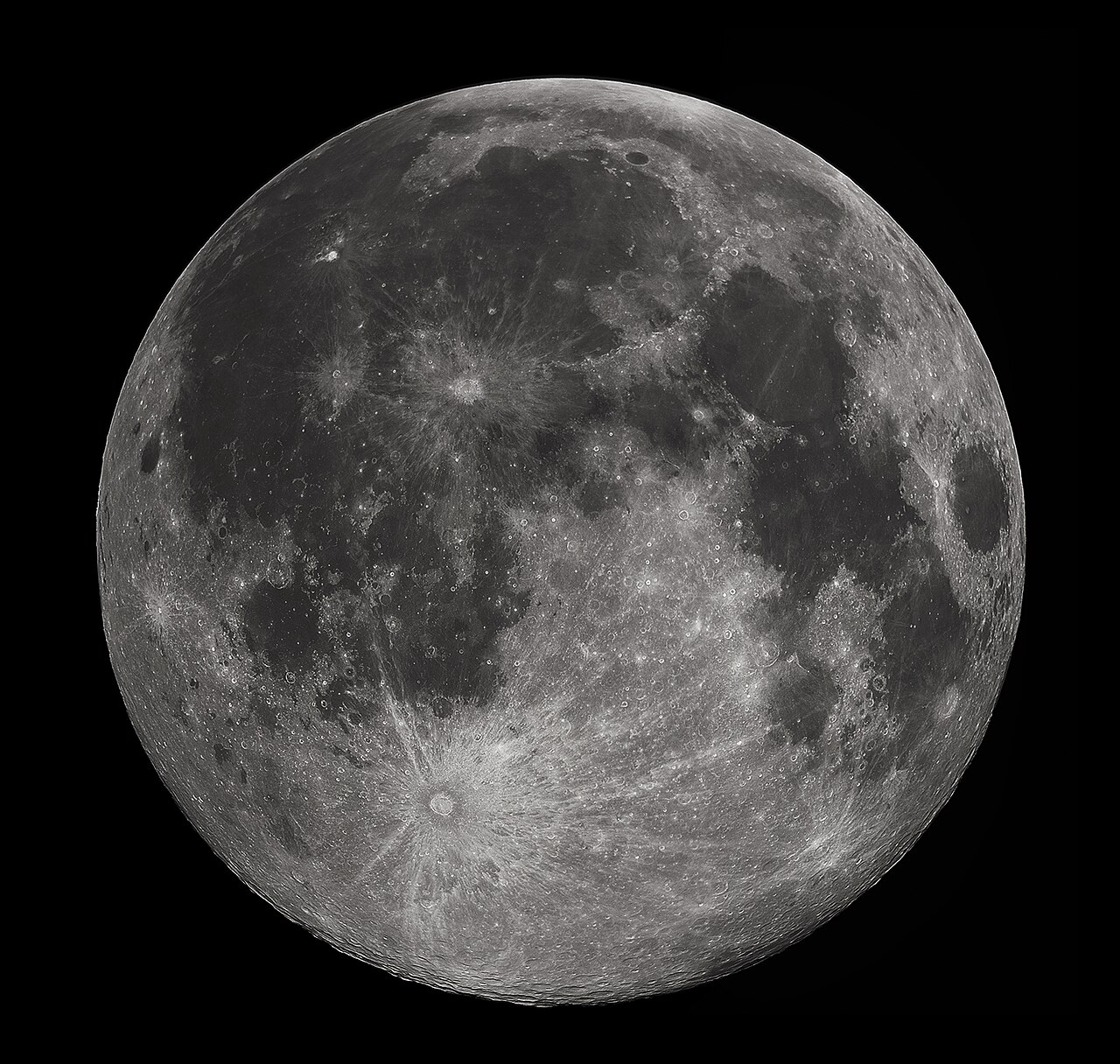




Mechanics and shadow zones
Earth's shadow has two main parts. The outer, lighter region is the penumbra, where Earth partially blocks sunlight. The inner, darker cone is the umbra, where Earth completely blocks direct sunlight. When the Moon passes only through the penumbra it experiences a penumbral eclipse, which can be subtle and sometimes hard to notice. When part of the Moon enters the umbra a partial eclipse occurs; when the entire lunar disk crosses the umbra the eclipse is total.
Detailed diagrams and explanations that illustrate penumbra and umbra geometry are available at shadow geometry guides. For orbital dynamics and precise timing, see resources on orbital mechanics at orbital motion references.
Appearance and the red colour
During totality the Moon often takes on a coppery, reddish or brownish tint rather than going completely dark. This is because sunlight passing through Earth's atmosphere is refracted and scattered: shorter (blue) wavelengths are scattered away, while longer (red) wavelengths are bent into the shadow and illuminate the lunar surface. This combined effect—refraction plus atmospheric scattering—gives the eclipsed Moon its characteristic hues. For a technical summary of refraction and atmospheric effects, consult atmospheric optics notes.
Types, frequency and cycles
- Penumbral lunar eclipse: The Moon passes through Earth's penumbra; dimming is subtle.
- Partial lunar eclipse: A portion of the Moon enters the umbra and darkens noticeably.
- Total lunar eclipse: The entire visible Moon lies within the umbra and usually appears red.
Lunar eclipses occur roughly a few times per year in various forms. They follow predictable patterns governed by orbital cycles; long-term repetition is described by cycles such as the Saros, which links similar eclipses separated by many years. For eclipse series and predictions, see eclipse cycle information.
Observing and safety
Lunar eclipses are safe to watch with the naked eye and can be enjoyed through binoculars or telescopes for more detail. Unlike solar eclipses, they pose no risk to the viewer's retina because no concentrated sunlight reaches the eye. Practical observing tips include finding a dark location with an unobstructed view of the sky, checking local start and end times, and allowing your eyes to adapt to darkness. For viewing guides and timetables, refer to observing guides.
History, cultural significance and scientific value
Lunar eclipses have been recorded throughout human history and often carried cultural or religious meanings. They helped ancient observers understand the relative motions of Earth, Moon and Sun and provided early evidence for Earth's roundness. In modern science, eclipses have been used to study Earth's atmosphere (by analyzing the reddening) and to calibrate instruments. Because they are accessible to many observers, lunar eclipses remain popular public astronomical events that connect cultural tradition with contemporary science.
Related articles
Author
AlegsaOnline.com Lunar eclipse Leandro Alegsa
URL: https://en.alegsaonline.com/art/59921