
Lunar south pole: permanently shadowed craters and polar ice
The Moon's south pole hosts deep, permanently shadowed craters that trap water and other volatiles. It is a priority for science and exploration because of ice deposits, unique illumination and extreme cold.
Overview — The lunar south pole is the region around the Moon's southern rotational axis and is notable for large craters and rugged highlands. Because the Moon keeps the same face toward Earth, sunlight arrives at a very low angle near the poles. As a result, some crater interiors lie in near-perpetual darkness and remain extremely cold. These permanently shadowed regions (PSRs) can trap water and other volatile compounds delivered by comets, asteroids and the solar wind. For maps and mission planning see regional lunar maps.
Image gallery
10 Images


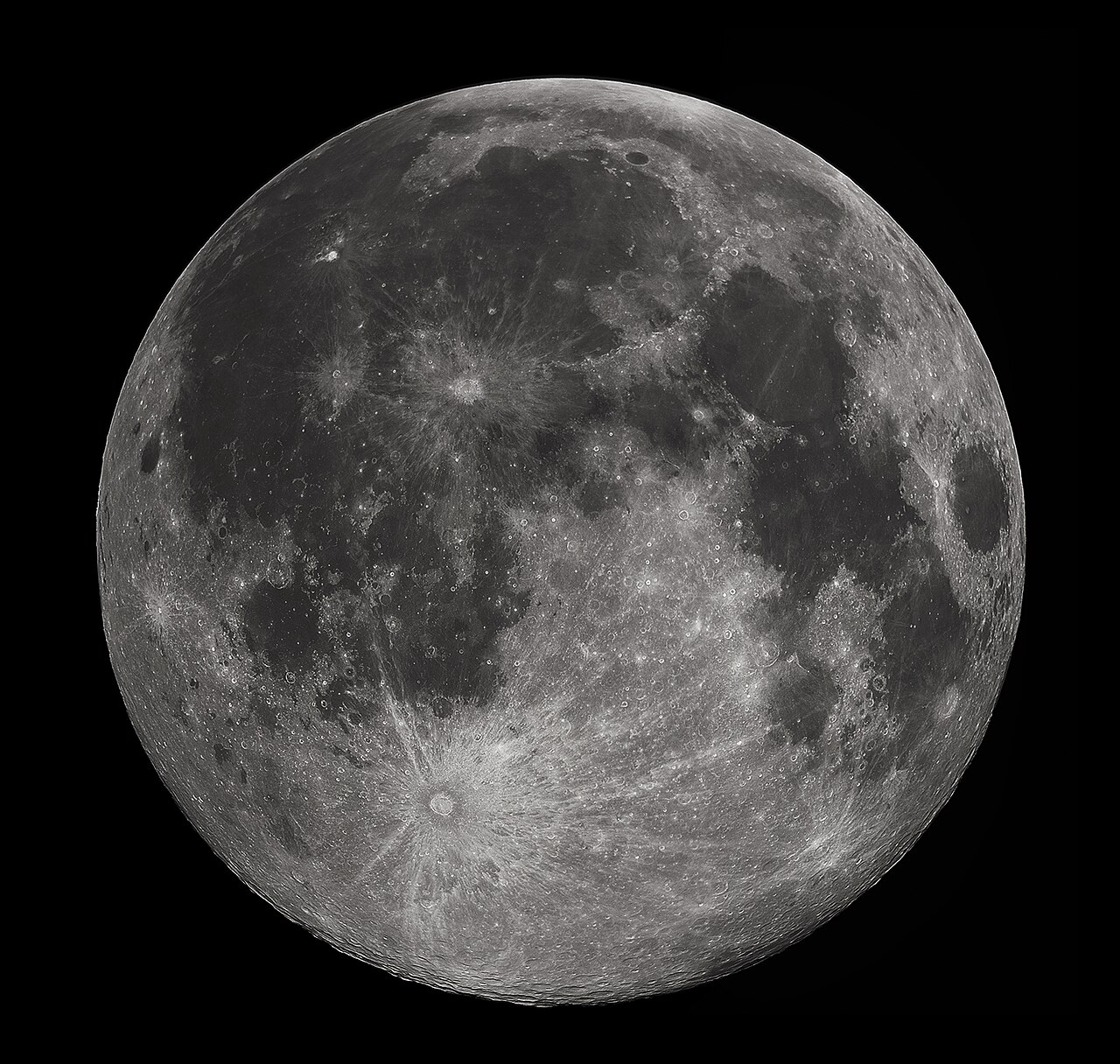


Physical characteristics
The terrain around the south pole is highly uneven: deep basins, steep rims and narrow ridges create a patchwork of microenvironments. Some elevated peaks and crater rims receive extended or near-continuous sunlight, while adjacent hollows remain dark and cold. The floors of PSRs act as cold traps where ice and frost can persist for long periods. Instruments including radar, infrared spectrometers and neutron detectors have identified hydrogen-rich areas that are consistent with water ice; datasets and processed observations are available in remote sensing archives.
Detection and evidence
Multiple orbital missions have contributed to understanding the south polar environment. Imaging and altimetry mapped illumination and slopes; radar and neutron measurements detected signals indicative of hydrogen; and targeted experiments delivered direct evidence of water released from a controlled impact in 2009. These complementary approaches help distinguish surface frost, buried ice, and hydrogen chemically bound in minerals.
Scientific and exploration importance
- Resources: Water ice could supply drinking water, oxygen for life support, and feedstock for propellant production, reducing the need to launch all consumables from Earth.
- Climate and history: Polar deposits preserve records of volatile delivery and the space environment over long timescales, informing planetary science and solar system evolution.
- Operational sites: Peaks with prolonged illumination offer stable solar power opportunities for landers, habitats and communications relays.
Operational challenges and opportunities
Although scientifically attractive, the south pole poses engineering challenges. Very low temperatures in permanently shadowed areas complicate operations and can affect batteries, electronics and mechanical systems. Steep and blocky terrain increases landing risk and mobility difficulty. At the same time, nearby sunlit ridges create opportunities for solar power and thermal management, so careful site selection is key. Agencies and companies planning robotic and crewed missions frequently cite the south pole as a priority; consult exploration overviews and technical archives in mission archives for concepts and requirements.
Note: Both lunar poles show potential for ice, but the south pole's combination of deep PSRs and adjacent illuminated terrain makes it a particularly valuable target for near-term exploration and long-term presence.
Related articles
Author
AlegsaOnline.com Lunar south pole: permanently shadowed craters and polar ice Leandro Alegsa
URL: https://en.alegsaonline.com/art/59925
Sources
- space.com : "NASA takes aim at Moon with double sledgehammer"
- ui.adsabs.harvard.edu : 1995LPI....26.1339S