
Lu Xun — influential Chinese writer and founder of modern Chinese literature
Lu Xun (Zhou Shuren, 1881–1936) was a leading Chinese writer and intellectual who helped modernize Chinese literature through critical short stories, essays, translation, and promotion of vernacular language.
Overview
Lu Xun is the pen name of Zhou Shuren, born September 25, 1881 and died October 19, 1936. His name appears in Chinese as 鲁迅 (simplified) and 魯迅 (traditional). He is widely regarded as one of the most important figures in twentieth‑century Chinese letters: a novelist, short story writer, essayist, critic and translator whose work helped shape modern Chinese cultural and political debate. He is often described simply as a writer, but his public role extended into education and intellectual leadership.
Image gallery
10 Images


Life and development
Born in Shaoxing in Zhejiang province, Zhou initially trained in science and medicine before turning to literature and translation. He adopted the name Lu Xun as his pen name and chose to write in the vernacular Chinese (baihua) to reach broader readers. His personal experiences of social upheaval and cultural change informed a lifelong interest in criticizing social injustice and conservative traditions.
Writing, style and themes
Lu Xun's work is noted for its psychological realism, satirical edge and moral urgency. He employed short stories, sketches and essays to expose hypocrisy, superstition and the suffering of ordinary people. Recurring themes include the conflict between old customs and modernity, the need for intellectual awakening, and the stubborn persistence of injustice. His tone ranges from ironic and caustic to deeply compassionate.
Major works and examples
- Short stories: "The True Story of Ah Q" is a landmark novella that satirizes social complacency.
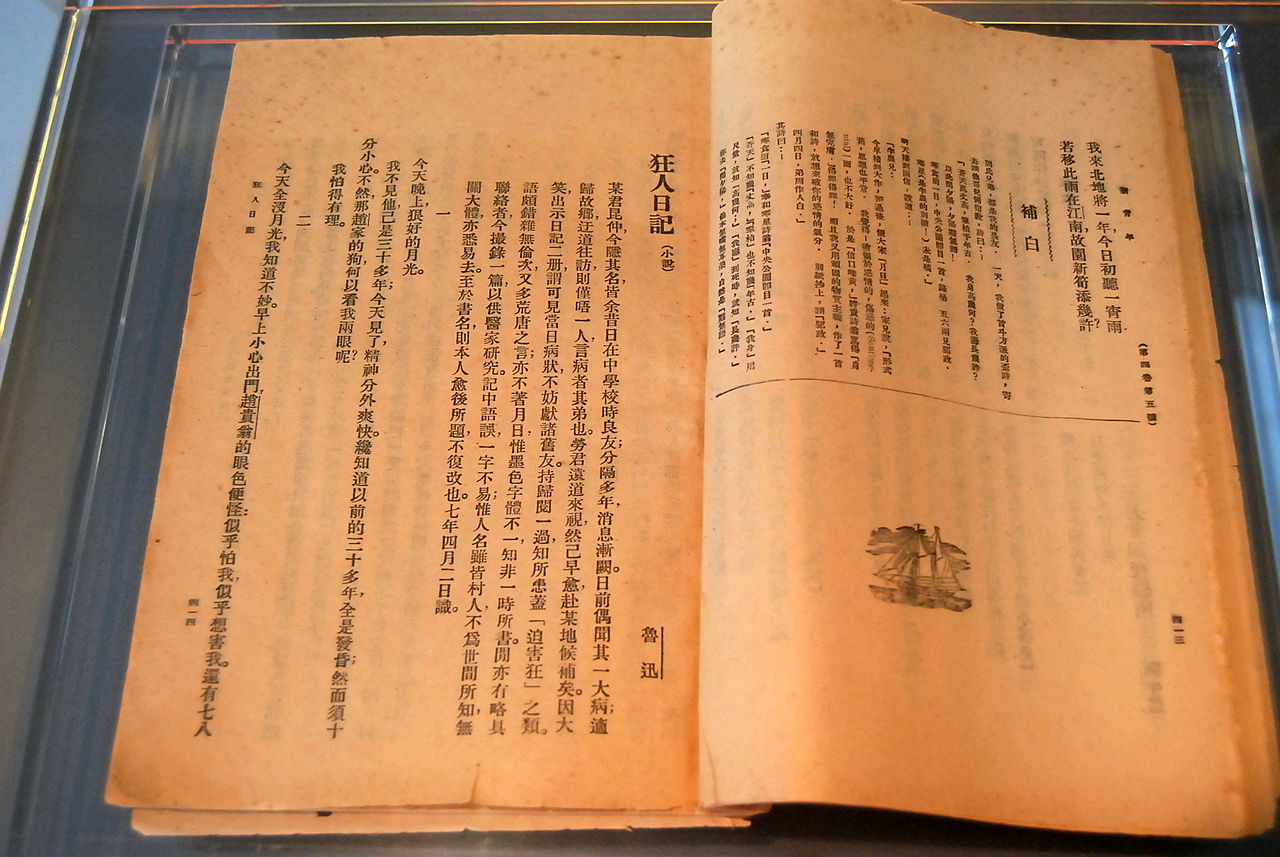
- Other key pieces include "Medicine" and the influential early work "A Madman's Diary," which is often cited as one of the first modern Chinese short stories.
- He also wrote essays and translated foreign literature, helping introduce new ideas to Chinese readers.
Influence and reception
Lu Xun's writings played a formative role in the May Fourth cultural movement and in debates about language reform and national renewal. After his death he was celebrated by many intellectual and political currents for his critique of tradition, though interpretations of his legacy have varied over time. His insistence on clear expression and social conscience influenced generations of writers and educators.
Legacy and memorials
Lu Xun's cultural importance is reflected in memorials and study centers. In Shanghai, Lu Xun Park contains a museum dedicated to his life and a well‑visited tomb. His works remain widely read and translated, taught in schools, and referenced in discussions about literature's role in social change.

Legacy
Lu Xun's will said:
"For my family, I had a number of points in mind, including the following:
- Take not a penny from anyone for burial - except from old friends.
- Make it short, bury me, and call it a day.
- No eulogies, please.
- Forget about me and mind your own business - if you don't, it's your own fault.
- When my son grows up and shows no special talents, I want him to pursue a modest profession to earn a living. In no case shall he become a meaningless writer or artist.
- Don't rely on the promises of others.
- Don't put up with people who harm others while rejecting the principle of retribution and preaching tolerance."
- Lu Xun
In 2004, the "Lu Xun Memorial Hall" was built in his native city Shaoxing, an important building by the architect Chen Tailing.

Lyric
Lu Xun was ambivalent about poetry, believing that the great works of Chinese poetry had been written long ago:
"I believe that by the end of the Tang period all the excellent poetry had already been written. Since then, it's better not to try your hand at writing poetry unless you're the monkey king who can leap from the Buddha's palm."
Nevertheless, he composed poetry, if only out of "habit" or when asked to do calligraphy.
Questions and answers
Q: What is the real name of Lu Xun?
A: His real name is Zhou Shuren (周树人).
Q: When was Lu Xun born?
A: He was born on September 25, 1881.
Q: Where was he born?
A: He was born in Shaoxing of Zhejiang Province.
Q: What are some examples of his works?
A: Some examples of his works include "The True Story of Ah Q" and "Medicine".
Q: Is there a museum about him in Shanghai?
A: Yes, there is a museum about him located in Lu Xun Park in Shanghai.
Q: Is there a tomb for Lu Xun?
A: Yes, his tomb can be found at the same location as the museum - Lu Xun Park in Shanghai.
Related articles
Author
AlegsaOnline.com Lu Xun — influential Chinese writer and founder of modern Chinese literature Leandro Alegsa
URL: https://en.alegsaonline.com/art/59637