
Love Parade disaster (Duisburg, 2010)
A deadly crowd crush at the Love Parade in Duisburg on 24 July 2010 that killed 21 people, injured hundreds, and prompted wide review of mass‑event safety, planning and accountability.
Overview
On 24 July 2010 a fatal crowd crush occurred during the Love Parade in Duisburg, North Rhine‑Westphalia, Germany. The incident developed in an access tunnel and ramp that led to the fenced festival area and resulted in 21 confirmed deaths and at least 511 reported injuries. The scale of casualties and the circumstances of the crush made the event an international news story and prompted sustained public and professional interest in the safety of large assemblies.
Image gallery
6 Images



Background of the festival
The Love Parade began in 1989 in Berlin and grew from a street celebration into a large, itinerant parade and festival celebrating electronic dance music. Traditionally a free, open‑air event featuring floats, DJs and large moving crowds, the festival attracted visitors from across Europe and beyond. The 2010 edition differed from many earlier editions because it was staged inside a closed, fenced festival area with controlled access points.
Site, organisation and context
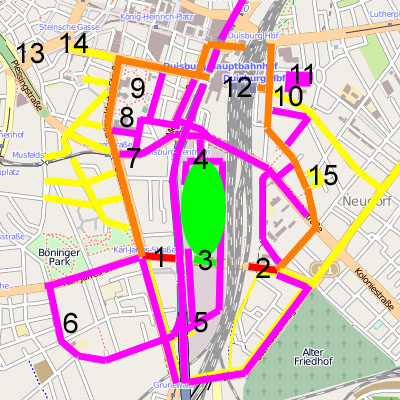
The Duisburg event formed part of cultural programming connected to the Ruhr region’s year as European Capital of Culture under the RUHR.2010 umbrella and related European Capital of Culture activities. Local authorities, the event promoter and security services established an entry system that concentrated attendees through a limited number of gates, ramps and a tunnel. That layout, combined with estimates of a very large attendance, created a setting in which controlled one‑way flows were intended but not consistently maintained.
How the crush developed
Accounts from emergency responders, witnesses and later reviews agree that the fatal compressive asphyxia occurred when extremely dense and mixed directional flows formed in the constricted passageway. When crowd density rises beyond a certain threshold, individual movement becomes impossible and compressive forces can lead to loss of consciousness and death. Contributing factors reported in public analyses included narrow access routes, bottlenecks, bidirectional movement where unidirectional flow had been planned, and inadequate space for emergency movement and ambulance access.
Emergency response and immediate consequences
Medical teams, police and volunteers worked on site and at nearby hospitals to treat hundreds of injured people. The emergency response involved triage, evacuation of victims and temporary suspension of event activities. The human scale of the disaster prompted a rapid local operational reaction and later triggered formal inquiries into how rescue services performed and how coordination between organisers and authorities could be improved.
Investigations and legal proceedings
Following the disaster, municipal and national investigators, safety experts and prosecutors carried out inquiries into planning, site design, crowd management and decision‑making before and during the event. Official reviews examined permits, risk assessments, stewarding, police deployment and communications. Legal proceedings and administrative reviews were opened in the years after the incident; these inquiries and court cases extended over several years and formed a significant part of the public response.
Aftermath and legacy
Event organisers announced that the Love Parade would no longer take place, citing respect for the victims. The Duisburg tragedy became an important case study in crowd safety, influencing event licensing, urban planning for major gatherings and training for emergency services. Safety guidance, standards for stewarding, the use of multiple separated entry and exit routes, and real‑time crowd monitoring have been highlighted as key preventive measures in the wake of the incident.
Memorials, commemoration and ongoing study
Memorials and commemorative events have been held to honour the victims and to remind planners and the public of the risks associated with very large crowds. Academics, engineers and safety practitioners continue to study crowd dynamics, event design and human factors to reduce the chance of similar incidents. Practical recommendations from these studies emphasize early planning with authorities, conservative capacity limits, clear signage, robust communications and rapid access for emergency services.
Contextual links and resources
Readers seeking primary documents, official investigation reports and specialist analyses can consult municipal archives, safety research bodies and archived news coverage. For general background on the festival and related cultural programming, see pages on the Love Parade, the electronic music festival phenomenon, and the role of RUHR.2010 as part of the European Capital of Culture programme. Local information about the host city and region is available under Duisburg, North Rhine‑Westphalia and Germany, and historical context for the festival can be found in material relating to Berlin and the parade tradition more broadly.
Further discussion of crowd management and festival planning practices is available from specialist safety organisations and event management authorities; such resources explain contemporary best practices adopted after high‑profile incidents and are intended to reduce risk at large public gatherings.
Related articles
Author
AlegsaOnline.com Love Parade disaster (Duisburg, 2010) Leandro Alegsa
URL: https://en.alegsaonline.com/art/59538
Sources
- news.sky.com : "Germany Love Parade Stampede: At Least 19 Are Killed at a Music Festival in Duisburg | World News | Sky News"
- essen-fuer-das-ruhrgebiet.ruhr2010.de : "Loveparade: "The Art of Love" brings electrifying beats to Duisburg"
- bbc.co.uk : "BBC News - Organisers blamed for German Love Parade deaths"