
Love Parade (electronic dance music festival)
A street-based electronic music event that began in Berlin in 1989, known for its mobile sound systems, mass participation, and its influence on global rave and club culture; last held in 2010.
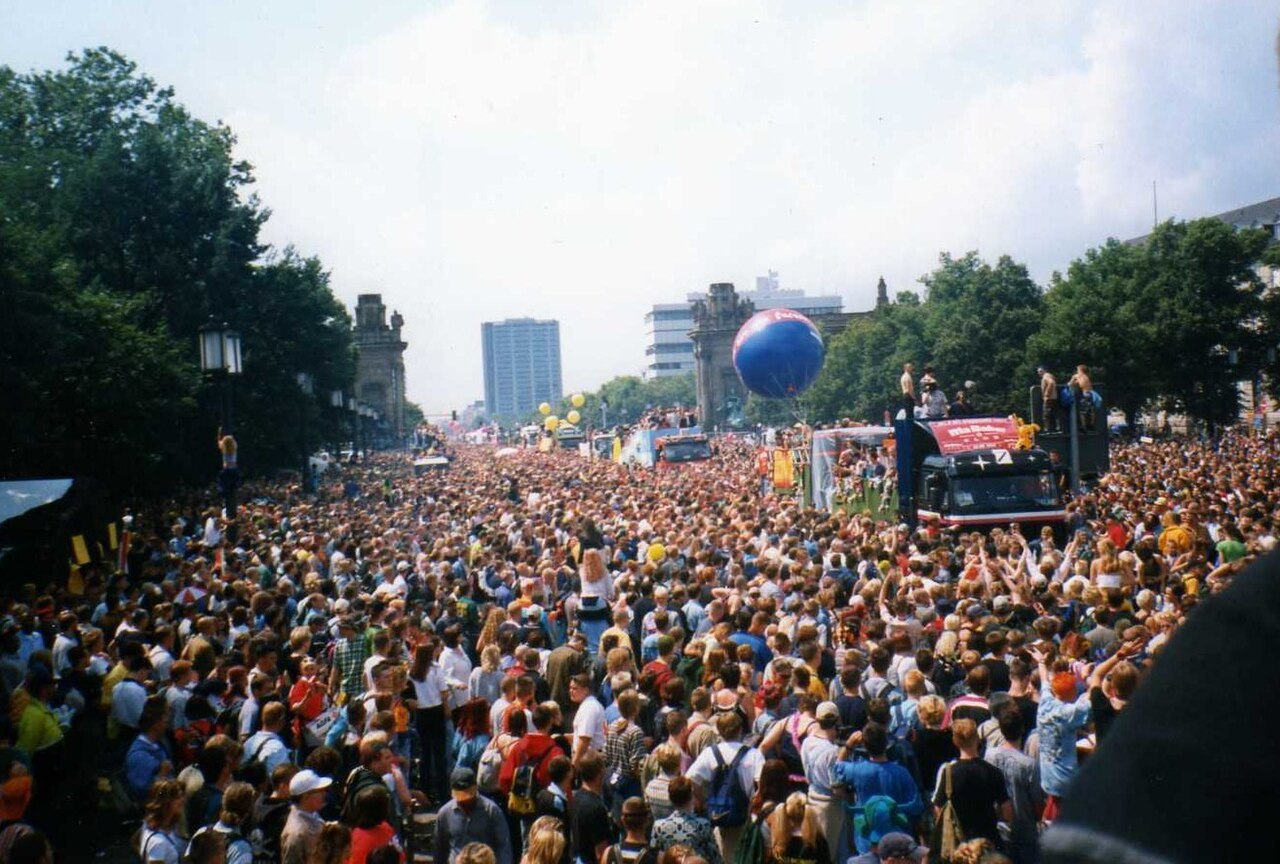
The Love Parade was a large, street-based electronic dance music festival that began in Berlin in 1989. Conceived as a public celebration of techno and dance culture, it combined mobile sound systems, decorated trucks and floats, and thousands (sometimes millions) of participants moving together through public spaces. Organizers and attendees emphasized freedom, dance, and a party atmosphere that blurred the lines between parade, concert and dance marathon. For background information see festival overview and the event's origins in Berlin.
Image gallery
3 Images

Format and characteristics
The Love Parade’s basic format centered on a procession of vehicles equipped with powerful speakers and live DJs who played continuous electronic music. Typical elements included:
- Decorated trucks and floats serving as mobile stages and sound sources (sound trucks).
- Resident and guest deejays performing sets that ranged from techno and house to trance and related styles.
- Open, outdoor routes through city streets intended for mass, public participation.
- A largely noncommercial, celebratory ethos in its early years, later mixed with sponsorship and large-scale event organization.
History and development
The first Love Parade attracted a small crowd of activists and music fans in 1989. Over the following decade the event grew rapidly: by 1999 organizers reported attendance figures in the order of a million or more, and at times the parade drew well over a million participants. The event was staged in Berlin for many years before being held in different German cities. Organizers paused the parade in 2004 and 2005; it returned in later years but faced increasing logistical and political challenges as it expanded.
Impact and cultural importance
The Love Parade played a significant role in popularizing techno and electronic dance culture beyond clubs and underground scenes. It helped shape festival aesthetics—costuming, float design and the idea of sound-system parades—and inspired similar events internationally. The gathering was a focal point for youth culture, tourism and debates about public use of urban space.
Safety, controversy and final edition
As the parade grew, concerns about crowd safety, permits and infrastructure mounted. The final officially organized Love Parade took place in 2010 and was marred by a severe crowd crush that resulted in multiple fatalities and many injuries. That incident prompted legal inquiries, public review of crowd-management practices and the decision not to continue the event in its previous form; for reporting and inquiry references see coverage of the 2010 incident.
Though the Love Parade as an annual mass street festival has ended, its influence remains visible in electronic music festivals, parade-style events and the continuing global popularity of DJ culture. For broader context about Germany and electronic music scenes see Germany resources and additional historical notes at festival overview.
Related articles
Author
AlegsaOnline.com Love Parade (electronic dance music festival) Leandro Alegsa
URL: https://en.alegsaonline.com/art/59539