
Lying in repose: public viewings and their customs
Lying in repose is a public display of a deceased person's body for visitors to pay respects. It differs from a formal state honor and varies by culture, venue, rules, and religious practice.
Overview
Lying in repose refers to making a deceased person's body available for public visitation so that friends, family, colleagues and members of the public may pay their respects. Often called a public viewing in some regions, the practice is common for well‑known figures — such as religious leaders, entertainers, athletes and public servants — but it can also be arranged for private individuals. A typical lying in repose is organized by a family, a religious institution, a professional association or a funeral home rather than by the state; for a general description of public viewing practices see public viewing.
Image gallery
2 Images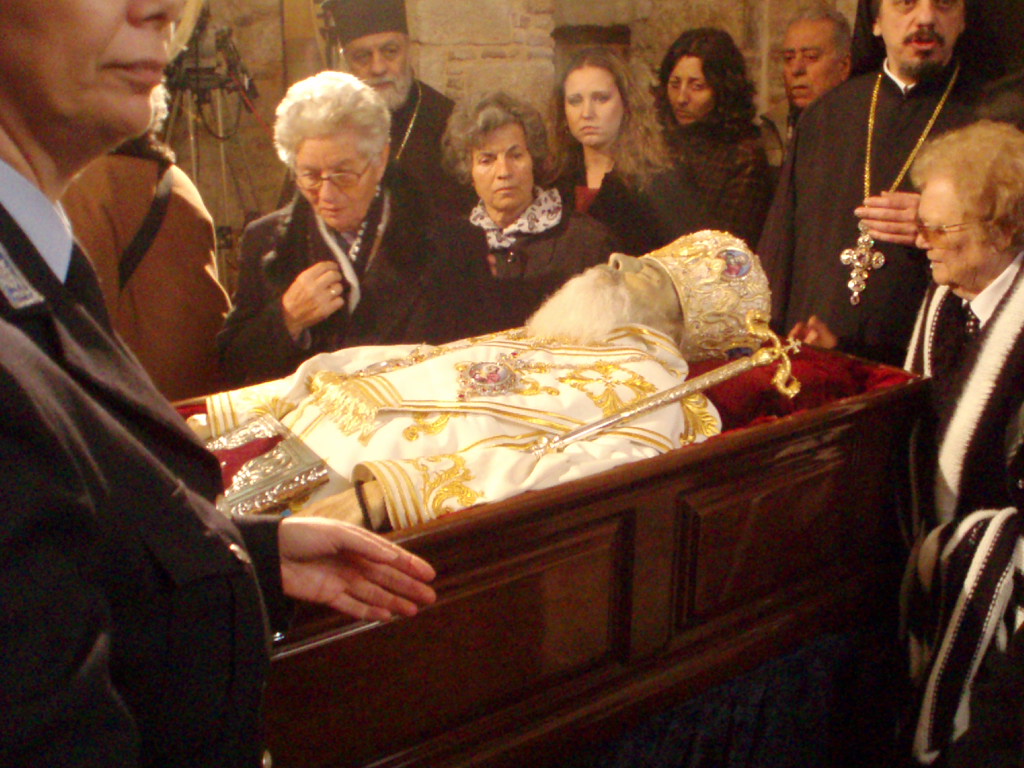

Typical characteristics
Events described as lying in repose share several practical features. The body is usually prepared and presented in an open coffin or on view at a suitable location, such as a funeral home, a church, a cathedral or sometimes a civic building or arena. Visiting hours may be scheduled over one or several days. Attendees may file past the casket in a procession, spend time in quiet reflection, leave flowers or messages, and join in organized prayers or vigils. Family members often sit nearby and may receive condolences.
- Venue: private or non‑governmental sites; occasionally large public venues for prominent figures
- Access: open to the public or limited by invitation, sometimes with security checks
- Rituals: varies by faith and culture; can include prayers, musical tributes or silent tribute
- Presentation: open or closed casket, and care taken to respect dignity and religious requirements
History and development
Public display of the deceased has ancient roots in many cultures. In modern times the form and prominence of lying in repose have been shaped by religious customs, changing funeral practices, and media attention. Whereas earlier communities often held wakes at home, twentieth‑century professional funeral services standardized preparation and viewing. High‑profile lie‑ins have sometimes been staged indoors or outdoors to accommodate large numbers, and live broadcasts or photographic coverage became common where families or institutions permit it.
Uses, examples and social importance
Lying in repose serves multiple social functions: it helps the bereaved begin communal mourning, provides a public forum for collective grief when a notable person dies, and offers closure by allowing a final, visible farewell. Examples include leaders of religious communities, local cultural figures, athletes or actors whose fan communities seek a place to mourn together. For many communities, a public viewing becomes an integral part of the funeral and memorial sequence.
Distinction from lying in state and practical notes
Although the terms can seem similar, lying in repose is separate from the formal honor known as lying in state. Lying in state typically involves government authorization, ceremonial guards and official protocols at a designated national site. Lying in repose lacks official state sanction, though it can be elaborate. Practical considerations include permitting, crowd control, safety and sensitivity to cultural or religious requirements. Families or organizers should communicate access rules, photographing policies and any expected behavior to attendees to preserve dignity for mourners.
Related articles
Author
AlegsaOnline.com Lying in repose: public viewings and their customs Leandro Alegsa
URL: https://en.alegsaonline.com/art/60090