
Lynching of Jesse Washington (Waco, Texas, 1916)
The 1916 public lynching of Jesse Washington in Waco, Texas, became a notorious example of racial violence in the Jim Crow era and galvanized national anti-lynching activism.
Jesse Washington was a young African American farm worker who was seized, tried, and brutally lynched in Waco, Texas, on May 15, 1916. Reports identify him as a teenage laborer accused of the rape and murder of Lucy Fryer, the wife of his white employer. Contemporary observers characterized the killing and the crowd’s response as racially motivated. Although Washington signed a confession during his interrogation and led authorities to a weapon, accounts note that no eyewitnesses saw him commit the crime and his treatment before and during the trial raised serious questions about due process.
The case moved quickly through the McLennan County legal system. Under intense public pressure, Washington was brought to trial in Waco; the atmosphere in the courtroom was hostile and inflamed. After entering a guilty plea, he was sentenced to death. Immediately following sentencing he was seized by members of the crowd, pulled from the courtroom, and taken to the city courthouse lawn where a large mob gathered. Estimates of attendance vary, but contemporary reports describe a crowd of over ten thousand people that included local officials and law enforcement, and many children.
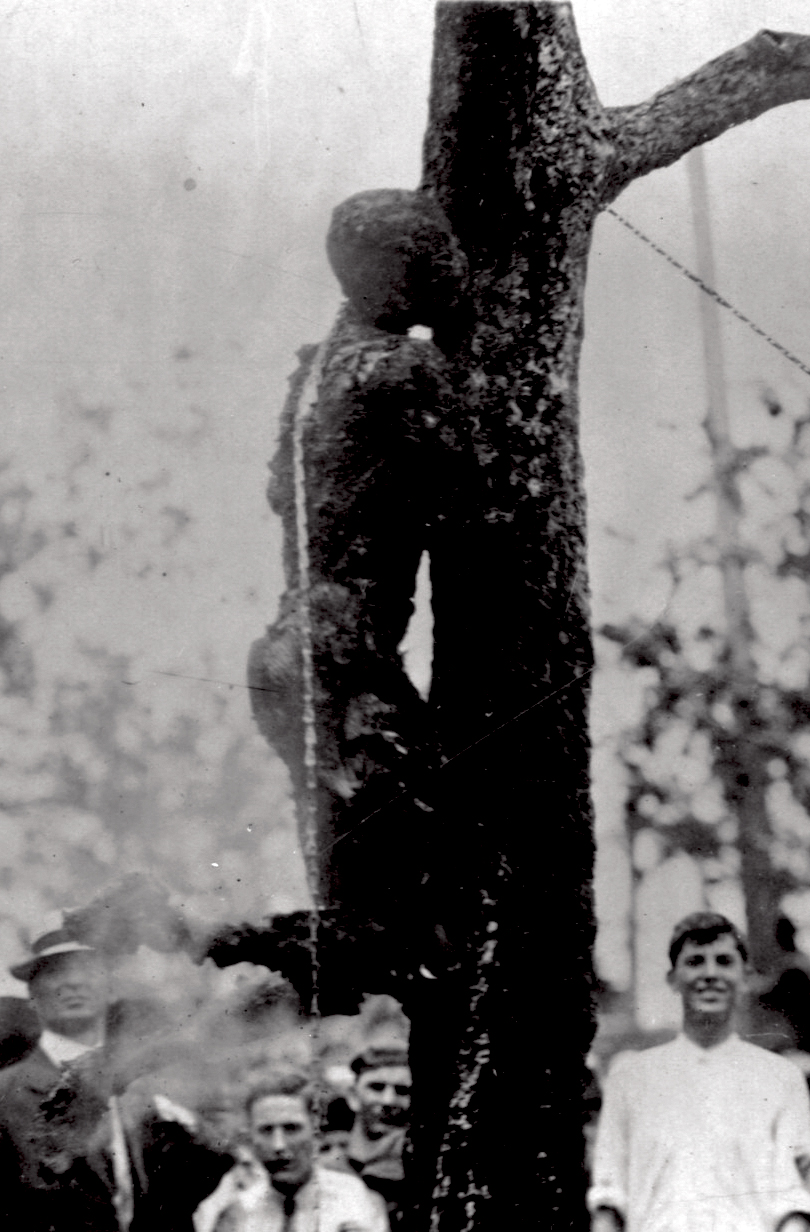
The lynching itself was exceptionally brutal and public. Members of the mob mutilated Washington’s body, including the removal of genitalia and digits, and repeatedly lowered and raised him above a bonfire. Photographers recorded the scene and prints were circulated; a professional photographer produced images that were later sold as postcards inside Waco, providing some of the rare visual documentation of a lynching while it was occurring. Witness reports say portions of his burned remains were taken away and traded as souvenirs. The event became widely known in the press as the “Waco horror.”
Local support for the lynching contrasted with outrage in many parts of the nation. Newspapers outside central Texas condemned the spectacle, and civil rights organizations used the incident to press for legal and social change. The National Association for the Advancement of Colored People (NAACP) dispatched investigator Elisabeth Freeman to collect testimony and details despite local reluctance to discuss the riot. NAACP leaders, including W. E. B. Du Bois, published a report in The Crisis that included graphic photographs of Washington’s charred body and argued that lynching was barbarous and a national scandal. The NAACP made the case that such incidents demanded federal as well as local remedies.
Image gallery
10 Images


Context, reaction and legacy
The lynching occurred during the Jim Crow era when extrajudicial killings of black men were used to enforce racial hierarchies and terrorize African American communities. In Waco, which had presented itself as a modern and progressive city, the massacre exposed deep racial divisions and the willingness of segments of the white populace — including some officials — to tolerate mob violence. Even as many local voices defended or downplayed the event, national attention helped shift public opinion: the spectacle and the post-event distribution of images contributed to framing lynching as an unacceptable brutality rather than a form of communal justice.
- Investigation: The NAACP’s inquiry and published evidence highlighted procedural failures and societal complicity; law enforcement conduct and courtroom security drew criticism.
- Media and imagery: Photographs and postcards amplified the incident’s reach and shocked distant audiences; contemporary reporters noted the role of printed images in shaping outrage.
- Public memory: The event left a lasting mark on Waco’s reputation; civic debate about how to remember the killing resumed repeatedly across the twentieth and twenty-first centuries.
- Commemoration attempts: Proposals for monuments and public acknowledgement surfaced in the 1990s and 2000s but faced local resistance, and efforts at reconciliation have been uneven.
Historians view the lynching of Jesse Washington as a crucial episode in the national struggle against lynching and racial violence. It illustrated how spectacle, photography, and organized protest could combine to change public perceptions and strengthen anti-lynching campaigns. At the same time, the event underscored the limits of local accountability during the Jim Crow period and the long challenges communities face in confronting painful episodes from their past. For further contextual study see archived reports and the contemporary Crisis articles published by the NAACP, which examined the case and its broader implications for civil rights and federal anti-lynching legislation.
Relevant primary and secondary sources, official county records, and collections of contemporaneous journalism provide fuller detail and varying perspectives on the circumstances leading to Washington’s arrest, the conduct of the trial, the composition of the mob, and subsequent civic efforts at remembrance. Scholars continue to reassess the Waco case as part of a larger historical pattern of racialized violence and its enduring social consequences.
For more on specific aspects of the episode and its documentation, consult institutional archives and curated collections that preserve NAACP communications, local newspapers from 1916, and later historical treatments that explore the legal, cultural, and political ramifications of the lynching. Additional information and references are available through linked resources and historical repositories: case details, confession and evidence, trial reports, mob accounts, bonfire descriptions, post-lynching coverage, memorial proposals, and other curated materials at designated archives and research centers.
Questions and answers
Q: Who was Jesse Washington?
A: Jesse Washington was a teenage African American who worked on a farm in Robinson, Texas.
Q: What did he allegedly do?
A: He was accused of raping and killing Lucy Fryer, the wife of his white boss.
Q: How did people react to the event?
A: Over 10,000 people, including city officials and police, gathered to watch the attack. People enjoyed the attack, many children attended the event. Members of the mob removed his testicles, cut off his fingers, and hung him over a bonfire. Pictures of the event were taken by a professional photographer and printed as postcards in Waco. Lynching was supported by many Waco residents but not supported by newspapers around the United States.
Q: What action did NAACP take after receiving Freeman's report?
A: The National Association for the Advancement of Colored People (NAACP) hired Elisabeth Freeman to investigate and after receiving her report co-founder and editor W. E. B Du Bois published an in-depth report featuring photographs of Washington's burnt body in The Crisis magazine as part of their anti-lynching campaign.
Q: How did this event change people's view on lynching?
A: The media attention this event received made people become against lynching - it was seen as "barbarism" rather than an acceptable form of justice.
Q: What reputation did Waco gain after this incident?
A: After this incident Waco gained a reputation for racism despite being known as a modern and progressive city prior to it happening.
Q: Did any monuments get built for this event in later years?
A: In later years some Waco residents wanted to build a monument for this event but it didn't gain enough support from other members within the city so no monument got built
Related articles
Author
AlegsaOnline.com Lynching of Jesse Washington (Waco, Texas, 1916) Leandro Alegsa
URL: https://en.alegsaonline.com/art/60109