
Lorraine — historic region in northeastern France
Lorraine is a historic and former administrative region in northeastern France, now part of Grand Est. This article summarizes its geography, history, economy, major cities, and cultural legacy.

Overview
Lorraine (German: Lothringen) is a historic territory in the northeast of France. It was an administrative region until the 2016 territorial reform, when it became part of the larger Grand Est region. The area combines rolling plateaus, river valleys and low mountains and has long stood at the crossroads of French and German-speaking Europe. Its population was recorded at about 2.3 million people in 2012, concentrated in a handful of urban centres.

Image gallery
10 Images


Geography and main cities
Lorraine stretches from the Rhine-Meuse watershed toward the Vosges hills. Key urban centres include Metz (the historical capital), Nancy, and industrial towns such as Thionville. Other notable towns are Bar-le-Duc and Épinal. Population and economic activity are unevenly distributed: some river valleys and former mining zones are more densely settled than the uplands.
History and identity
The region has a complex history shaped by its position on the Franco-German frontier. Parts of Lorraine were independent duchies in the medieval period, later absorbed by the French crown. After the Franco-Prussian War (1870–71) significant portions, often referred to together with Alsace, passed to the German Empire and were returned to France after World War I. Lorraine again experienced occupation and contest during World War II. These shifts left a layered cultural identity visible in language, architecture and place names.
Economy and culture
Historically Lorraine was an industrial powerhouse: coal and iron mining and steelmaking dominated its economy from the 19th century until the late 20th-century decline of heavy industry. Today the economy is more diversified, with services, light manufacturing, logistics and agriculture. Culinary and cultural contributions remain prominent: the region is famous for specialties such as quiche Lorraine and for artistic movements centred in Nancy.
Administration and departments
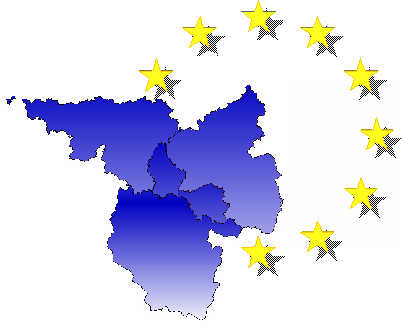
Before the 2016 administrative reorganisation, Lorraine comprised four departments: Meurthe-et-Moselle, Meuse, Vosges and Moselle. Metropolitan governance, transport links and cross-border cooperation with neighbouring countries continue to shape the area within the larger Grand Est framework.
Notable facts
- Metz and Nancy are cultural hubs with historic centres, cathedrals and museums; Metz hosts notable Romanesque and Gothic heritage.
- Lorraine's location has made it strategically important in European diplomacy and industry.
- Today it is valued for a mix of industrial heritage, natural landscapes and culinary traditions.
Related articles
Author
AlegsaOnline.com Lorraine — historic region in northeastern France Leandro Alegsa
URL: https://en.alegsaonline.com/art/59277