
Lot (river) — tributary of the Garonne in southwestern France
The Lot (Occitan: Olt) is a major river in southern France rising in the Massif Central and joining the Garonne; known for its limestone valleys, historic towns and varied river uses.
Overview
The Lot, called Olt in Occitan, is a prominent river in southern France. Rising in the highlands of the Massif Central, it follows a generally westward course before emptying into the Garonne. The river gave its name to the Lot department and has long shaped the landscape, economy and settlement pattern of the region. For mapped reference see coordinates.
Image gallery
9 Images


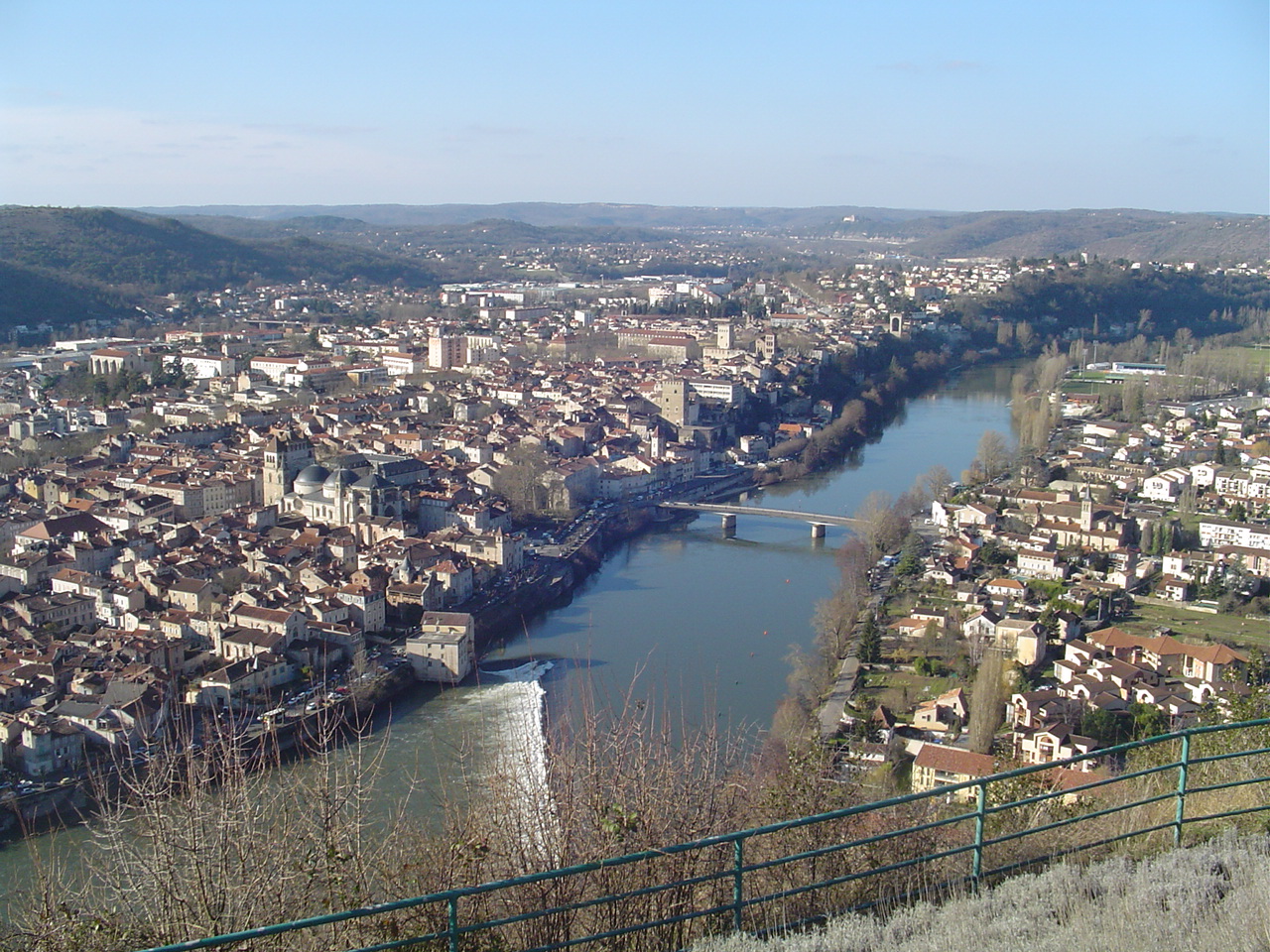


Course and tributaries
The Lot flows through a sequence of valleys and limestone gorges, cutting across several departments. Along its route it receives water from a number of smaller rivers, among the best known are the Célé and the Truyère. Typical river scenery includes steep calcareous cliffs, meandering reaches and fertile floodplains that support agriculture and vineyards in places.
Physical features and infrastructure
The channel alternates between shallow rocky stretches and broader, slower sections. Over the centuries engineers have constructed weirs, small dams and locks to regulate flow, supply water and generate hydroelectric power at several sites. Large-scale navigation for commercial traffic declined in the 19th and 20th centuries, but parts of the river remain usable for recreational boating and canoeing.
History and cultural importance
The Lot valley has evidence of human occupation from prehistoric times through the medieval period; towns and fortified villages grew on its banks to control crossings and trade. Cahors, one of the river's best-known towns, prospered as a medieval entrepôt. The river has inspired painters and writers and today many historic villages along the Lot are popular with visitors.
Ecology and recreation
The Lot supports freshwater fish, aquatic invertebrates and riparian vegetation typical of temperate rivers. Its varied habitats—riffles, pools and backwaters—are important for biodiversity. Recreational uses include angling, canoeing, walking along river trails and nature watching. Conservation efforts focus on water quality, habitat continuity and sustainable tourism.
Notable distinctions
- The Occitan name Olt reflects the river's cultural roots.
- The river lent its name to the administrative Lot department.
- See mapped location: coordinates, and regional context at southern France resources.
Questions and answers
Q: Where is the Lot river located?
A: The Lot river is located in southern France.
Q: What are the coordinates for the Lot river?
A: The coordinates for the Lot river are 44°18′52″N 0°20′04″E / 44.31444°N 0.33444°E / 44.31444; 0.33444.
Q: What is the Occitan name for the Lot river?
A: The Occitan name for the Lot river is Olt.
Q: What is the Lot department named after?
A: The Lot department is named after the Lot river.
Q: What type of river is the Lot?
A: The Lot is a tributary river.
Q: Which river is the Lot a tributary of?
A: The Lot is a tributary river of the Garonne river.
Q: In what direction does the Lot flow?
A: The text does not provide information on the direction in which the Lot flows.
Related articles
Author
AlegsaOnline.com Lot (river) — tributary of the Garonne in southwestern France Leandro Alegsa
URL: https://en.alegsaonline.com/art/59352
Sources
- services.sandre.eaufrance.fr : "Le Lot (O---0150)"
- hydro.eaufrance.fr : "Le Lot à Villeneuve-sur-Lot"
- geoportail.gouv.fr : "Source du Lot"
- geoportail.gouv.fr : "Confluence du Lot"
- services.sandre.eaufrance.fr : "Le Bramont (O7030500)"
- services.sandre.eaufrance.fr : "e Dourdou de Conques (O80-0400)"
- services.sandre.eaufrance.fr : "Riou Mort (O81-0400)"
- services.sandre.eaufrance.fr : "La Diège (O8160500)"
- services.sandre.eaufrance.fr : "Le Boudouyssou (O86-0400)"
- services.sandre.eaufrance.fr : "La Colagne (O71-0400)"
- services.sandre.eaufrance.fr : "Boralde de Saint-Chély d'Aubrac (O7240520)"
- services.sandre.eaufrance.fr : "Boralde Flaujaguèse (O7250500)"
- services.sandre.eaufrance.fr : "La Truyère (O7--0250)"
- services.sandre.eaufrance.fr : "Le Célé (O8--0250)"
- services.sandre.eaufrance.fr : "La Thèze (O85-0400)"