
Thionville: Moselle city on the left bank of the river near Luxembourg and Germany
Thionville is a commune in the Moselle department of northeastern France, on the Moselle River near the borders with Luxembourg and Germany. It has historic fortifications, industrial heritage and strong cross-border links.
Thionville (Luxembourgish: Diddenuewen, German: Diedenhofen) is a commune of the Moselle department in the Grand Est region. It lies on the left bank of the Moselle River in northeast France, close to the borders with Luxembourg and Germany. The town functions as a local administrative, commercial and transport hub and had a population of about 41,000 inhabitants in 2014. Its location has shaped much of its economy and culture, with regular flows of people and goods across nearby frontiers.
Image gallery
10 Images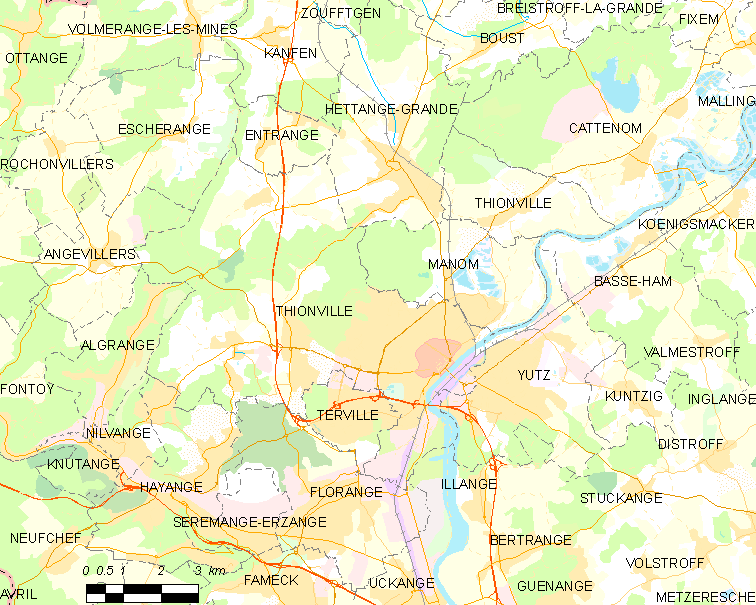


Geography and urban character
Thionville occupies a riverside position on the Moselle and includes a historic centre, residential neighborhoods, and former industrial zones. The riverfront and bridges mark the town visually and historically; streets near the old quarter contain civic buildings, shops and restaurants. As a mid-sized urban centre, Thionville serves surrounding smaller communes and acts as a node on regional road and rail corridors that link it to larger cities and neighbouring countries. The town's role as a regional centre also means a significant number of residents commute internationally for work, especially toward Luxembourg.
Notable features
- Historic core with church buildings and municipal architecture reflecting several centuries of development.
- Riverside and bridge crossings that have influenced trade and transport along the Moselle.
- Areas shaped by 19th–20th century industrial activity in the Lorraine region.
- Cross-border economic connections and a multilingual environment.
History and development
Thionville has medieval origins and over time acquired fortifications and civic institutions typical of towns on strategic routes. The town's location in Lorraine meant it was affected by the larger European balance of power: it was part of the territory contested between France and Germany in modern times and experienced changes of sovereignty in the late 19th and mid-20th centuries. Industrialization in the 19th and 20th centuries—linked to the iron and steel regional economy—left a visible imprint on the urban landscape and labor patterns.
Economy, culture and present-day importance
Today Thionville combines local services, light industry and commerce with a service economy shaped by cross-border labour markets. Cultural life reflects Franco-Germanic influences typical of Lorraine: cuisine, language use and traditional events show a blending of traditions. The town remains an important local centre for education, retail and transport, and continues to be influenced by its proximity to the wealthy Luxembourg labour market and close connections with neighbouring regions.
As a regional node on the Moselle and a place of historical significance, Thionville illustrates how borderland towns adapt to shifting economic and political landscapes while preserving a distinct local identity. For an overview of its administrative role and services, consult local municipal sources or regional guides about the city.
Related articles
Author
AlegsaOnline.com Thionville: Moselle city on the left bank of the river near Luxembourg and Germany Leandro Alegsa
URL: https://en.alegsaonline.com/art/99390