
Los Angeles River
A 51-mile river running through Los Angeles County, historically free-flowing but largely channelized; subject of ecological restoration, recreation, and urban planning efforts.
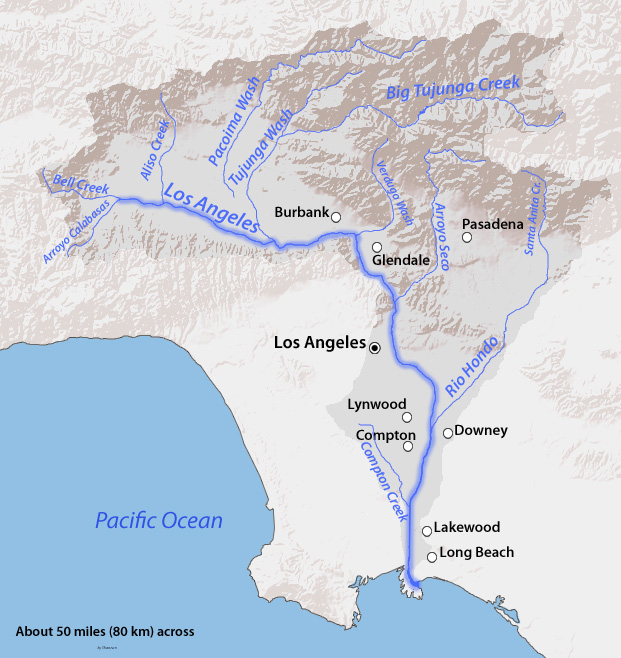
The Los Angeles River, commonly called the LA River, is a roughly 51-mile watercourse that crosses the Los Angeles County region of the United States. Its formal historic Spanish name is El Río de Nuestra Señora la Reina de los Ángeles de Porciúncula, sometimes shortened to the Porciúncula River. The river begins in the San Fernando Valley near Canoga Park and flows generally southeast and southwest to empty into the Pacific near the Long Beach waterfront and Los Angeles Harbor, a part of San Pedro Bay.
Image gallery
10 Images




Physical characteristics and watershed
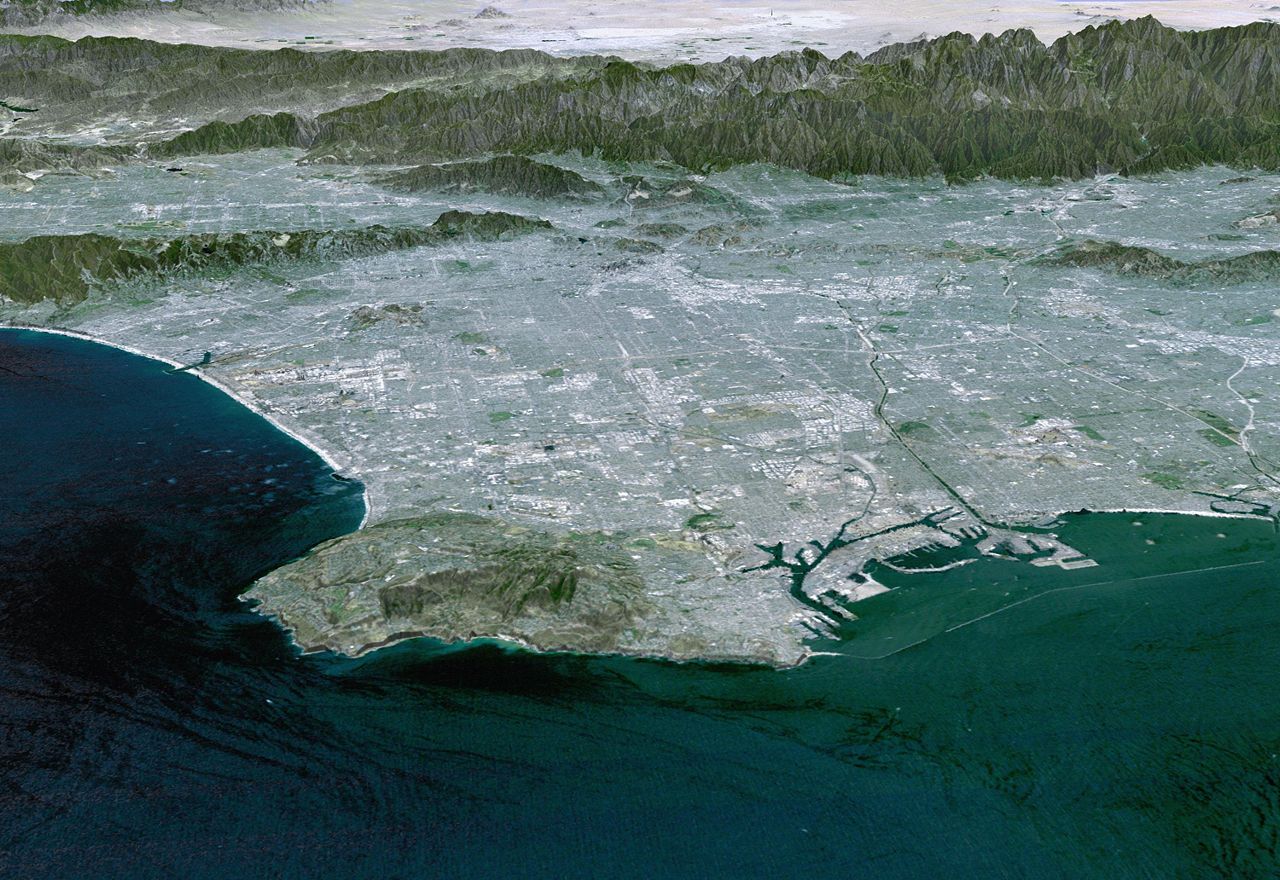
The LA River drains a basin surrounded by the San Gabriel Mountains, the Santa Monica Mountains and the Santa Susana Mountains, along with several smaller ranges and foothills. Many of its flows arrive from mountain-fed tributaries and urban runoff. Historically the river meandered across a broad floodplain, shifting course after heavy storms and depositing silt over wide areas. The modern channel, however, is constrained for flood control and follows a largely fixed path through a concrete-lined corridor known as the concrete channel.
History and human impact
Before urbanization the Los Angeles River was a seasonal, braided system that supported wetlands, riparian woodlands and abundant wildlife. Recurrent floods, which caused erosion and unpredictable changes to the landscape, prompted engineering responses in the early 20th century. The opening of the Los Angeles Aqueduct in 1913 shifted the city's primary water supply away from the river and accelerated urban development. As the basin urbanized, the river became heavily channelized to move stormwater quickly and protect lives and property.
Ecology, water quality and uses
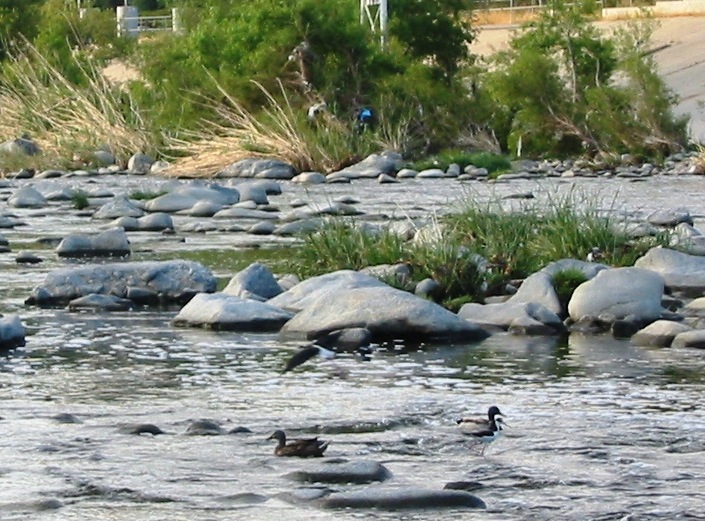
Because stormwater, treated wastewater and urban runoff dominate its flows, the Los Angeles River has long been considered polluted in many stretches. In drier months treated effluent, including effluent from facilities such as the Donald C. Tillman Water Reclamation Plant, supplies much of the baseflow. Despite water-quality challenges, stretches of the river support plants and animals adapted to urban riparian corridors and provide habitat connections across the basin.
Recreation, restoration and planning
In recent decades the LA River has become the focus of public interest for recreation, ecological restoration and urban design. City, county and nonprofit initiatives propose a range of interventions: restoring native vegetation, creating continuous bike and pedestrian greenways, improving water quality, and reintroducing more natural hydrologic patterns in selected reaches. Examples of commonly discussed actions include:
- Creating parklands and overlooks along the channel
- Installing stormwater capture and treatment systems
- Reconnecting side channels and wetlands to improve habitat
- Improving public access and multi-modal trails
Distinctive facts and significance
The LA River is distinctive for its mixture of engineered infrastructure and ongoing ambitions to restore ecological function within a large metropolitan region. Its long Spanish name reflects the region's colonial history, while the channelized reaches illustrate 20th-century flood control priorities. Today the river is a symbol of urban transformation: a corridor that carries floodwaters and treated flows, links neighborhoods, and prompts debates about environmental justice, open space, and sustainable water management in Southern California.
For more context and maps, see regional planning resources and watershed studies via river and municipal links preserved by public agencies and local organizations.
Questions and answers
Q: What is the Los Angeles River also called?
A: The Los Angeles River is also called El Rio De Nuestra Senora La Reina De Los Angeles De Porciuncula or Porciuncula River; Spanish: River of the Angels; informally LA River.
Q: How long is the river?
A: The Los Angeles River is about 51 miles (82 km) long.
Q: Where does the river flow to?
A: The Los Angeles River flows from Canoga Park south and west to its end at the Long Beach Harbor, in San Pedro Bay, part of the Pacific Ocean.
Q: What mountains are around it?
A: The basin of the Los Angeles River is rimmed by the San Gabriel Mountains, Santa Monica Mountains and Santa Susana Mountains, as well as several smaller mountain ranges.
Q: When did people first settle near it?
A: People first settled near the Los Angeles River around 1850s.
Q: What happened when the aqueduct opened in 1913?
A: With the opening of the Los Angeles Aqueduct in 1913,the river was no longer needed as a water source for drinking water and other uses.
Q: Is there any plan for restoration of this river ?
A: Yes , plans for restoration of this river are being discussed .
Related articles
Author
AlegsaOnline.com Los Angeles River Leandro Alegsa
URL: https://en.alegsaonline.com/art/59305
Sources
- geonames.usgs.gov : "USGS GNIS Detail: Los Angeles River"
- wsoweb.ladwp.com : "A Hundred or a Thousand Fold More Important"
- ioe.ucla.edu : "Views on the State and Beyond- The Los Angeles River: Restoration, (Re)Invention? The Politics of Nature in L.A."
- ladpw.org : "Los Angeles River Watershed"
- urbanedpartnership.org : "The Official Beginning of the Los Angeles River"
- seriss.com : "Friends Of Vast Industrial Concrete Kafkaesque Structures- Los Angeles River Photo Journal- Page 1"
- urbanedpartnership.org : "Sepulveda Basin and Dam"
- urbanedpartnership.org : "The Verdugo Wash Converges with the Los Angeles River"
- seriss.com : "Friends Of Vast Industrial Concrete Kafkaesque Structures- Los Angeles River Photo Journal- Page 5"
- urbanedpartnership.org : "Frogtown along the Los Angeles River"
- urbanedpartnership.org : "The Arroyo Seco Converges with the Los Angeles River"
- urbanedpartnership.org : "The Rio Hondo Converges with the Los Angeles River"
- urbanedpartnership.org : "The Los Angeles River: Reshaping the Urban Landscape"
- theriverproject.org : "Know Your Watershed: The Los Angeles River Watershed"
- urbanedpartnership.org : "The History of the Los Angeles River"