
Lockheed C-5 Galaxy: United States Strategic Airlifter
The Lockheed C-5 Galaxy is a very large strategic military transport used by the United States Air Force since 1970. It hauls oversized cargo, supports global deployments and was modernized into the C-5M.
The Lockheed C-5 Galaxy is a very large strategic cargo aircraft originally designed and built by Lockheed and later supported by Lockheed Martin. Operated by the United States Air Force, the C-5 first flew in 1968 and entered service in about 1970. It is one of the largest military transports produced in the West, notable for a very large cargo bay and the ability to move outsized and very heavy loads over intercontinental distances.
Image gallery
10 Images



Design and main characteristics
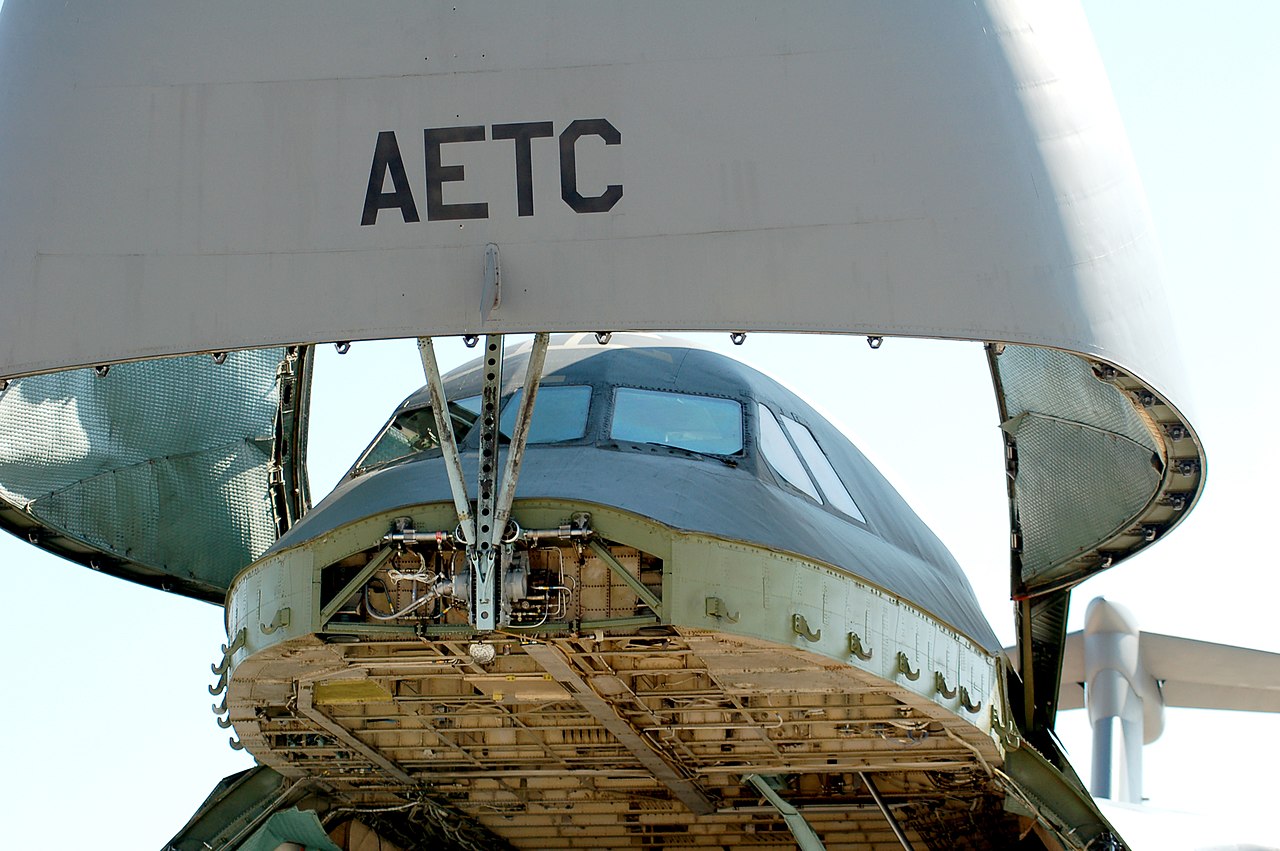
The Galaxy features a high-mounted wing, T-tail and a long, wide fuselage with both a forward nose that can tilt upward and a rear loading ramp to permit drive-on/drive-off loading. The landing gear can be lowered to "kneel" the fuselage, reducing the ramp angle for large vehicles. Its external dimensions are substantial: roughly 247 feet (75 m) long, about 65 feet (19 m) tall, with a wingspan near 222 feet (67 m), and a maximum takeoff weight in the range of 840,000 pounds (around 378,000 kg).
Capacity, crew and operations
- Cargo capability: the C-5 is built to carry outsized equipment that cannot be accommodated by smaller transports, including heavy armored vehicles such as tanks and large rotorcraft such as helicopters, as well as palletized freight and oversized modules.
- Crew and handling: typical flight crews include pilots, a flight engineer and loadmasters; the large cargo volume and ramp arrangements simplify loading and unloading of wheeled and tracked vehicles.
- Range and support: intended for long-range strategic airlift, the type can operate on intercontinental routes and has been flown with aerial refueling on long missions when required.
Development, modernization and variants
Conceived in the 1960s to provide global strategic airlift beyond the capacity of earlier transports, early C-5 production faced technical and cost challenges. Over its service life the type has undergone extensive modernization programs. Notably, programs commonly referenced as the Reliability Enhancement and Re-engining Program (RERP) and the Avionics Modernization Program (AMP) produced the modernized C-5M variant, which features newer engines, updated avionics and improved systems reliability and performance. These upgrades extended the aircraft's service life and reduced maintenance demands.
Service history and use
The C-5 has been a core strategic airlifter for the United States Air Force for decades, supporting major deployments, exercises and humanitarian relief missions worldwide. Its ability to move very large or heavy items in a single lift has made it valuable for rapid deployment of equipment and for disaster response when large cargo must be moved quickly. Throughout its operational history the fleet has experienced accidents and losses; several aircraft were lost in crashes.
Significance and comparison
The C-5 Galaxy is widely recognized as one of the largest military transport aircraft built in the West. It complements smaller tactical airlifters by providing extreme volume and payload capacity for strategic missions. While newer airlifters have been introduced, the Galaxy's combination of range, dual ramps and outsized cargo capability keeps it relevant for missions where single, very large lifts are required.
Related articles
Author
AlegsaOnline.com Lockheed C-5 Galaxy: United States Strategic Airlifter Leandro Alegsa
URL: https://en.alegsaonline.com/art/58774
Sources
- airforce-magazine.com : "2012 USAF Almanac, Fact and Figures."
- fas.org : Federation of American Scientists, C-5A/B Galaxy