
Lockheed Martin F-22 Raptor
A fifth-generation stealth air superiority fighter developed by Lockheed Martin. Known for stealth, supercruise, thrust vectoring and advanced sensor fusion; entered U.S. service in 2005 and remains a strategic asset.
Overview
The Lockheed Martin F-22 Raptor is a U.S.-built fifth-generation, single-seat, twin-engine fighter designed primarily for air superiority missions. Developed in the late 20th century under a competitive prototype program, the aircraft combines low observable (stealth) design, high sustained speed without afterburners (supercruise), exceptional maneuverability and an integrated avionics suite intended to increase situational awareness and survivability. The program was led by Lockheed Martin with a number of industry partners; for company information see Lockheed Martin. The prototype first flew in the early 1990s, and the type officially entered operational service with the United States Air Force in 2005, following development and testing phases documented at various milestones such as the first flight event referenced at first flight records.
Image gallery
10 Images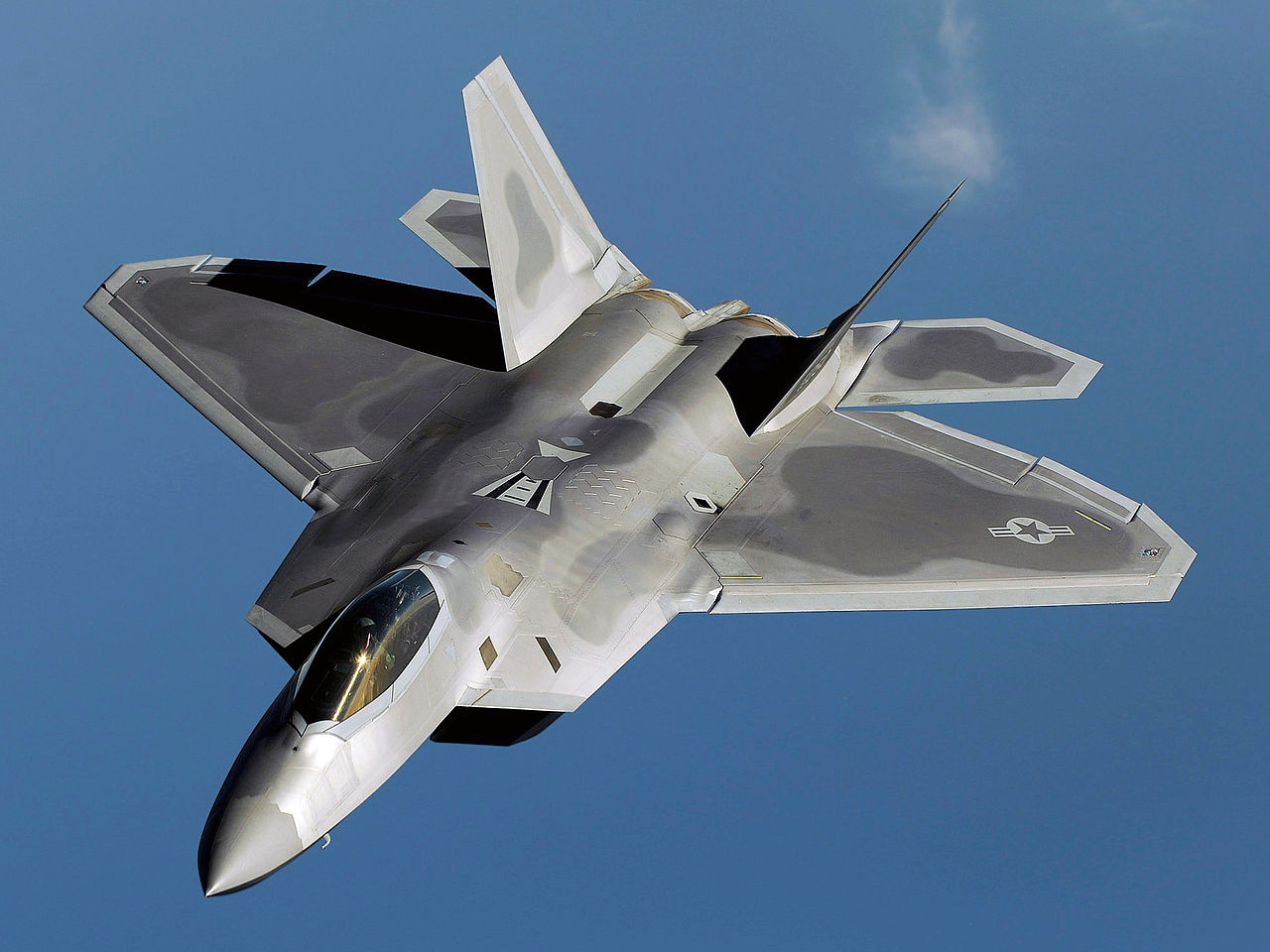




Design and key characteristics
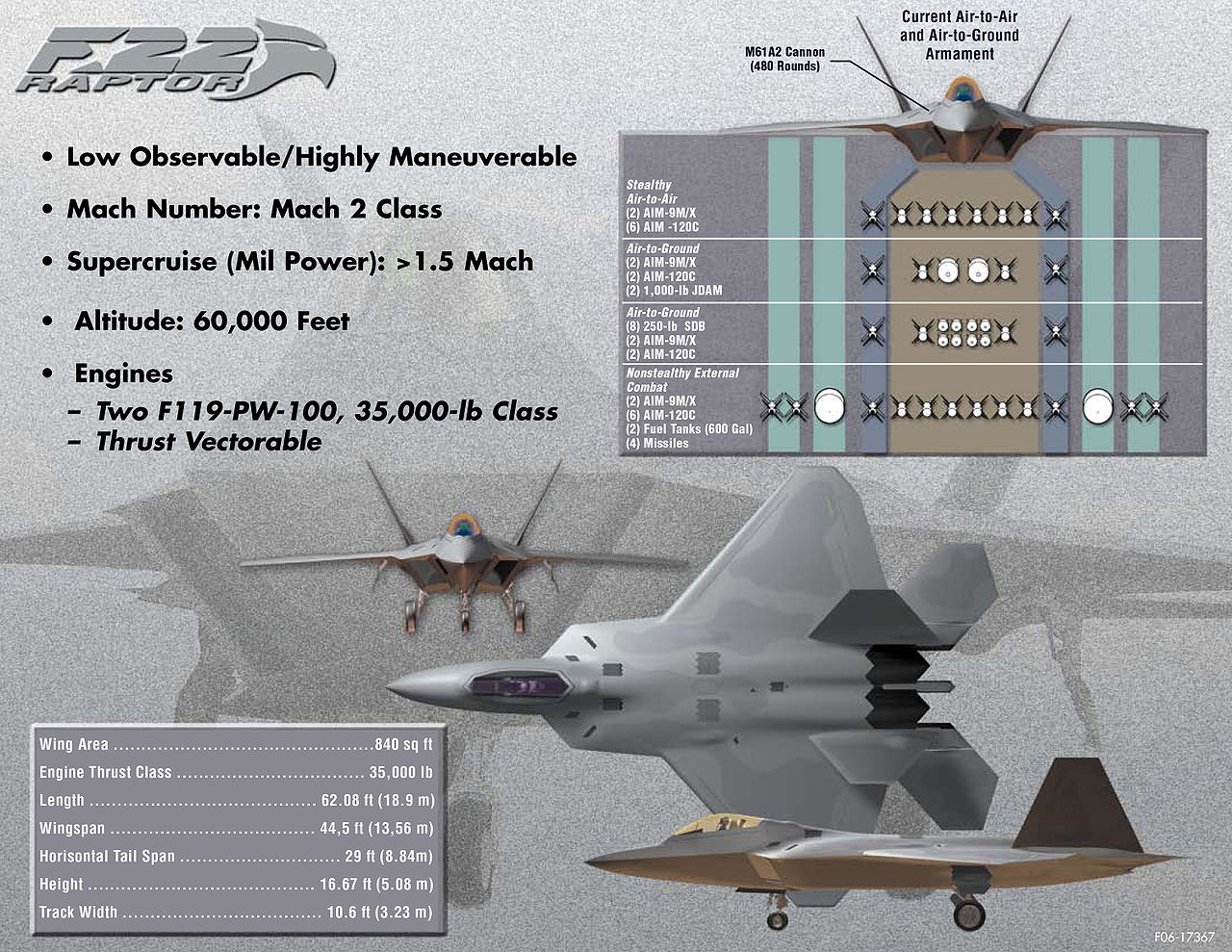
The F-22's configuration emphasizes radar cross-section reduction, internal carriage of weapons, and aerodynamic agility. Its external shape, radar-absorbent materials and careful management of panel alignment reduce detectability by opposing radar systems, a capability often summarized as stealth. The aircraft is powered by two high-performance turbofan engines with afterburners and two-dimensional thrust-vectoring nozzles that improve turning performance and post-stall handling. One of the Raptor's operational advantages is the ability to cruise at supersonic speeds without continuous afterburner use (supercruise), permitting rapid transits and engagement while conserving fuel.
Avionics, sensors and weapons
Central to the F-22's concept is its integrated sensor suite and information fusion, allowing the pilot to detect, track and prioritize threats more effectively than legacy fighters. The aircraft carries most of its armament internally to preserve stealth: typical internal loadouts include medium-range, radar-guided missiles and short-range infrared-guided missiles. For example, it has internal capacity for multiple AIM-120 AMRAAM medium-range missiles and AIM-9 Sidewinder short-range missiles, commonly listed among its standard complements; see references for missile systems such as AIM-120 / AIM-9. External pylons can be fitted for additional stores or fuel but at the cost of reduced low-observable characteristics.
Operational history and roles
Since entering service in 2005, the F-22 has been employed primarily in air dominance, interception and escort roles, with some deployments supporting strike and electronic attack missions when integrated into broader task forces. Its advanced sensors and communications allow it to serve as a force multiplier, sharing targeting information with other aircraft and ground units. The Raptor has seen operational deployments to various theaters as part of forward presence and training exercises, demonstrating airspace control, deterrence and advanced tactics against both legacy and more modern threats.
Production, export policy and limitations
The F-22 program was curtailed from initially larger planned production quantities because of high unit cost, changing strategic priorities and evolving requirements. Production ended earlier than originally planned, leaving a relatively small fleet compared with previous fighter generations. In addition, national policy has restricted the export of the F-22 to protect sensitive technologies and classified systems, a measure that has kept the type exclusive to the U.S. inventory. Costly sustainment and modernization needs also influence long-term fleet availability and upgrades.
Legacy and notable distinctions
The Raptor is often cited as one of the first operational embodiments of fifth-generation fighter principles—combining stealth, integrated avionics, sensor fusion, supercruise and superior agility. Its development influenced subsequent advanced fighters around the world and informed design trade-offs between stealth, range, payload and cost. While no longer in mass production, the F-22 remains a benchmark for air superiority platforms and a core element of U.S. air combat strategy; official milestones and capability summaries appear in many defense and manufacturer documents, including service entry notes at service entry.
- Key performance traits: stealth shaping, supercruise, thrust-vectoring, integrated sensor fusion.
- Typical internal armament: radar-guided medium-range missiles and infrared short-range missiles (AIM-series).
- Policy notes: export restricted and production limited due to cost and protection of technology.
For further technical summaries and program history, consult official defense and manufacturer publications, and archival accounts of the prototype evaluations and entry-to-service timeline (first flight resources, service milestones, manufacturer pages).
Related articles
Author
AlegsaOnline.com Lockheed Martin F-22 Raptor Leandro Alegsa
URL: https://en.alegsaonline.com/art/58776