
Liverworts: small non‑vascular plants (Marchantiophyta)
Liverworts are simple, non‑vascular plants of the Marchantiophyta, often dominant in damp habitats. This article covers their form, life cycle, evolution, ecology, cultural history and distinguishing features.
Liverworts are a diverse group of small, non‑vascular plants traditionally included with mosses and hornworts among the bryophytes. Their leafy or flattened thalloid bodies make them easy to miss, yet they occur in many damp environments worldwide. As photosynthetic organisms without specialized water‑conducting tissues, liverworts typically inhabit moist soils, rocks, tree bark and other sheltered surfaces where water is regularly available. See general information on plants for context.
Image gallery
10 Images


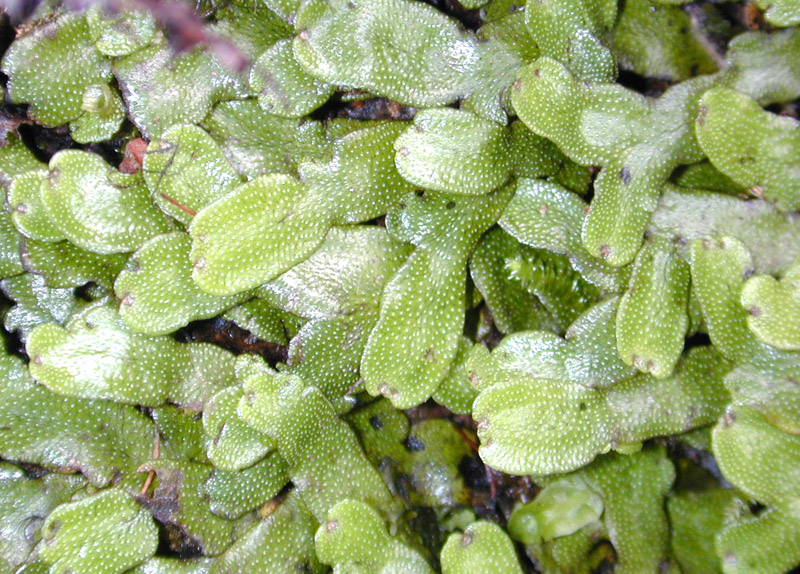


Form and life cycle
Two broad growth forms exist: thalloid liverworts, which form flat, often lobed sheets of tissue, and leafy liverworts, with stems bearing overlapping leaf‑like scales. The dominant phase of the life cycle is the gametophyte (the green, photosynthetic individual), while the sporophyte is usually small and dependent on the gametophyte. Sexual reproduction requires water because motile sperm swim to eggs, and many species also reproduce asexually by producing gemmae—tiny clonal bodies dispersed by raindrops.
Ecology and practical roles
Liverworts are important in ecosystem processes despite their small size. They help retain moisture, stabilize soils, and contribute to the earliest stages of substrate colonization on bare rock and disturbed ground. Some species are indicators of long‑term humidity or habitat continuity. They are found near springs and streams and in consistently misty locations such as cloud forests; for example, they often favour a spring, a riverbank, or places with frequent fog.
Origins and classification
Researchers consider liverworts among the most ancient lineages of land plants. Molecular studies, including work on mitochondrial DNA, suggest liverworts split early from other bryophyte lineages. This idea places them as ancestral to or sister to groups such as mosses and hornworts, with more complex vascular plants diverging later. Traditionally grouped with other bryophytes, liverworts are now commonly recognized as the division Marchantiophyta, although aspects of their taxonomy remain under active study in recent classifications and phylogenetic analyses.
Human uses and cultural history
The common name "liverwort" reflects a medieval belief system that linked plant shape to medicinal use. Under the doctrine of signatures, the lobed thallus of some species such as Marchantia was associated with the liver and used in traditional remedies—an idea dating back to the Middle Ages. Modern science does not support the notion that liverworts cure liver disease, though some species contain biologically active compounds that are studied for ecological and biochemical interest.
Distinguishing facts and examples
- Liverworts lack true vascular tissue, so they depend on surface water films and humidity for reproduction and hydration.
- They exhibit two major body plans: thalloid and leafy, with genera such as Marchantia, Riccia and many leafy Jungermanniales representing common forms.
- Although small, they are globally distributed and often abundant in moist microhabitats; their early divergence makes them significant for understanding plant evolution and the transition of life onto land. See notes on bryophyte evolution and related groups: bryophyte origins, vascular plant evolution.
For introductory overviews and taxonomy resources consult general plant references and dedicated bryophyte treatments. Additional background is available from specialist sources on non‑vascular plants and phylogenetic methods. Related topics and further reading: plants overview, molecular evidence, modern taxonomy.
Related articles
Author
AlegsaOnline.com Liverworts: small non‑vascular plants (Marchantiophyta) Leandro Alegsa
URL: https://en.alegsaonline.com/art/58612