
Long pepper (Piper longum) — botanical profile, history and uses
Long pepper (Piper longum) is a flowering vine in the Piperaceae family whose dried fruit is used as a spicy condiment and in traditional medicine across South and Southeast Asia.
Overview
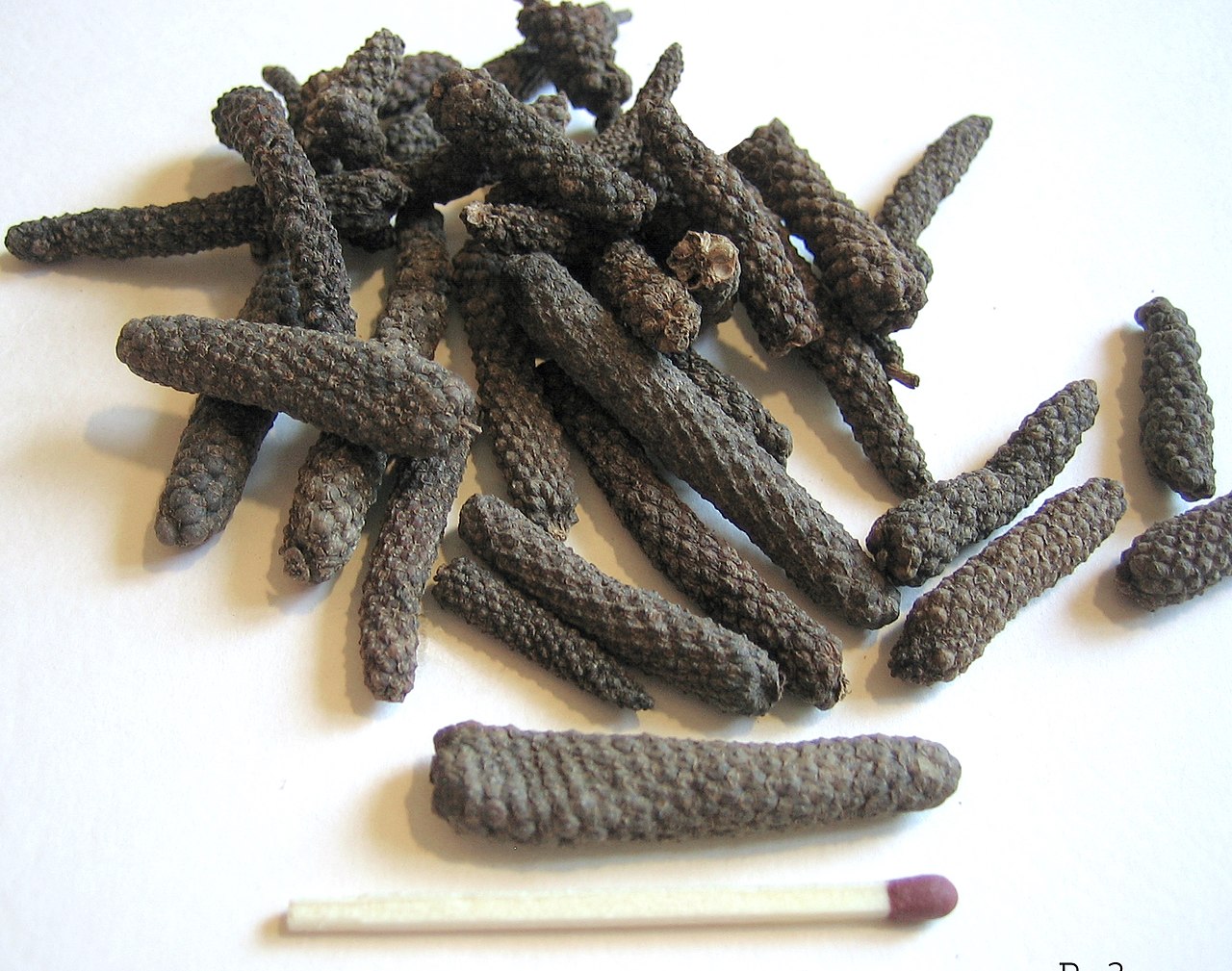
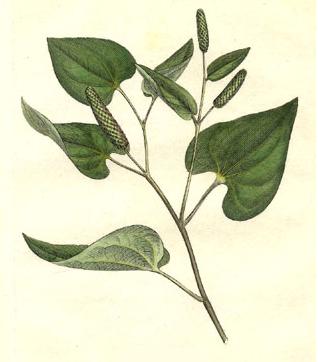
Long pepper, Piper longum, is a climbing perennial in the family Piperaceae. It produces slender, catkin-like fruiting spikes made up of numerous tiny drupes. When dried these spikes form a compact, peppery cluster commonly sold as a spice. Its flavor is hotter and more complex than common black pepper, with sweet, woody and slightly floral notes.
Image gallery
6 Images


Botany and cultivation
The plant is a vine that prefers tropical, humid climates and grows attached to supports or trees. The fruiting spikes are harvested when mature and dried for storage. Cultivation practices are similar to those for other pepper relatives, with attention to soil drainage and shade. For practical details on growing and propagation see cultivation resources.
Characteristics
- Form: elongated, cylindrical spike of tightly packed berries.
- Aroma and taste: pungent and warming, often described as sweeter and more aromatic than Piper nigrum.
- Common forms: whole dried spikes, ground powder, or incorporated into blends.
History and cultural significance
Long pepper has a long history of culinary and medicinal use across South Asia, the Indian subcontinent and parts of Southeast Asia. Known as pippali in Sanskrit, it appears in ancient Ayurvedic texts and was traded to the Mediterranean in antiquity. Its popularity in Europe declined after the spread of easier-to-handle black pepper, though it remained important in some regional cuisines. For historical references see historical sources.
Uses and distinctions
In cooking, long pepper is used whole in braises, pickles and spice mixes or ground into sauces where a warmer, more complex heat is desired. It is different from cubeb (Piper cubeba) and the Javanese long pepper (Piper retrofractum) in appearance and flavor; consult comparative guides for identification tips. In traditional medicine it has been used for digestive and respiratory complaints, though modern clinical evidence is limited; see summaries at medical summaries.
Collectors and chefs value long pepper for its unique profile and historical resonance; it remains a niche but notable spice in global culinary and botanical literature. For general background and botanical data consult Piperaceae references and specialised cultivation or culinary sources.
Related articles
Author
AlegsaOnline.com Long pepper (Piper longum) — botanical profile, history and uses Leandro Alegsa
URL: https://en.alegsaonline.com/art/59103