
Little Rock Nine — 1957 Integration of Little Rock Central High School
Nine African American students who integrated Little Rock Central High School in 1957, challenging segregation and prompting federal intervention; a landmark moment in the U.S. Civil Rights Movement.
Overview
The Little Rock Nine refers to a group of nine African American high school students who enrolled at Little Rock Central High School in Arkansas in 1957, seeking to attend a previously all-white public school after the U.S. Supreme Court's desegregation rulings. Their effort followed the implementation orders of Brown v. Board of Education II, which directed schools to desegregate. The attempt to integrate the school produced a national crisis when state authorities resisted federal court orders and violent crowds opposed the students' attendance.
Image gallery
10 Images




Members
- Carlotta Walls LaNier
- Elizabeth Eckford
- Ernest Green
- Gloria Ray Karlmark
- Melba Pattillo Beals
- Minnijean Brown
- Thelma Mothershed Wair
- Jefferson Thomas
- Terrence Roberts
Sequence of events
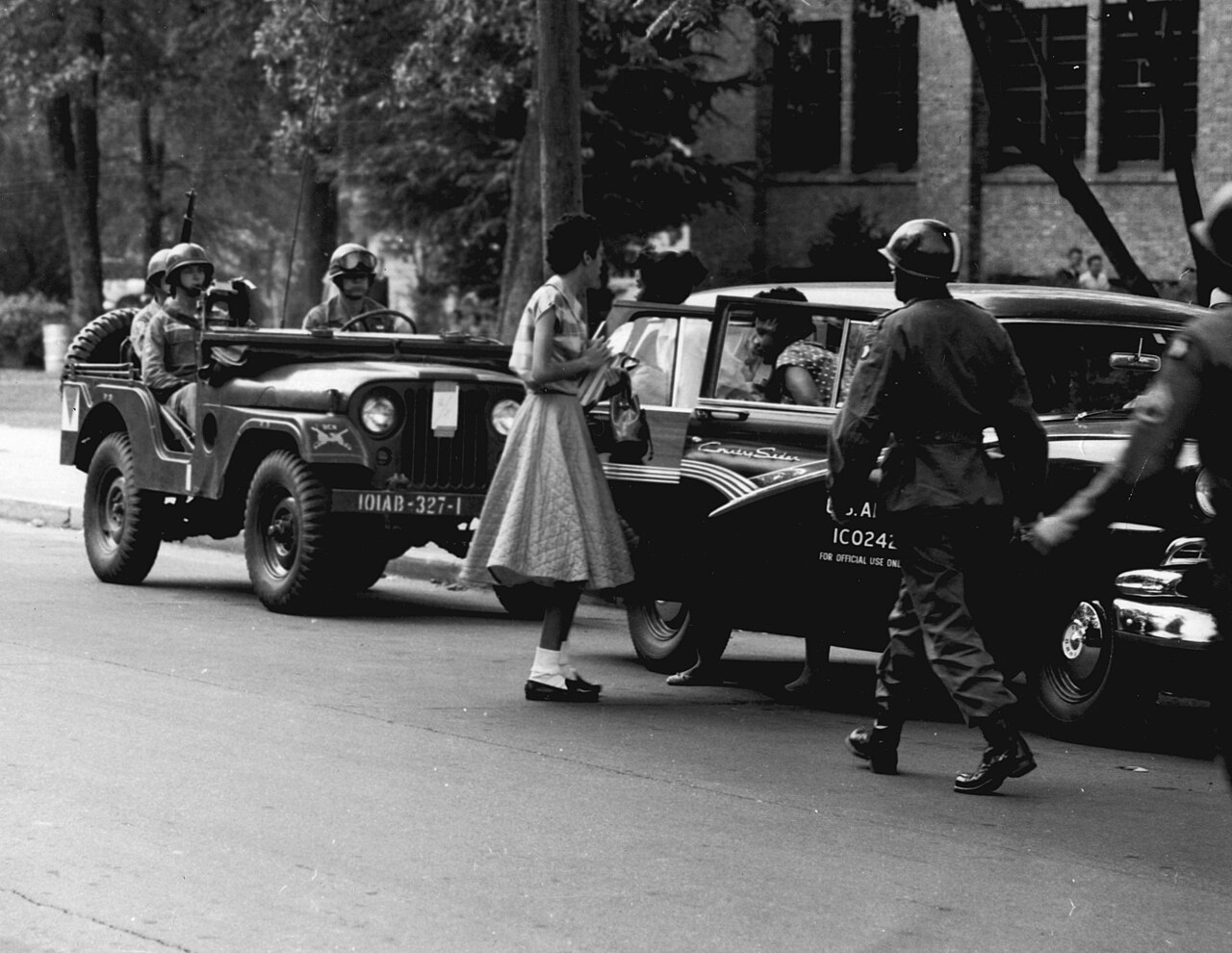
When the students attempted to enter Little Rock Central High School, they were blocked by the Arkansas National Guard at the direction of Governor Orval Faubus, who claimed his action would preserve order at the segregated institution. The standoff drew national attention. In response to repeated defiance of federal court orders, President Dwight D. Eisenhower took the extraordinary step of intervening with federal authority, sending federal troops and federalizing the National Guard so the students could safely attend classes. The deployment included elements of the U.S. Army to enforce the rule of law and uphold the court-mandated desegregation.
Significance and impact
The events in Little Rock became a defining episode of the larger Civil Rights Movement. The crisis tested the federal government’s willingness to enforce constitutional rights against state resistance and demonstrated the limits of "separate but equal" educational policies. The experience of the nine students, including the first African American graduate from that school, highlighted both the personal costs of desegregation and the courage required to challenge entrenched segregation.
Legacy and notable facts
Little Rock Central High School is preserved in historical memory and scholarship as a key site of desegregation; it is often referenced when discussing school integration and civil rights. Visitors and researchers consult archival materials and interpretive centers associated with the school and the episode. For background on the school itself see Little Rock Central High School, and for context on segregation policies referenced during the crisis see segregated school discussions. Details of federal enforcement actions appear in accounts that reference the use of federal troops and enforcement mechanisms such as those described at federal military intervention.
Further reading
Scholarly accounts, memoirs by the participants, and documentary sources provide a fuller picture of the legal battles, personal experiences, and long-term consequences of the Little Rock integration effort. The episode remains a widely studied example of constitutional enforcement, social change, and the political tensions of the 1950s.
Related articles
Author
AlegsaOnline.com Little Rock Nine — 1957 Integration of Little Rock Central High School Leandro Alegsa
URL: https://en.alegsaonline.com/art/58522