
Civil Rights Movement (United States)
Mid-20th-century movement in the United States that challenged racial segregation and discrimination, using legal action, mass nonviolent protest and political advocacy to secure equal rights for African Americans.
The Civil Rights Movement was a broad social movement in the United States that sought to end legalized racial segregation and gain full citizenship and equal treatment for African Americans. Emerging most visibly in the 1950s and 1960s, the movement combined courtroom challenges, grassroots organizing, electoral politics and public demonstration to press for change.
Image gallery
10 Images

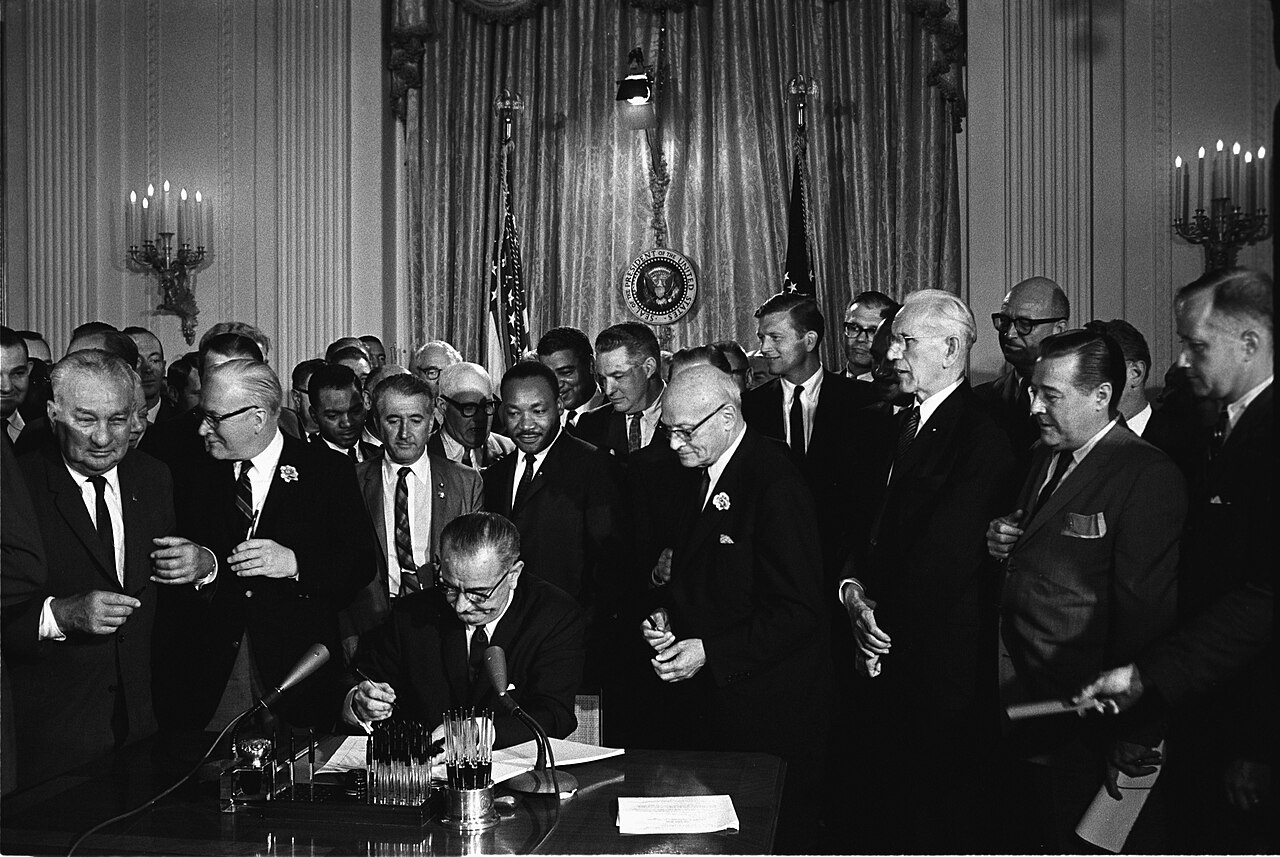


Methods and tactics
Many organizations and leaders emphasized nonviolent action and civil disobedience—deliberately and peacefully breaking laws considered unjust. Mass protests, economic pressure such as boycotts, direct actions like sit-ins, and large-scale marches were common. Legal challenges and voter-registration drives worked alongside street demonstrations to challenge discriminatory practices.
Participants and organization
The movement was not monolithic: it included clergy, students, labor unions, local community groups and national organizations. Key figures and groups attracted national attention, while local activists sustained long campaigns. People of many races and religions took part, and the movement received varied political and financial backing from unions and sympathetic white politicians, as well as from presidents such as Lyndon B. Johnson.
Confrontation and alternatives
Participants often faced harassment and violence from local authorities and mobs; clashes with the police and attacks by racist opponents were frequent risks. While many leaders promoted nonviolence, other strands—most notably the Black Power movement—argued for self-determination, pride and, in some cases, more confrontational tactics. These differences reflect a spectrum of strategies for achieving civil rights.
Achievements and legacy
The movement helped produce landmark legal and legislative changes. Court rulings and national campaigns paved the way for major statutes such as the Civil Rights Act and the Voting Rights Act, and broader enforcement of constitutional protections embodied in the Constitution. Activists also supported passage of civil reforms and amendments and pushed for federal laws and amendments that removed barriers to voting and public accommodation. Beyond laws, the movement shifted public opinion and opened pathways to political representation and social mobility for African Americans.
Significance and continuing debates
Historians and citizens view the Civil Rights Movement as a defining chapter in American history: a campaign that combined moral argument, legal strategy and mass action. Its successes did not end racial inequality, and debates continue about strategies, the balance between reform and transformation, and the movement's lessons for other social causes. The movement's memory is invoked in discussions of racial justice, voting rights and civil liberties today.
Further reading: accounts of specific campaigns and leaders, as well as archival collections and oral histories, provide deeper context about tactics, local struggles and national outcomes. For additional introductions and timelines, see resources linked here and elsewhere: overview, national context, nonviolent philosophy, major protests, civil disobedience, organizers, economic strategies, direct action, law enforcement, opposition, alternate currents, rights and claims, diverse participants, faith communities, political alliances, allied politicians, presidential role, legislative milestones, constitutional foundations.
Questions and answers
Q: What was the Civil Rights Movement?
A: The Civil Rights Movement was a social movement in the United States that aimed to gain equal rights for African Americans.
Q: How did activists of the Civil Rights Movement protest?
A: Activists of the Civil Rights Movement used strategies like boycotts, sit-ins, and protest marches to peacefully demonstrate against unfair laws.
Q: Who were some of the people involved in the Civil Rights Movement?
A: The Civil Rights Movement was made up of many different people and groups, including African-Americans, labor unions, religious groups, and some white politicians such as Lyndon B. Johnson.
Q: Did activists ever fight back when attacked during protests?
A: No, even when police or racist white people would attack them during protests, activists never fought back but instead continued to peacefully demonstrate.
Q: What did the Black Power movement believe?
A: The Black Power movement believed black people should demand their civil rights and force white leaders to give them those rights.
Q: How successful was the Civil Rights Movement?
A: The Civil Rights Movement was very successful; it helped get five federal laws and two amendments to the Constitution passed which officially protected African Americans' rights and also helped change many white people's attitudes about how black people were treated and what rights they deserved.
Related articles
Author
AlegsaOnline.com Civil Rights Movement (United States) Leandro Alegsa
URL: https://en.alegsaonline.com/art/20602
Sources
- links.jstor.org : The Decolonization of Portuguese Africa: Metropolitan Revolution and the Dissolution of Empire by Norrie MacQueen - Mozambique since Independence: Confronting Leviathan by Margaret Hall, Tom Young - Author of Review: Stuart A. Notholt African Affairs, Vol. 97, No. 387 (Apr., 1998), pp. 276-278
- moh.tie.net : "The American Indian Movement"
- gop.com : "Republican Party 2004 Platform"
- newsroom.lds.org : "LDS Newsroom – Same-Gender Attraction"
- reclaimamerica.org : "SBC Officially Opposes "Homosexual Marriage"
- splcenter.org : "18 Anti-Gay Groups and Their Propaganda"