
Line Islands (central Pacific archipelago)
A chain of coral atolls and low islands near the equator in the central Pacific, split between the United States and Kiribati; notable for remote wildlife habitats, large atolls, and unique time-zone history.
The Line Islands are a scattered chain of coral atolls and low islands in the central Pacific Ocean, located close to the equator. The group stretches across a broad area of open ocean and includes both permanently inhabited islands and many remote, uninhabited atolls. They lie in what is generally described as the central Pacific and sit near the equatorial belt, giving the chain a tropical maritime climate.
Image gallery
2 Images
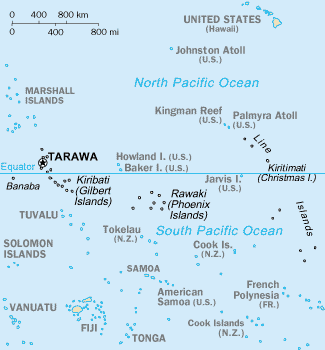
Geography and islands
The archipelago consists of high reef islets, atolls with lagoons, and submerged reefs. The largest landmass in the chain is Kiritimati (sometimes called Christmas Island), while other islands are tiny and often ringed by coral. Several islands are low and composed largely of sand and coral rubble, making them vulnerable to storm surge and sea-level rise.
- United States territory: Jarvis Island (Jarvis), Kingman Reef (Kingman Reef) and Palmyra Atoll. These are administered as unincorporated U.S. territories or as protected areas under U.S. conservation programs.
- Kiribati: The Republic of Kiribati includes several Line Islands such as Kiritimati, Tabuaeran (Tabuaeran), Washington Island, Malden Island, Caroline Island, Flint Island, Vostok Island, and Starbuck Island (Starbuck Island).
- The islands are often grouped geographically into northern, central and southern clusters for navigation and ecological description.
History and administration
European and American visitors began charting the Line Islands in the 18th and 19th centuries. During the 19th and 20th centuries various islands were claimed or administered by the United States and the United Kingdom; most of the islands that are now part of Kiribati were administered by Britain before Kiribati gained independence. Control and administration have influenced local use — from copra production and small settlements to strategic uses in the 20th century, including military and scientific stations on some islands.
Ecology and conservation
Many Line Islands are important breeding grounds for seabirds, turtles, and other marine life. Their surrounding waters host coral reefs with diverse fish and invertebrate communities. Because several islands are uninhabited and remote, they provide relatively undisturbed habitat, and portions of the chain have been set aside as wildlife refuges or marine managed areas by the responsible governments. Threats include invasive species, overfishing in surrounding waters, and the long-term impacts of climate change and sea-level rise on low-lying atolls.
Notable facts and significance
Kiritimati is among the world’s largest coral atolls by land area, and the Line Islands have played a role in navigation, telecommunication and national boundary decisions. In the 1990s Kiribati adjusted the international date line through its territory so its easternmost islands share the same calendar day as the rest of the country; this change placed some Line Islands among the earliest time zones on Earth. The contrast between inhabited islands with communities and services and the many isolated, uninhabited atolls makes the Line Islands an instructive example of Pacific island diversity and conservation challenges.
For further reading, government and conservation organizations maintain summaries and management plans for individual islands and for the surrounding marine areas. These documents cover wildlife surveys, legal status, and ongoing conservation efforts.
Related articles
Author
AlegsaOnline.com Line Islands (central Pacific archipelago) Leandro Alegsa
URL: https://en.alegsaonline.com/art/58238