
Linn County, Iowa
Linn County in eastern Iowa, founded in 1839 and named for Senator Lewis F. Linn. Its county seat is Cedar Rapids; the county combines a major urban center with surrounding towns, agriculture and river valleys.
Linn County is located in the eastern part of the state of Iowa in the Midwestern United States. According to the 2010 census the county had a population of 211,226, making it the second-most populous county in Iowa. The administrative center and largest city is the county seat, county seat Cedar Rapids, which anchors a metropolitan area of smaller cities and townships. The county was organized on January 15, 1839, and was named for U.S. Senator Lewis F. Linn, a nineteenth-century advocate of western settlement.
Image gallery
3 Images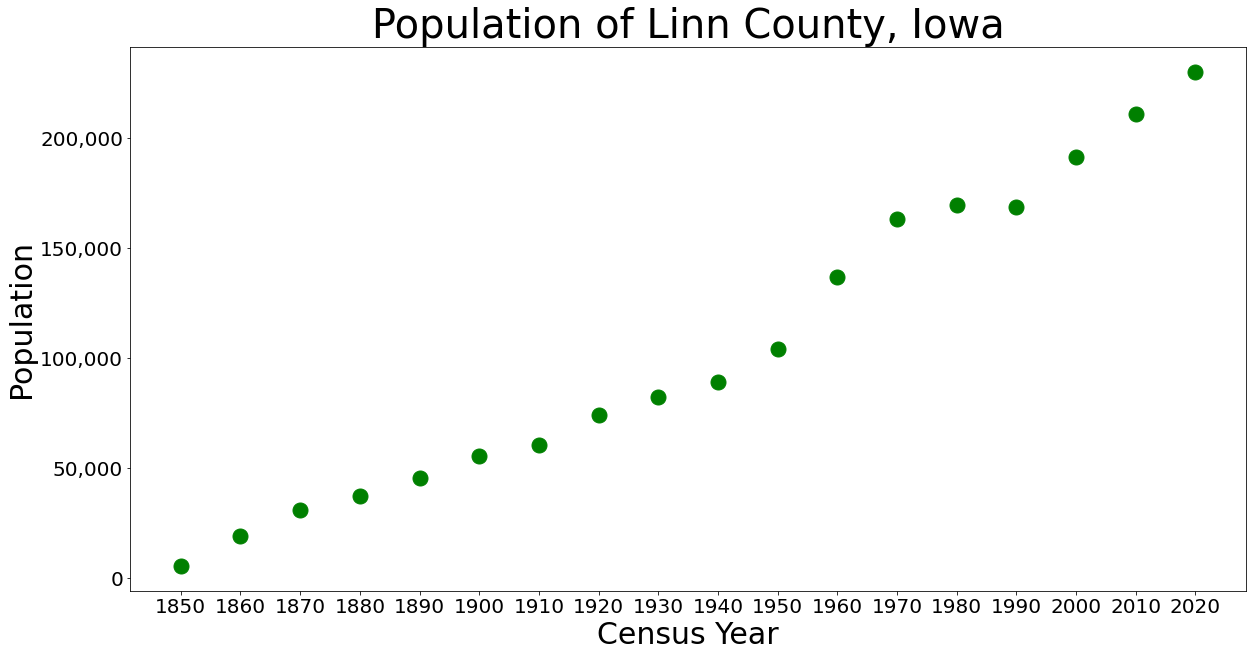


Geography and environment
Linn County's terrain combines river valleys, rolling farmland and urbanized corridors. The Cedar River runs through the county and through Cedar Rapids, shaping local floodplains, parks and transportation routes. Major highways provide regional connections and support commuting and freight movement. Public and recreational lands include a network of trails, conservation areas and riverfront greenways that serve residents and visitors.
History and development
Established in the early period of Iowa's territorial organization, Linn County developed as a trading and milling center where river access and later railroads encouraged settlement. Cedar Rapids grew as an industrial and cultural hub; smaller towns surrounding it expanded with agriculture and local manufacturing. Over time the county has mixed urban growth with retained agricultural acreage and small-town character.
Economy, education and culture
The county economy blends manufacturing, services, education, health care and agriculture. Higher-education institutions and community colleges provide workforce training and cultural programming. Cedar Rapids supports museums, performance venues and regional festivals; local collections include works by regional artists and institutions that reflect the area's immigrant heritages. The mix of employers and educational options helps sustain the metropolitan labor market.
Communities and government
- Cedar Rapids (county seat)
- Marion
- Hiawatha
- Mount Vernon
- Lisbon
- Center Point
County government is administered from the courthouse in Cedar Rapids and follows the typical Iowa county structure with elected supervisors and elected officials responsible for public safety, roads, public health and records.
Notable facts and challenges
Linn County is regionally significant as a population and economic center in eastern Iowa. It has faced challenges associated with urban growth and river flooding; the Cedar River has caused notable flood events that prompted infrastructure improvements and resilience planning. The county's combination of urban amenities and surrounding rural landscapes makes it a focal point for culture, commerce and outdoor recreation in the region.
For general information and government services consult local resources or the county's official pages: Linn County information, state context at Iowa state resources, metropolitan details at Cedar Rapids, or census data at the 2010 census. Historical references include founding and namesake material on Lewis F. Linn, and broader regional guides available through civic and tourism sites: county seat materials and additional regional portals Iowa and state.
Related articles
Author
AlegsaOnline.com Linn County, Iowa Leandro Alegsa
URL: https://en.alegsaonline.com/art/58301
Sources
- quickfacts.census.gov : "State & County QuickFacts"
- naco.org : "Find a County"
- books.google.com : The Origin of Certain Place Names in the United States