
Lens (optics): overview, types, history and uses
A lens is a transparent optical element that refracts light to form images. This article explains how lenses work, common shapes and types, focal length and power, history, and key applications.
A lens is a transparent optical element that redirects light rays by refraction to form images. Lenses are commonly made from materials such as glass, plastic or other clear media; even a droplet of water can act as a simple lens. The general purpose of a lens is to change the size, orientation, or focus of an image, making objects appear magnified, reduced, or inverted depending on the design.
Image gallery
10 Images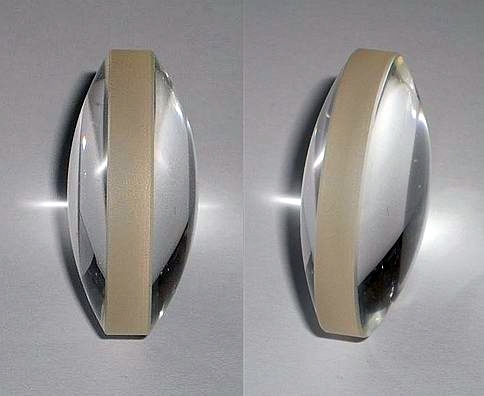




How lenses work
Lenses alter the path of light because their surfaces cause the light to change speed and direction when it crosses a boundary between materials. This effect is the principle of refraction. Curved surfaces bend incoming rays so that they converge toward a point or diverge as if coming from a point. The exact bending depends on the curvature of the surfaces and the refractive index of the lens material.
Shapes, types and aberrations
Practically, lenses are described by their surface shapes and optical action. Basic geometric forms include convex (thicker at the centre), concave (thinner at the centre) and planar (flat) surfaces. Optically, lenses are classified as converging (positive) or diverging (negative). Real lenses introduce imperfections called aberrations — such as spherical aberration, coma and chromatic dispersion — which designers correct by combining multiple elements or using special glass types and coatings.
- Convex (converging) — brings parallel rays toward a real focal point.
- Concave (diverging) — causes parallel rays to spread as if from a virtual focal point.
- Planar and meniscus — flat or slightly curved elements used for spacing, support or minor optical adjustments.
Focal length and optical power
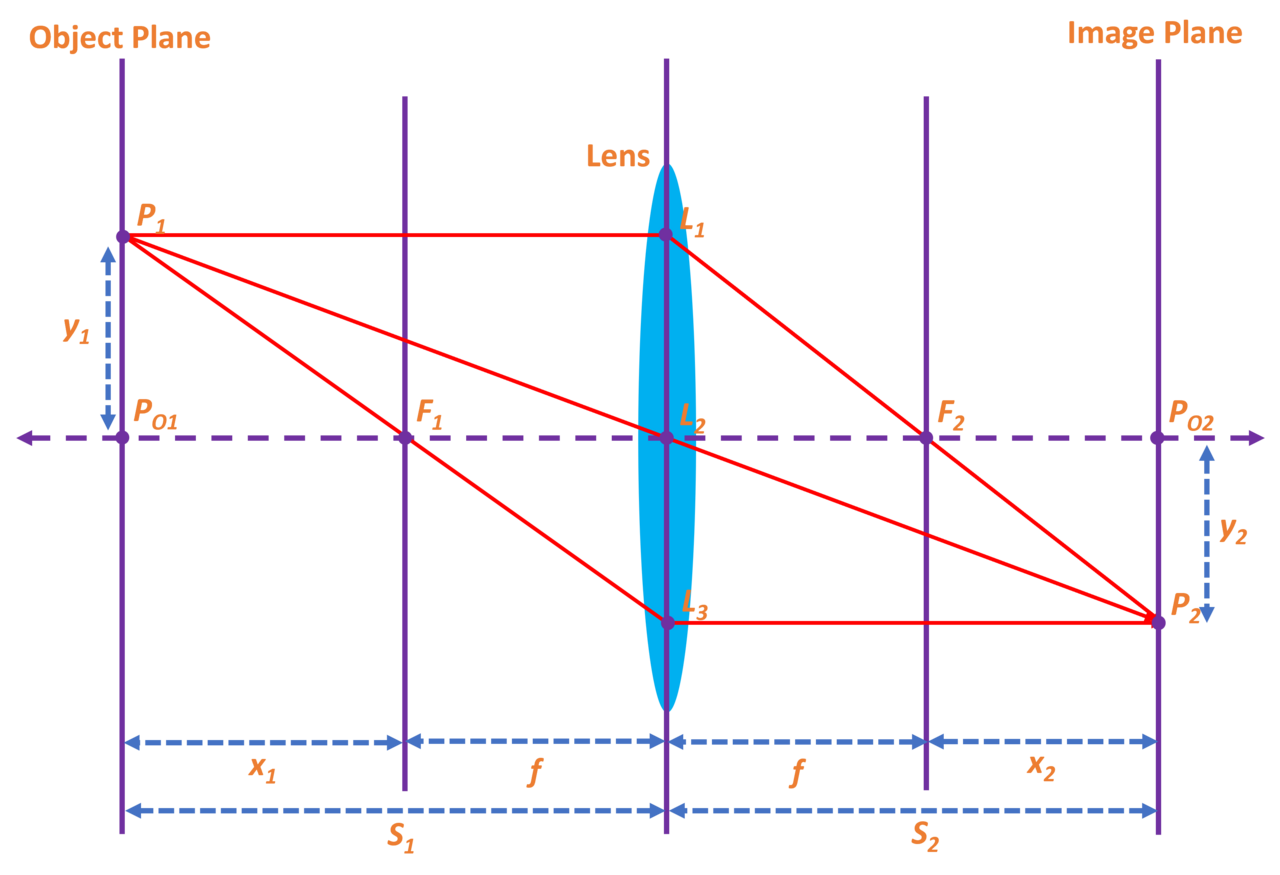
The focal length is the distance from a lens to the point where it focuses parallel incoming rays (or appears to focus them). Shorter focal lengths produce stronger convergence or divergence. Optical power is commonly defined as the reciprocal of focal length (in metres) and is used to describe the strength of thin lenses; practical lens systems combine elements to achieve desired effective focal lengths and magnifications.
History and development
People observed magnifying effects of curved glass and water in antiquity, and lenses were adapted into early reading aids and simple magnifiers. In the Middle Ages spectacles became widespread in Europe. The scientific advances of the early modern era led to refinements that enabled the first microscopes and telescopes, and later developments in precision grinding, glass formulation and anti-reflective coatings produced the high-performance lenses used today.
Uses, examples and notable facts
Lenses are essential in many devices and fields. Everyday examples include eyeglasses and contact lenses, while biological optics include the eye, which contains a flexible lens. Scientific and technical instruments such as microscopes, cameras, telescopes, projectors and magnifying glasses rely on lens elements and assemblies. Optical engineering often combines multiple lenses with coatings and apertures to control focus, reduce reflections and correct aberrations for sharp, accurate imaging.
Related articles
Author
AlegsaOnline.com Lens (optics): overview, types, history and uses Leandro Alegsa
URL: https://en.alegsaonline.com/art/57157