
Glass: composition, types, history and practical uses
An accessible overview of glass: what it is, how it is made, major types and properties, historical development, common uses, recycling, and myths about its nature.
Overview
Glass is an inorganic, typically transparent hard material formed when certain raw ingredients are melted and cooled to produce a non-crystalline solid. It can be worked into many shapes, from thin flat panes to hollow vessels and delicate art objects, and is most commonly valued for its transparency. By varying ingredients and processing, manufacturers produce clear, frosted or brightly coloured glass suited to different purposes.
Image gallery
10 Images


Composition and common types
The basic network former in most commercial glass is silicon dioxide (silica). Ordinary container and window glass are usually a soda–lime composition made mostly of silicon dioxide together with sodium oxide derived from sodium carbonate and calcium oxide (lime) from calcium compounds. Changing proportions or adding other oxides creates distinct families:
- Soda–lime glass: everyday windows and bottles.
- Borosilicate glass: increased resistance to thermal shock, used for laboratoryware and cookware (e.g., Pyrex-type products).
- Lead and crystalline-style glass: adding lead (and sometimes zinc oxides) raises the refractive index and density; such material is often called crystal.
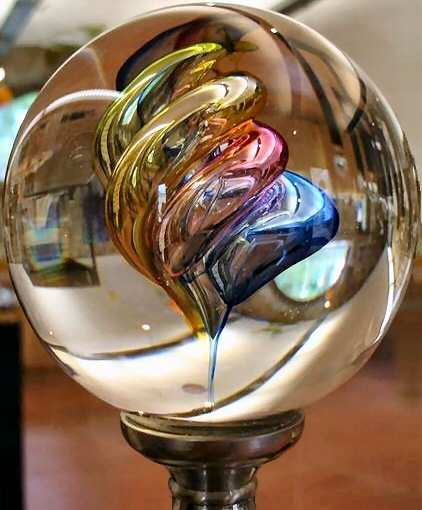
- Colored glass: small amounts of metal oxides produce color—cobalt yields blue, chromium green, and other pigments give reds, ambers and more (for example, cobalt oxide for blue).
Manufacture, shaping and properties
Glassmaking methods include melting and casting, blowing, drawing, rolling and the modern float process for flat glass. After shaping, glass is typically annealed to relieve internal stresses, while heat treatment can produce tempered glass that is stronger and shatters into small, less dangerous pieces. Laminated glass sandwiches a plastic interlayer to hold fragments in place after impact. Optically precise glass varieties are formulated for lenses and prisms used in instruments and cameras.

History and cultural roles
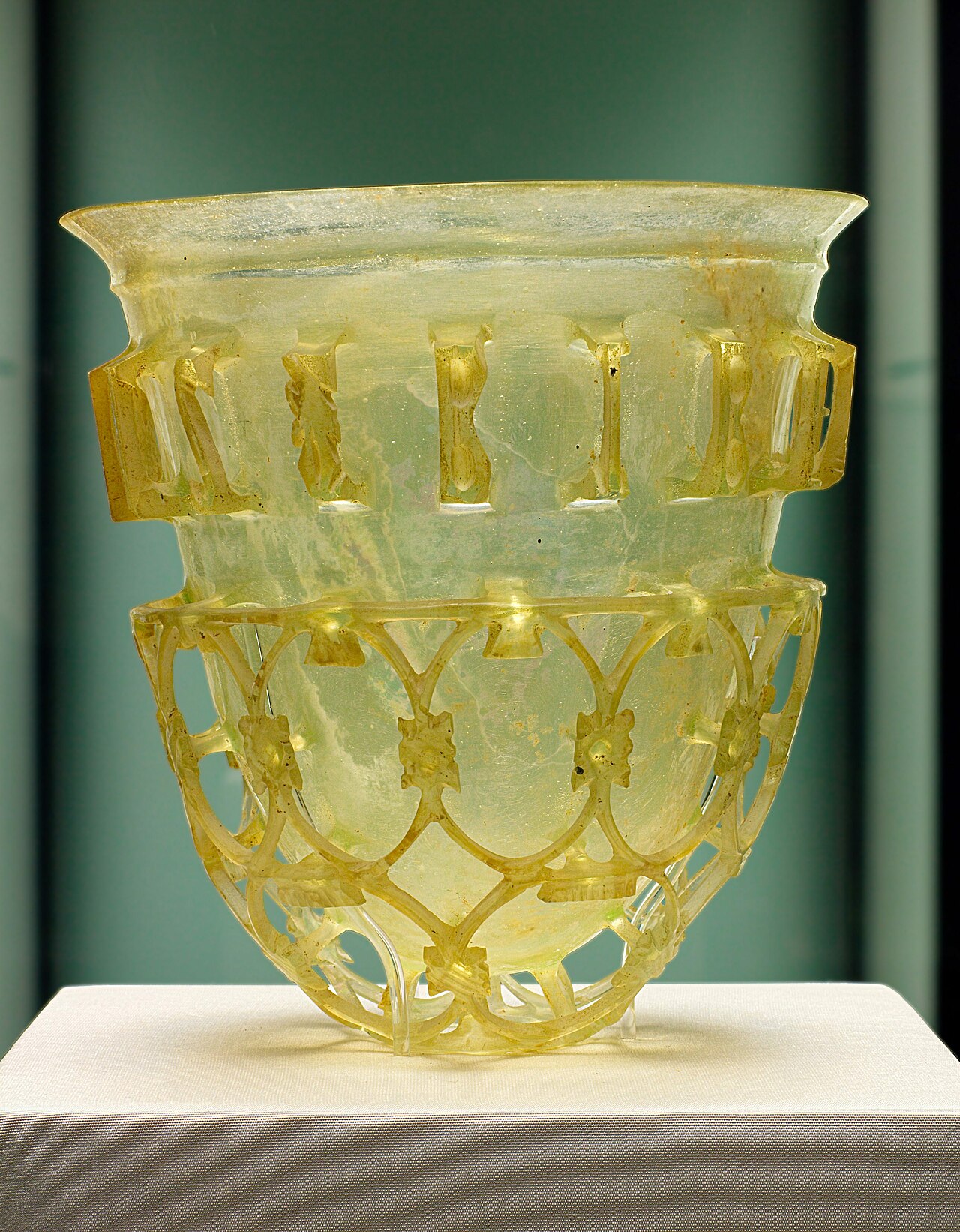
Glassmaking has a long, multi-regional history. Early glass objects appear in the Near East and Mediterranean several millennia ago; Roman workshops expanded techniques for blowing and forming vessels, producing characteristic Roman glass beakers and containers. Over centuries techniques spread and diversified, enabling stained and painted glass used in architecture and ritual settings—famous examples remain in churches and other monuments around the world. Stained- and leaded-window traditions continue to influence art and design (stained glass in a church, for instance).

Uses, advantages and common misconceptions
Glass is essential across many domains: architectural glazing, household and laboratory containers, optics and precision instruments, light guides and telecommunications (optical fibers), and decorative arts. A drinking vessel is one of the simplest examples—the same material that makes a clear a glass of water possible also serves in advanced optics. Although often hard and brittle, glass can be engineered for toughness and safety.
One persistent myth claims that glass flows on human timescales because very old window panes are thicker at the bottom. This appearance is not due to flow at room temperature but to historical manufacturing methods and post-production handling—the atomic structure of glass is amorphous, not a crystalline or viscous liquid at ordinary temperatures.
Recycling and sustainability
Glass is highly recyclable: containers and flat glass can be collected, crushed and remelted repeatedly without major degradation of composition, saving raw materials and energy. Recycled cullet is widely used to make new bottles and jars or as aggregate in construction and industrial applications; many municipal recycling programs accept and encourage glass recovery (recycled glass stream).

Further distinctions and practical notes
- Terminology: "crystal" in trade names often refers to high-lead or high-index glass rather than a true crystalline structure.
- Coloration and optics depend on controlled additions of metal oxides and heat treatment; an artist or manufacturer chooses ingredients to balance strength, clarity and hue (for example, manufacturers use cobalt oxide for blues and other oxides for a range of tones).
- For eye correction the word "glasses" commonly denotes spectacles made from optical glass or modern plastics.
Glass remains a versatile material whose basic chemistry and processing options allow a wide range of mechanical, optical and aesthetic properties, making it indispensable in everyday life, industry and the arts.
Questions and answers
Q: What is glass made of?
A: Glass is mainly composed of silica, and specifically soda-lime glass is made up of silicon dioxide (SiO2), sodium oxide (Na2O) from sodium carbonate (Na2CO3), calcium oxide, also called lime (CaO), and several minor additives.
Q: How can different colours be added to glass?
A: Different colours can be added to glass by adding small amounts of metal oxides. For example, a blue colour is given by tiny amounts of cobalt oxide.
Q: What does the term 'cut glass' refer to?
A: Cut glass refers to glass that has been decorated entirely by hand using rotating wheels which make cuts in an otherwise smooth surface.
Q: Where did the myth that glass is a liquid come from?
A: The myth that glass is actually a liquid comes from the fact that old windows in houses and churches (200–300 years old) are sometimes a little out of shape due to the process of making them in the past which led to them being thicker at one edge than the other.
Q: What are glasses often used for?
A: Because glass is used to make lenses, "glasses" often refers to eyeglasses or spectacles.
Q: Is crystal actually a crystal?
A: No, crystal glass is not actually a crystal because all types of glass are non-crystalline solids.
Q: Can recycled materials be used when making new pieces of glass? A: Yes, recycled materials such as bottles and jars can easily be recycled into new pieces of glasses or used in industry as aggregate or sand.
Related articles
Author
AlegsaOnline.com Glass: composition, types, history and practical uses Leandro Alegsa
URL: https://en.alegsaonline.com/art/39126
Sources
- cutglass.org : cutglass.org/AboutCutGlass.htm