
Kuril Islands — geography, natural features, history, and territorial dispute
Chain of islands stretching between Russia and Japan. Covers geography, ecology, history, economy and the ongoing sovereignty dispute over several southern islands.
Overview
The Kuril Islands are a volcanic island chain in the northwest Pacific Ocean that links the Russian Kamchatka Peninsula to the Japanese island of Hokkaido. Often called the Chishima Islands in Japanese, the group forms a long, narrow archipelago whose climate and environment are shaped by cold currents, frequent earthquakes and active volcanism. Administratively most of the islands belong to the Russian Federation, though Japan asserts claims to several southern islands. The competing claims are commonly discussed under the term the Kuril Islands dispute.
Image gallery
10 Images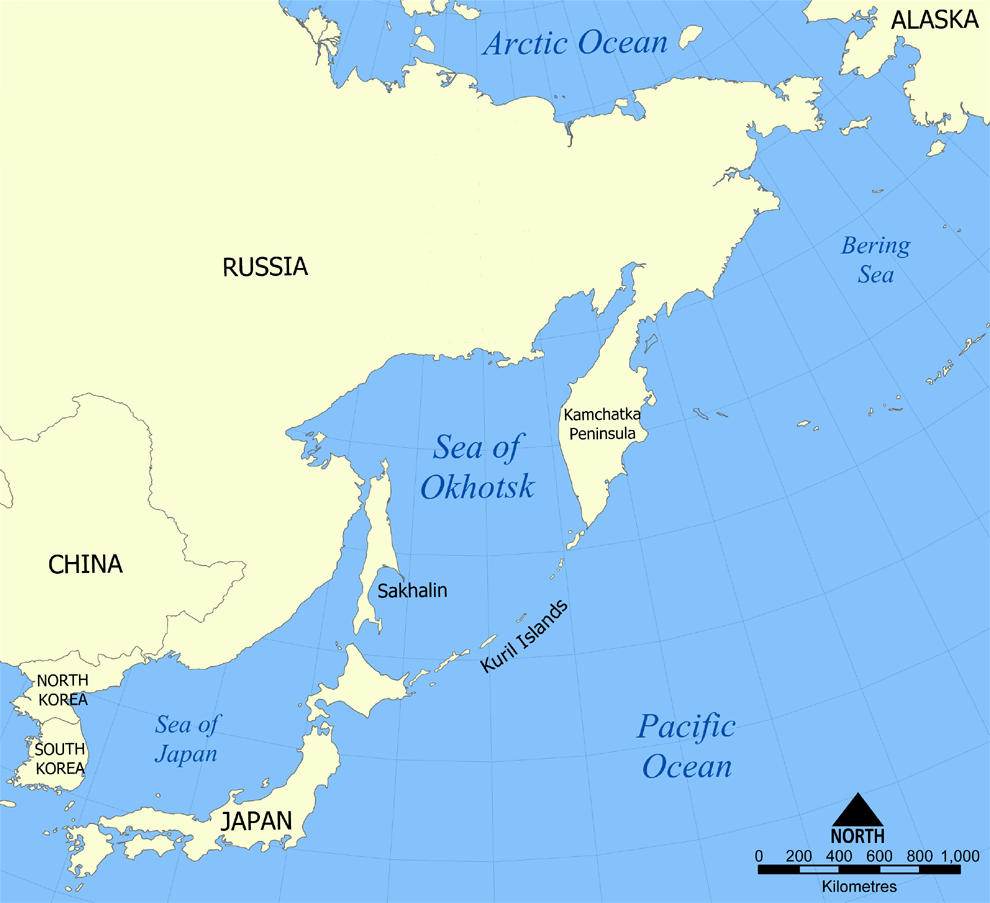




Geography and natural characteristics
The chain runs roughly northeast–southwest for about 1,300 km and comprises a mix of larger and many smaller islets — commonly described as a group of about fifty to sixty islands. The islands rise from an active subduction zone and are mostly volcanic; many peaks remain active and the area is seismically unstable. Vegetation varies from tundra and boreal forest on the larger islands to coastal grasses and shrubland on smaller rocks. Marine life is abundant, and the surrounding seas are important for fisheries and migratory seabirds.
Principal islands and groups
- Major northern and central islands include Shumshu, Paramushir, Onekotan, and Urup.
- Largest southern islands include Chishima names such as Iturup (Etorofu), Kunashir (Kunashiri), Shikotan and the Habomai islets.
- Smaller islets and rocks are scattered along the chain; many are uninhabited or host only small settlements or military facilities.
History and development
The Kuril Islands have long been visited and inhabited intermittently by indigenous Ainu and other peoples. European and Asian exploration intensified from the 17th century, and sovereignty shifted through treaties and wars among regional powers. After World War II the Soviet Union took control of the entire chain. Postwar treaties and declarations, including proposals in the 1950s, affected administrative arrangements but did not produce a final settlement acceptable to both sides.
Economic uses and strategic importance
The islands are valued for fisheries, particularly for species such as pollock and salmon, and for rich surrounding marine ecosystems. There are localized fishing towns, seasonal operations and limited mineral prospects. Strategically, the chain controls access between the Sea of Okhotsk and the Pacific Ocean, giving them military significance for naval and air operations. Russia maintains military installations on some islands while Japan emphasizes the islands’ proximity to Hokkaido and their importance to national security and local economies.
Sovereignty dispute and modern diplomacy
The southernmost islands — notably Iturup (Etorofu), Kunashir (Kunashiri), Shikotan and the Habomai islets — remain at the heart of the disagreement. Both countries present legal and historical arguments for sovereignty. Japan has pressed for return of these four islands, calling them part of the Chishima chain, and some political parties in Japan press for broader claims. Russia administers the islands as part of Sakhalin Oblast and rejects transfer without comprehensive resolution. At various points there were proposals — including a 1956 Soviet offer to return two smaller islands — but wider geopolitical concerns, including the presence of the United States in the region and arrangements over places such as Okinawa, prevented agreement.
Notable facts and contemporary issues
The dispute complicates bilateral relations, affects fisheries cooperation and restricts some economic development. Conservationists note the islands’ ecological value for seabirds and marine mammals. Travel to many islands is limited by weather, military controls and infrastructure. Ongoing diplomacy oscillates between periods of negotiation and stalemate; occasional confidence-building measures have been tried, but a comprehensive, lasting settlement has not been achieved.
Names and languages associated with the islands reflect their complex history: in Russian they are known as Курильские острова, while in Japanese the chain appears as 千島列島 or in Hepburn romanization as Chishima rettō. For further reading and official statements see the pages indicated by these links and archives maintained by the governments involved.
References to additional resources: Russia, Japan, and materials describing the Kuril Islands dispute provide detailed legal and historical documents useful to specialists and general readers alike.
Related articles
Author
AlegsaOnline.com Kuril Islands — geography, natural features, history, and territorial dispute Leandro Alegsa
URL: https://en.alegsaonline.com/art/54663