
Hepburn romanization
A phonetic system for writing Japanese in the Latin alphabet, developed in the 19th century and widely used for pronunciation guidance, signage, and many practical applications.
Overview
Hepburn romanization is a method for rendering Japanese sounds with the Latin alphabet. In Japanese it is often called ヘボン式ローマ字. The system emphasizes pronunciation for speakers of Western languages, representing Japanese syllables in a way that approximates English phonetic expectations rather than strictly mirroring kana spelling. It is one of the most familiar romanization schemes used by learners, mapmakers, and institutions outside Japan.
Image gallery
3 Images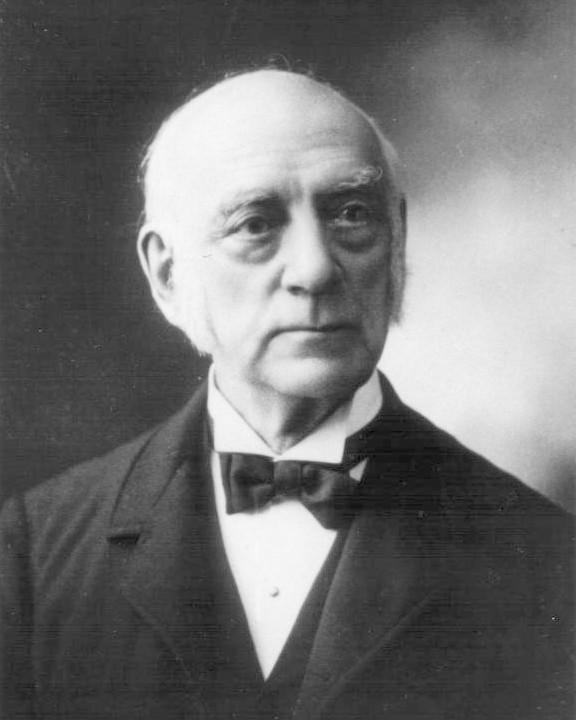


Key characteristics
Hepburn seeks to show how words are pronounced. Typical features include:
- Use of digraphs such as shi, chi, tsu to reflect actual pronunciation (し → "shi", ち → "chi", つ → "tsu").
- Representation of long vowels with macrons (for example Tōkyō for とうきょう) or sometimes with doubled vowels or circumflexes when macrons are unavailable.
- Geminate (doubled) consonants indicated by doubling the consonant letter that follows the small つ (e.g., kippu for きっぷ).
- Use of an apostrophe to clarify the syllabic n (ん) before vowels or y sequences, as in kon'yaku, preventing misreading as a palatalized syllable.
History and development
The scheme is named after James Curtis Hepburn, an American physician and missionary whose Japanese–English dictionary and medical work in the late 19th century helped popularize this style of romanization. Over time Hepburn romanization has been revised and adapted. Distinct variants are commonly called "Traditional Hepburn" and "Revised Hepburn," which differ in details such as vowel marking and how certain consonant clusters are rendered. Institutional practices have also led to slight modifications in official use.
Uses and examples
Hepburn is widely used for practical tasks that require readable pronunciation cues: travel signage, guidebooks, passport name transliteration, language teaching materials, and roman-letter input systems for typing Japanese. Examples rendered in Hepburn include Tōkyō (とうきょう), Kyōto (きょう), Ōsaka (おおさか or おうさか), and Shinjuku (しんじゅく). In many contexts macrons are omitted for simplicity, producing familiar forms like "Tokyo" and "Osaka." For more on romanization generally see romanization.
Comparisons and notable distinctions
Other systems exist, most notably Kunrei-shiki and Nihon-shiki, which follow kana spelling more strictly and are sometimes preferred in linguistic or legal contexts inside Japan. Compared with those systems, Hepburn:
- Prioritizes ease of pronunciation for English-speakers.
- May obscure morphological boundaries because it smooths orthography to sound.
- Is the de facto standard in many international and educational settings, though practices vary by agency and publisher.
Questions and answers
Q: What is Hepburn romanization?
A: Hepburn romanization is a system of Japanese romanization that uses the Latin alphabet.
Q: What is the purpose of Hepburn romanization?
A: The purpose of Hepburn romanization is to help people from countries other than Japan to learn how to spell Japanese in the Latin alphabet.
Q: What is the Japanese name for Hepburn romanization?
A: The Japanese name for Hepburn romanization is ヘボン式ローマ字 (Hebon-shiki Rōmaji).
Q: What type of letters does Hepburn romanization use?
A: Hepburn romanization uses the Latin alphabet.
Q: Who uses Hepburn romanization?
A: Many people from countries other than Japan use Hepburn romanization.
Q: Is Hepburn romanization a system of Japanese writing?
A: No, Hepburn romanization is not a system of Japanese writing but a system of Japanese romanization.
Q: Why do people use Hepburn romanization?
A: People use Hepburn romanization to help learn how to spell Japanese in the Latin alphabet.
Related articles
Author
AlegsaOnline.com Hepburn romanization Leandro Alegsa
URL: https://en.alegsaonline.com/art/43656
Sources
- japantimes.co.jp : "To shine or to die: the messy world of romanized Japanese"