
Klaus Bednarz: German television correspondent, reporter and author
German television journalist and author noted for Cold War-era foreign correspondence in Poland and the Soviet Union, longtime presenter of Monitor, and writer of books in Polish and Russian.
Overview
Klaus Bednarz was a prominent German journalist and television reporter who worked across broadcast and print media for decades. Trained as a historian and Slavic scholar, he became known for in-depth coverage of Eastern Europe and the Soviet sphere during the Cold War era. He combined reporting from the field with documentary presentation and authored books in several languages, earning recognition in German media circles and beyond.
Image gallery
1 Image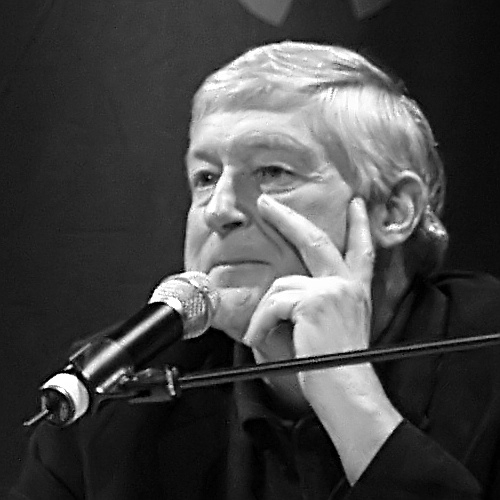
Early life and education
Bednarz was born in Falkensee, Brandenburg, where he spent his early years before pursuing higher education. He attended several universities, studying in cities such as Hamburg, Vienna and Moscow, combining language training with historical and regional studies. These studies prepared him for a career focused on Slavic countries and the complex politics of post‑war Europe.
Career and methods
Beginning work in television in 1967, Bednarz established himself as a foreign correspondent with extended postings abroad. From 1971 until 1977 he reported from Poland, and from there he went on to cover the Soviet Union until the early 1980s. He was also widely seen as a presenter on the long‑running current affairs programme Monitor, where his interviews and reports combined factual detail with historical context. He wrote books and essays in other languages as well, publishing works in Polish and Russian, a practice that helped him reach audiences inside the countries he covered.
Selected career highlights
- Started regular television work in 1967 and developed a reputation as a reliable field correspondent.
- Long-term postings in Poland (1971–1977) and the Soviet Union (to 1982) brought direct reporting from key Cold War settings.
- Presenter and contributor to the programme Monitor, known for investigative and contextual reporting.
- Published books and reports in multiple languages, including Polish and Russian, strengthening cross‑border dialogue.
Significance and themes
Bednarz's reporting emphasized social reality and human stories behind political developments. His background in Slavic studies and on‑the‑ground experience allowed him to interpret diplomatic events, cultural trends and economic conditions for German viewers and readers. Rather than simple headline reporting, his pieces often traced historical roots and cultural contexts, helping audiences better understand shifts in Eastern Europe during a turbulent period.
Later life and legacy
Throughout his career he received multiple journalism awards and continuing recognition for work that bridged reporting and scholarship. Bednarz remained engaged with media and writing after his main years as a foreign correspondent, reflecting on the changes that followed the Cold War. He died on 14 April 2015 in Schwerin, in the state of Mecklenburg‑Vorpommern. His career is often cited as an example of rigorous foreign correspondence that combined linguistic skill, historical knowledge, and a commitment to clear, context‑rich reporting.
For readers who want to explore his work further, contemporary collections of articles and recorded reports remain accessible through archives and broadcaster retrospectives, providing source material for those studying Cold War media, German journalism or the history of Eastern Europe.
Additional resources and archival materials may be found via broadcaster pages and library catalogs; for institutional references see broadcaster and university holdings linked from campus and media archive portals.
journalist • television • writer • Falkensee
Related articles
Author
AlegsaOnline.com Klaus Bednarz: German television correspondent, reporter and author Leandro Alegsa
URL: https://en.alegsaonline.com/art/53912
Sources
- archynews.com : "TV-Journalist Klaus Bednarz ("Monitor") died"