
Kirby's Epic Yarn
Kirby's Epic Yarn is a yarn-and-fabric themed platformer starring Kirby, originally released for the Wii in 2010. Noted for its handcrafted art style, gentle difficulty, and a later enhanced 3DS port.
Kirby's Epic Yarn is a handcrafted-style platformer platformer video game that reimagines Nintendo's pink protagonist in a world made of cloth, yarn and patchwork. The original version appeared on the Nintendo Wii, and it was created through a collaboration between studios, credited to Good-Feel with involvement from HAL Laboratory, and published by Nintendo. The game's aesthetic replaces typical sprites and polygons with stitched textures, felt backgrounds and sewing-themed animation, giving levels the look and feel of a moving textile diorama.
Image gallery
2 Images
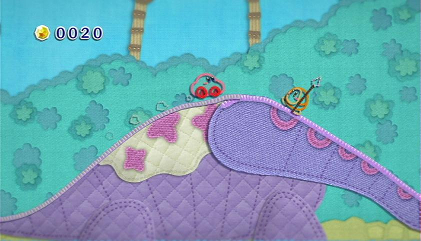
Gameplay and mechanics
Rather than relying on Kirby's usual inhale-and-copy abilities, this title centers on yarn-based mechanics. The player navigates landscapes of cloth, pulling threads, unravelling fabric, and interacting with buttons or patches that change the environment. Damage does not function like a conventional platformer; when hit, Kirby often transforms into a different yarn form and is returned to a nearby point instead of immediately losing lives, which makes the game notably accessible for younger or less experienced players.
Levels, collectibles and cooperative play
Stages are designed as stitched tableaux with multiple layers and hidden paths. Collectibles such as beads, treasure pieces and special patches encourage exploration and replay. The game supports local cooperative modes in which a second player can join to assist with platforming and puzzle solving, reinforcing its family-friendly design and emphasis on discovery over punishment.
Development and release
Kirby's Epic Yarn was first released in Japan on October 14, 2010 (Japan release), followed by North America on October 17, 2010 (North America release). It reached Australia on February 24, 2011 (Australia release) and Europe on February 25, 2011 (Europe release). An enhanced port titled Kirby's Extra Epic Yarn was later produced for the Nintendo 3DS, bringing the textile visuals and bonus content to a handheld audience.
Reception and legacy
Critics commonly praised the game's art direction, music and inventive use of materials as core mechanics, while some reviewers noted its low difficulty as a shortcoming for players seeking a tougher challenge. The distinctive yarn-and-cloth approach influenced subsequent Nintendo projects and reinforced the potential of strong visual themes to shape gameplay. As an entry in the Kirby series, it stands out for its stylistic departure and for offering a gentler, more exploratory platforming experience.
Notable distinctions
- Art and presentation: levels are presented as textile dioramas rather than traditional 2D or 3D scenery.
- Mechanics: damage and failure are softened compared with many platformers, prioritizing play continuity.
- Accessibility: cooperative play and forgiving design make it suitable for a broad audience.
Storyline
While Kirby is walking through Dream Land, he comes across a fluffy tomato. He decides to eat it and finds himself in a completely unknown world. Everything around him is made of yarn. He meets a boy on his adventure who is being chased by a monster, and helps him out. It turns out that the boy is Prince Plush, the heir to the throne of Cloth Land. He tells Kirby about Grim Yarn, an evil wizard who has cut the land into seven scraps of cloth and accidentally brought Kirby to this land. Kirby eventually goes in search of Grim Yarn to patch the land back together.
Voice actor
| Character | United States | Germany | |
| Makiko Ōmoto | |||
| Prince Plush | Tomoko Nakamura | ||
| Yūko Tsuga | Dave White | Wolf Kahler | |
| Paul Vaughan | |||


Questions and answers
Q: What type of video game is Kirby's Epic Yarn?
A: Kirby's Epic Yarn is a platformer video game.
Q: What console was Kirby's Epic Yarn developed for?
A: Kirby's Epic Yarn was developed for the Nintendo Wii console.
Q: Who developed Kirby's Epic Yarn?
A: Kirby's Epic Yarn was developed by HAL Laboratory.
Q: Who published Kirby's Epic Yarn?
A: Kirby's Epic Yarn was published by Nintendo.
Q: When was Kirby's Epic Yarn released in Japan?
A: Kirby's Epic Yarn was released in Japan on October 14, 2010.
Q: Was Kirby's Epic Yarn released for the Nintendo 3DS?
A: Yes, Kirby's Epic Yarn was ported to Nintendo 3DS in March 2019 as Kirby's Extra Epic Yarn.
Q: What was Kirby's Extra Epic Yarn?
A: Kirby's Extra Epic Yarn was the last Kirby game released for the Nintendo 3DS.
Related articles
Author
AlegsaOnline.com Kirby's Epic Yarn Leandro Alegsa
URL: https://en.alegsaonline.com/art/53742
Sources
- us.wii.com : "Surprising and Humorous Sound"
- press.nintendo.com : "Dates Announced for New Kirby, Donkey Kong and Pokémon Games"
- nintendo.co.jp : Official Japanese site
- nintendo.com.au : "Kirby's Epic Yarn on Wii - Bursting At The Seams With Fun"
- uk.wii.ign.com : "Kirby's Epic Yarn EU Release Date"