
Kirby's Return to Dream Land
A 2011 side-scrolling platform game by HAL Laboratory for the Wii; later remade as Kirby's Return to Dream Land Deluxe for the Nintendo Switch in 2023.
Overview
Kirby's Return to Dream Land is a side-scrolling platformer originally created by HAL Laboratory and published by Nintendo. The game was developed for the Wii and combines traditional Kirby mechanics—such as inhaling enemies and copying their powers—with levels designed for cooperative play. It presents classic 2D movement on a three-dimensional plane and was one of the flagship Kirby console titles of its generation.
Image gallery
2 Images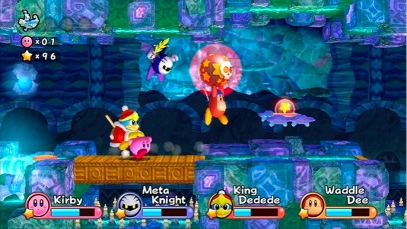

Gameplay and features
Players control Kirby as he traverses stages, defeats foes, and collects items. The title supports up to four-player cooperative play, letting additional players join with simplified characters. Central mechanics include copying enemy abilities, using environmental puzzles, and confronting larger boss encounters. The game is known for its approachable difficulty curve that suits younger players while offering optional challenges for experienced fans.
- Single-player and local multiplayer for up to four people.
- Copy abilities and special attacks that change Kirby's appearance and moveset.
- Boss fights that combine platforming and pattern recognition.
- Short, themed levels that vary in pace and layout.
Development and release
Developed by the long-time Kirby team at HAL Laboratory, the game continued the series' focus on accessible platforming and cooperative fun. It launched in late 2011: in North America on October 24, in Japan on October 27, in Europe on November 25, and in Australia on December 1. The original Wii release used the console's controller schemes to map Kirby's actions and player assists.
Remake and later editions
In 2022 Nintendo announced an updated version titled Kirby's Return to Dream Land Deluxe for the Nintendo Switch, which released in February 2023. The Deluxe edition expanded content with new modes, difficulty options, and quality-of-life improvements tailored for the Switch hardware, while preserving the core platforming and cooperative elements of the original.
Reception and legacy
Critics and players generally praised the game's presentation, cooperative gameplay, and faithfulness to the Kirby franchise. Its combination of familiar mechanics and multiplayer accessibility helped it maintain a steady place in the Kirby lineup. The title is often referenced as a modern console entry that brought traditional Kirby design to a broader audience on the Wii, and its Deluxe remake renewed interest among players on the Switch platform.
Notable facts
Beyond its gameplay, the release history illustrates Nintendo's regional rollouts and later commitment to preserving and enhancing past titles via remakes. For more information on platformers, the Kirby series, or developer details, see entries on platform games, video games, and the companies behind them: HAL Laboratory and Nintendo.
Related articles
Author
AlegsaOnline.com Kirby's Return to Dream Land Leandro Alegsa
URL: https://en.alegsaonline.com/art/53744