
Kalki — the prophesied tenth avatar of Vishnu
Kalki is the final avatar of Vishnu in Hindu eschatology, expected to appear at the end of the Kali Yuga to eradicate adharma and inaugurate a renewed age of truth (Satya Yuga).
Overview
Kalki (often spelled Kalkī) is described in Hindu texts as the tenth and final avatar of the god Vishnu. In traditional cyclical time theory, history is divided into four ages (yugas); the present age, Kali Yuga, is portrayed as an era marked by moral decline and social disorder. Kalki is expected to appear at the close of that age to remove corruption, punish persistent wrongdoers, and restore dharma (righteous order), thereby inaugurating a new Satya Yuga or age of truth.
Image gallery
8 Images


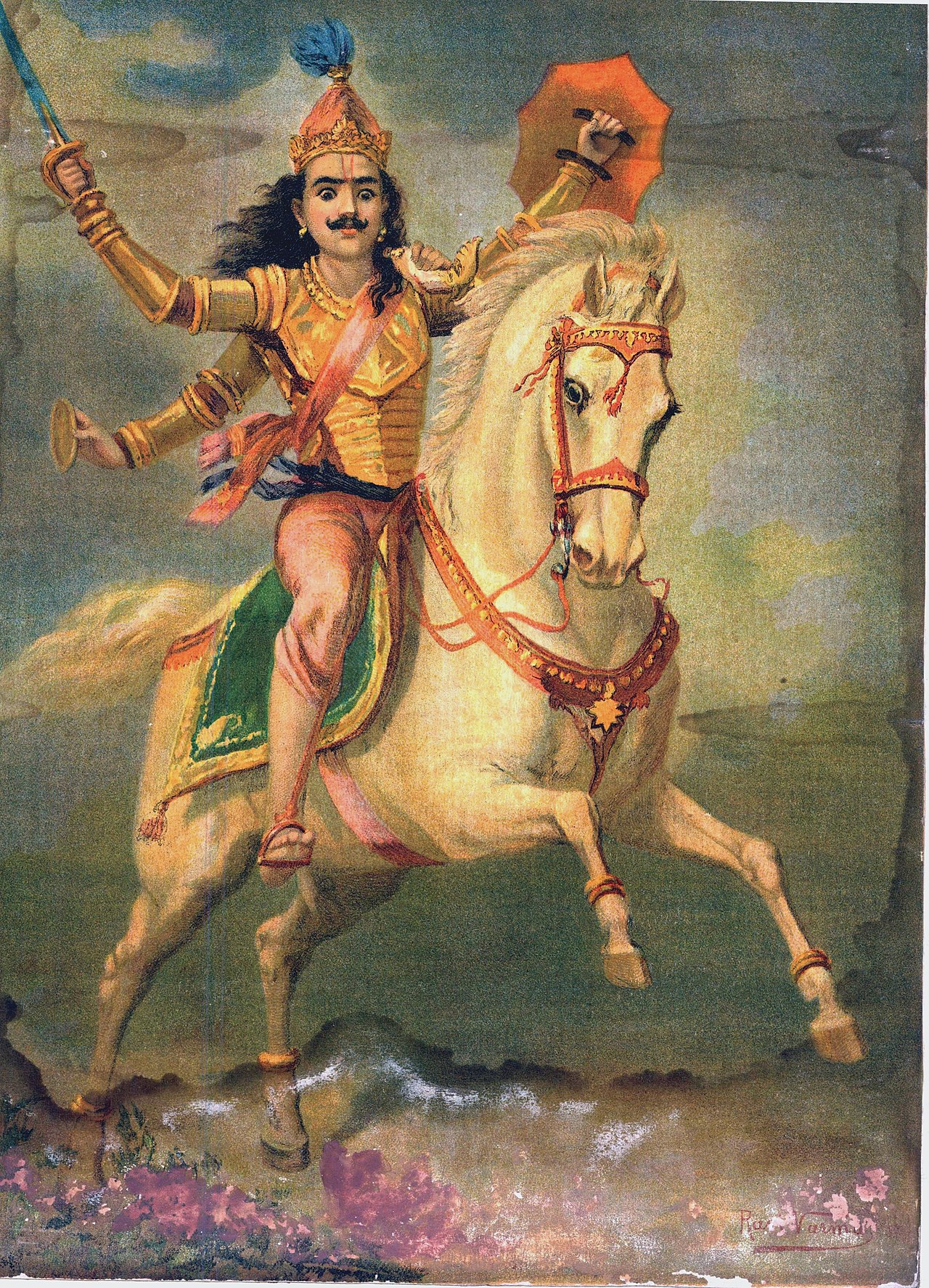


Characteristics and iconography
Scriptural descriptions often present Kalki as a warrior figure riding a white horse named Devadatta and wielding a blazing sword. He is frequently shown as a Brahmin-born warrior who combines ascetic lineage with martial power. Iconography emphasizes movement and decisive action: the horse, the weapon, and the role of judge and restorer. Different regional traditions vary in details such as name, birthplace, and the precise circumstances of his arrival.
Scriptural sources and chronology
Kalki is discussed most extensively in later Purāṇic literature, particularly in passages of the Viṣṇu Purāṇa and the Śrīmad Bhāgavata (Bhāgavata Purāṇa), which outline his mission and lineage. Traditional Hindu chronology gives the Kali Yuga a very long duration—classical calculations commonly state 432,000 years for the entire age—and place Kalki’s appearance at its end. Other accounts and popular interpretations offer different timelines; some traditions speak of an imminent coming when human behavior has become utterly corrupt, while scholarly readings emphasize the mythic and cyclical symbolism rather than a specific date.
Place of birth and role in eschatology
Certain Purāṇic passages state that Kalki will be born in a region called Śambhala, as the son of a Brahmin named Viṣṇuyāśa (or similar names in variant recensions). Various communities have identified Śambhala with different geographic locations; some modern identifications place it within parts of northern India, though such associations are interpretive. Kalki’s role is eschatological: he destroys great evils, defeats the personification of decline (sometimes called Kali or a similar demonic force), and re-establishes righteous social and religious order.
Variations, interpretations, and cultural impact
Beliefs about Kalki differ widely. In mainstream Hindu thought Kalki functions as the culminating avatar in a moral framework of cyclical time. In popular and devotional contexts he inspires hope for eventual renewal. Outside orthodox sources, various modern and syncretic readings have associated Kalki with other prophetic figures or contemporary events; some such claims are speculative or fringe. Kalki has also entered literature, art, and film as a symbol of final justice and transformation.
Notable facts and distinctions
- Kalki is the only one of Vishnu’s traditional avatars explicitly associated with the end of an age rather than with restoring order within an age.
- Descriptions of his birth, family, and horse vary between Purāṇas and regional retellings; these differences reflect the fluid, narrated quality of Purāṇic material.
- Modern interest often blends scriptural motifs with contemporary concerns, producing a range of devotional, literary, and speculative interpretations.
Further reading and related topics
For contextual study and comparative reading, see entries and resources on related concepts and texts:
- Avatar (incarnation) — general concept
- Hinduism — overview of beliefs and practices
- Vishnu — the preserver god
- Vishnu Purana — Purāṇic source material
- Kali Yuga — the present age in Hindu chronology
- Concepts of dharma and adharma
- Buddha in Hindu contexts — interactions and interpretations
- Śambhala — mythical birthplace traditions
- Modern and comparative prophecies — reception history
- Krishna — earlier avatāra and related teachings
- Mahābhārata and the Bhagavad Gītā — background texts
- Regional identifications of sacred geography
- Cultural depictions of Kalki in art and media
This article summarizes commonly attested features of the Kalki tradition as found in later Purāṇic literature and in contemporary devotional and popular discourse. It aims to distinguish scriptural descriptions and long-standing beliefs from modern, speculative associations while noting the variety of local interpretations.
Related articles
Author
AlegsaOnline.com Kalki — the prophesied tenth avatar of Vishnu Leandro Alegsa
URL: https://en.alegsaonline.com/art/51984