
Moradabad — Brass City of Uttar Pradesh
Moradabad is a historic city in Uttar Pradesh, India, noted for its brass handicrafts industry, its foundation in the Mughal era, and its role as a regional transport and administrative centre.

Overview
Moradabad is a city and municipal corporation in the Indian state of Uttar Pradesh. Founded in the early 17th century, it sits on the banks of the Ramganga river and serves as an important commercial and administrative centre in the region. The city is commonly known by the sobriquet Pital Nagri ("Brass City") in recognition of its long-standing metalwork tradition and the cluster of artisans and manufacturers who produce brassware for domestic use and export. Administratively, Moradabad is the headquarters of its district and plays a significant role within local railway and transport networks.
Image gallery
10 Images


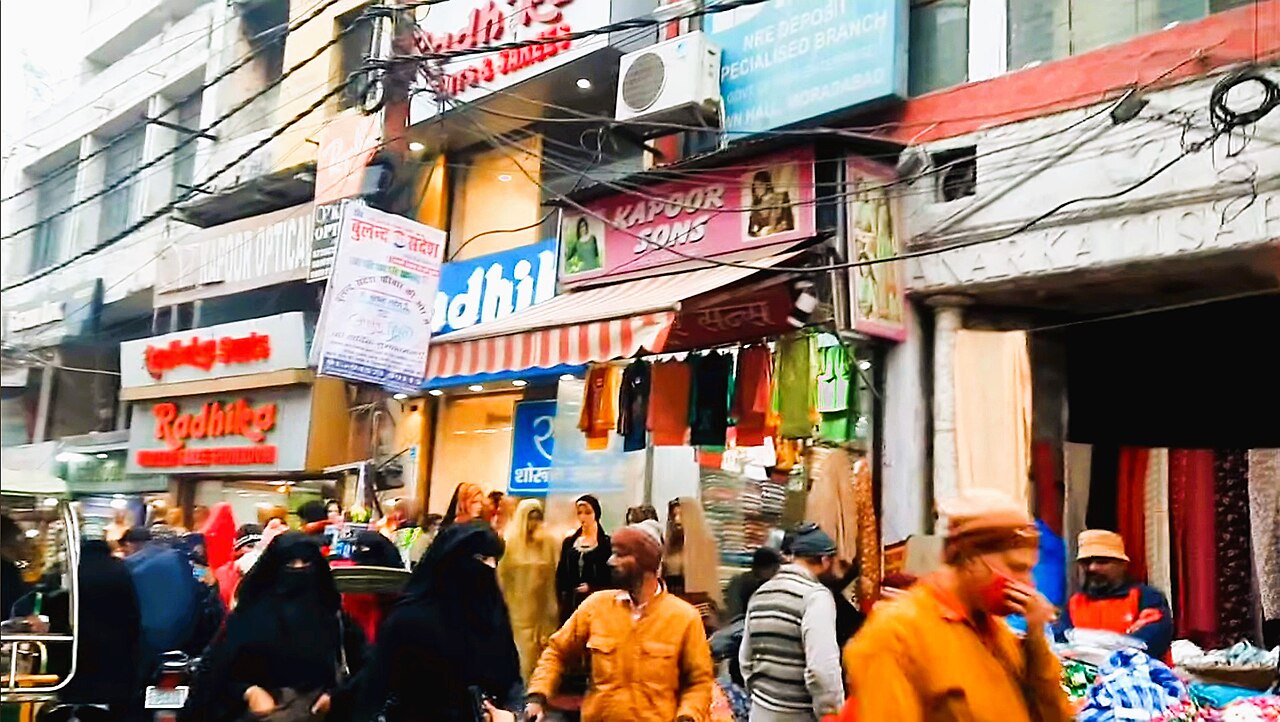
Geography and setting
Moradabad lies along the Ramganga river and occupies a strategic location between the national capital and the interior of Uttar Pradesh. It is located roughly 167 km from New Delhi and around 344 km north-west of Lucknow, the state capital. The city's position has historically made it a crossroads for trade and movement, linking agricultural hinterlands to larger urban markets. Its urban area includes residential neighbourhoods, industrial clusters, and traditional craft quarters where brassworking is concentrated.
Historical background
The settlement that became Moradabad was established in 1625 A.D. during the Mughal period. It is attributed to Rustam Khan and is named after Prince Murad Baksh, a son of the Mughal emperor Shah Jahan. Over the centuries the town grew under successive administrations and developed commercial ties across northern India. Elements of Mughal urban planning and historical architecture influenced the early town layout; later British-period developments and post-independence urbanisation expanded its civic infrastructure.
Economy and crafts
The economy of Moradabad is diverse but is best known for metalcraft, particularly brassware. A concentrated industry of artisans, small workshops and larger factories produces items such as utensils, decorative pieces, fittings and handicrafts. These goods are sold in domestic markets and exported abroad, and the city has acquired a reputation as a centre for brass manufacturing.
- Traditional skills: hand-beating, engraving and polishing of brass.
- Industrial linkages: small-scale foundries and manufacturing units.
- Market presence: wholesale and retail trade networks connect Moradabad products to national and international buyers.
Transport, administration and institutions
Moradabad functions as a divisional headquarters of the regional railway network, which underpins both passenger movement and freight transport. The municipal corporation oversees urban services while district-level offices manage administration for the surrounding region. Road links and rail connections contribute to the city's role as a distribution point for goods produced locally and in neighbouring districts.
Culture, notable facts and distinctions
The city's cultural life reflects the mix of craft traditions, religious communities and commercial activity. Annual markets, craft fairs and specialised trade events highlight the skills of brass workers and draw buyers and tourists. Moradabad's identity as "Brass City" is a distinctive characteristic, often referenced in discussions of Indian handicrafts and small-scale industry. While industrial growth has brought economic opportunity, it has also posed challenges for urban planning, environmental management and the preservation of traditional skills.
For further administrative and civic information see municipal corporation, the district profile at district authorities, and state-level resources at state government and state capital information. Historical context is available via cultural and Mughal-period studies at Mughal history and biographies related to Shah Jahan. Geography and river details can be referenced at Ramganga river, while travel and distance guides note links to New Delhi and Lucknow. Trade and industry sources may be consulted at brass industry resources.
These placeholders point to further reading and official pages where available. The city's blend of history, craft and commerce makes it a prominent example of a regional urban centre shaped by artisanal industry and transport connectivity.
Questions and answers
Q: What is the pronunciation of Moradabad?
A: The pronunciation of Moradabad is (help·info).
Q: Who established Moradabad?
A: Moradabad was established in 1625A.D. by Rustam Khan.
Q: What is the distance between Moradabad and New Delhi?
A: The distance between Moradabad and New Delhi is 167 km (104 mi).
Q: Where is the state capital of Uttar Pradesh located relative to Moradabad?
A: The state capital of Uttar Pradesh, Lucknow, is located 344 km north-west of Moradabad.
Q: What does "Pital Nagri" mean?
A: Pital Nagri means "Brass City", which refers to its famous brass handicrafts industry.
Q: What role does Moradabad play as a divisional headquarters?
A:Moradabad serves as the divisional headquarters for Northern Railway (NR).
Related articles
Author
AlegsaOnline.com Moradabad — Brass City of Uttar Pradesh Leandro Alegsa
URL: https://en.alegsaonline.com/art/66600
Sources
- mdamoradabad.org : "MDA MORADABAD"
- censusindia.gov.in : "Provisional Population Totals, Census of India 2011; Cities having population 1 lakh and above"
- books.google.com : Understanding: Geographical: Map Entries: for Civil Services Examinations: Second Edition
- moradabadrail.in : "Northern Railway: Moradabad Division"
- moradabad.nic.in : "Moradabad (UP), India | Official Website"
- census2011.co.in : "Moradabad Religion Census 2011"
- cia.gov : "Country Comparison:Population"
- 2010.census.gov : "2010 Resident Population Data"
- minorityaffairs.gov.in : MINUTES OF THE 34th MEETING OF EMPOWERED COMMITTEE TO CONSIDER AND APPROVE REVISED PLAN FOR BALANCE FUND FOR THE DISTRICTS OF GHAZIABAD, BAREILLY, BARABANKI, SIDDHARTH NAGAR, SHAHJANPUR, MORADABAD, MUZAFFAR NAGAR, BAHRAICH AND LUCKNOW (UTTAR PRADESH) UNDER MULTI-SECTORAL DEVELOPMENT PROGRAMME IN MINORITY CONCENTRATION DISTRICTS HELD ON 22nd JULY, 2010 AT 11.00 A.M. UNDER THE CHAIRMANSHIP OF SECRETARY, MINISTRY OF MINORITY AFFAIRS.