
Khepri — Egyptian god of the rising sun and the scarab
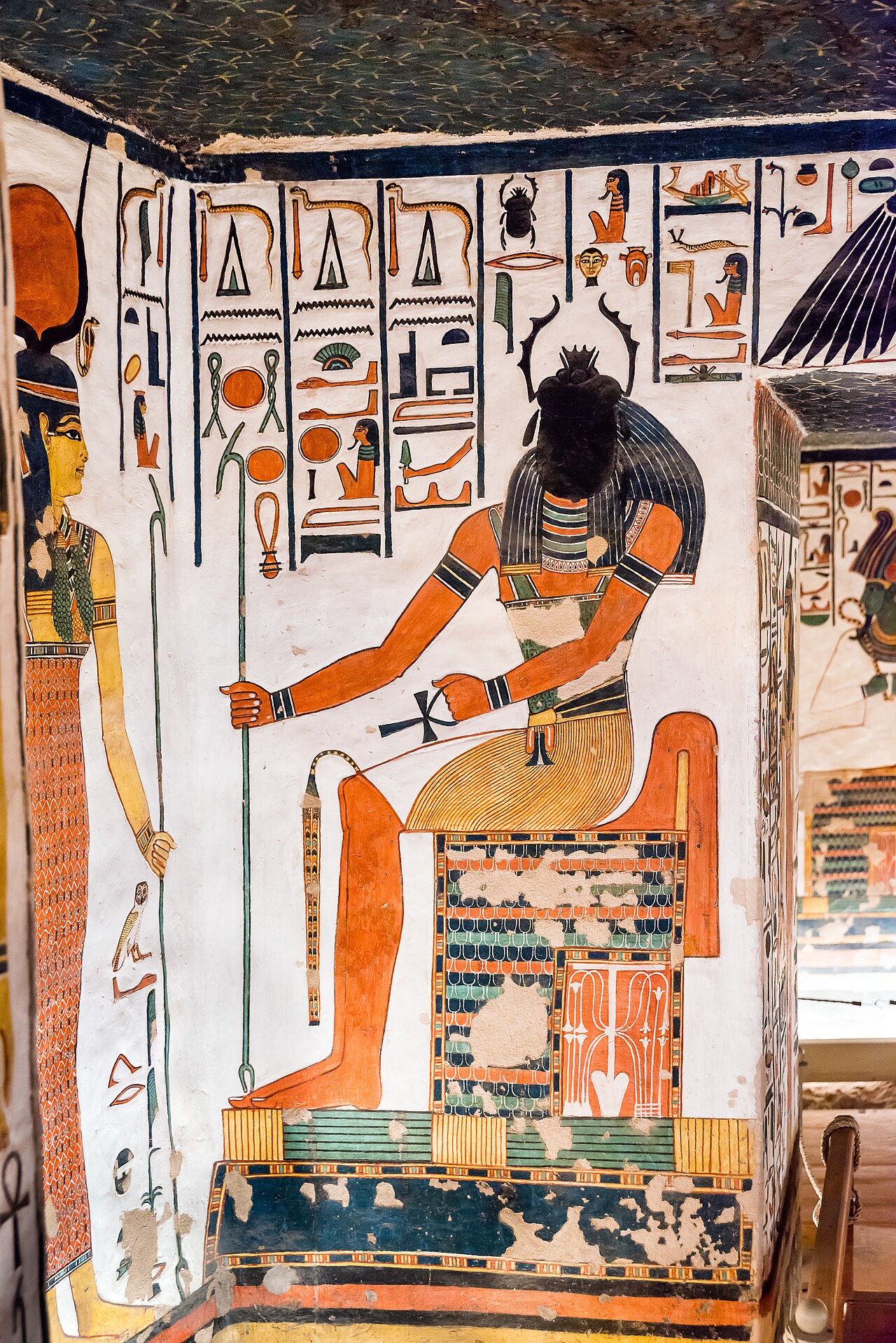
Khepri is the ancient Egyptian deity of the morning sun, creation, and regeneration, often depicted as a scarab or scarab-headed man and associated with the daily renewal of life and the sun’s motion.
Overview
Khepri is an ancient Egyptian deity closely linked with the rising sun, renewal, and the idea of becoming. In Egyptian thought Khepri represented the sun at dawn, the moment when the world is renewed each day. Because of this association with the morning sun, he is frequently treated as one aspect of the solar god complex often centered on Ra, and is sometimes described as Ra’s youthful or morning manifestation. His solar role is commonly expressed with references to the sun and the daily cycle.
Image gallery
10 Images






Name and symbolic meaning
The name Khepri is derived from the Egyptian verb usually transliterated as ḫpr, meaning "to become," "to come into being," or "to transform." That verbal root emphasizes generation and continual renewal rather than a one-time act of creation. Khepri therefore functions as a symbol of emergence and rebirth, both in cosmology (the sun’s daily rebirth) and in funerary belief where regeneration after death was a central concern.
Iconography and symbols
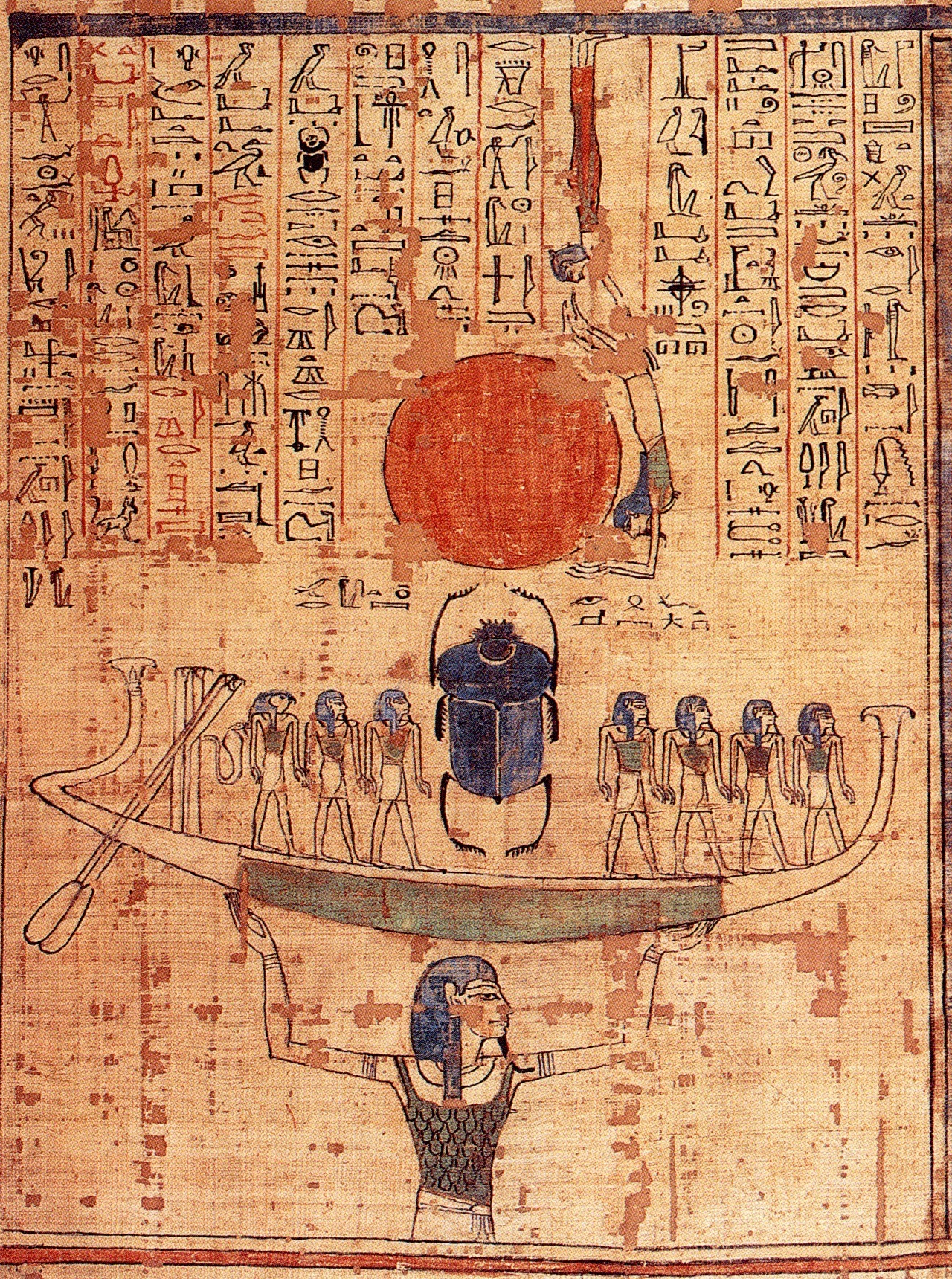
Khepri is most often represented either as a scarab beetle (a dung beetle) or as a human figure with a scarab for a head. The scarab image appears on amulets, tomb paintings, and carved reliefs. Ancient observers connected the beetle’s habit of rolling spherical balls with the movement of the sun, and this natural behavior became an emblem for the deity’s role in propelling the solar disc through the sky. The scarab itself was a powerful symbol of transformation and protection.
Religious role and historical context
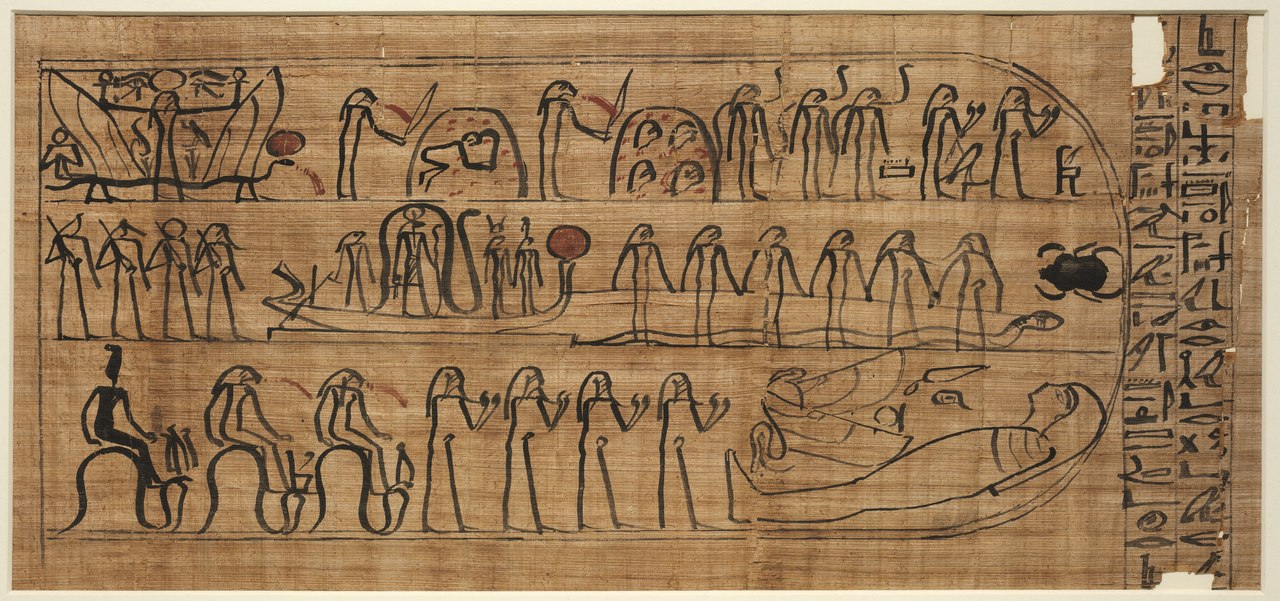
Through much of pharaonic history Khepri was woven into Egypt’s broader solar theology. Texts and spells in tombs and on funerary objects invoke his regenerative power to ensure resurrection or safe passage in the afterlife. Small scarab amulets and carved heart-scarabs imitated his image and were placed with the deceased to secure rebirth and moral vindication. The association of the beetle’s movement with the sun’s progress—people sometimes imagined Khepri as the agent that set the sun in motion—helped anchor him in both popular devotion and religious ritual.
Uses, cultural importance, and examples
Archaeological finds show scarab amulets, seals, and motifs in many contexts, from personal jewelry to official inscriptions. Artists used Khepri as a device to express the theme of cyclical regeneration: tomb paintings might show a scarab ushering in morning light, while inscriptions invited Khepri’s aid for renewal of the deceased. The deity’s image also appears in literary and liturgical compositions where the rising sun is celebrated as the start of a new, ordered day.
Distinctive facts and legacy
Although Khepri was not always the primary god of state cults, his conceptual importance lies in the emphasis on continual becoming rather than a single act of creation. Observers long ago linked the scarab’s behavior to celestial motion, seeing in the insect a fitting emblem for a god who "rolled" the sun into place. Modern interest in Khepri often highlights how everyday natural observation — the dung beetle’s habit of pushing a ball — shaped profound theological ideas. For more general background or comparisons within Egyptian solar theology, see resources on the scarabs and dung beetles and the conception of the orbit of the sun in ancient thought.
Related articles
Author
AlegsaOnline.com Khepri — Egyptian god of the rising sun and the scarab Leandro Alegsa
URL: https://en.alegsaonline.com/art/53226