
Kaliningrad — Russian exclave and former Königsberg on the Baltic Sea
Kaliningrad is a Russian port city and the administrative center of Kaliningrad Oblast, an exclave on the Baltic Sea with a long history as the former German city of Königsberg.
Overview
Kaliningrad is the largest city and administrative center of Kaliningrad Oblast. Historically known by other names—Karaliaučius in Lithuanian, Königsberg in German and Królewiec in Polish—the city occupies a small stretch of territory on the southeastern shore of the Baltic Sea. It is separated from the main part of Russia and is therefore considered an exclave bordered by the countries Poland and Lithuania.

Image gallery
10 Images

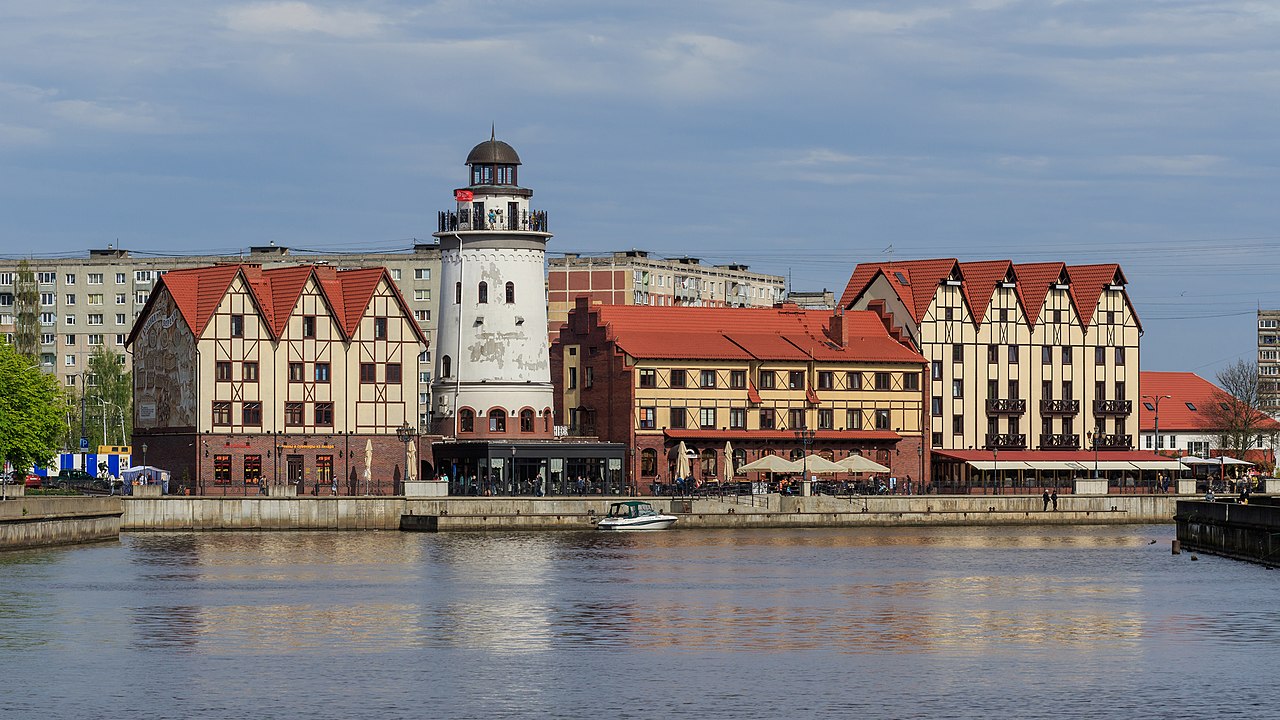


Geography and political status
The oblast in which the city sits is Russia's westernmost administrative region and a notable strategic outpost on the Baltic. Its position between two European Union members—both land borders with Poland and Lithuania—gives the city unique logistical and diplomatic constraints: connections to mainland Russia require air or sea travel, or transit through neighboring states under specific arrangements. The location has shaped Kaliningrad's economy, infrastructure and security posture for decades.
History and identity
The city has medieval origins and long associations with the Teutonic Order and the Duchy then Kingdom of Prussia. Its traditional founding is dated to 1254, a milestone in the development of the regional trading and military hub (1254). For centuries it was known as Königsberg, a German-speaking cultural center and the seat of the University of Königsberg where figures such as Immanuel Kant lived and taught. The name and the city’s governance changed in the aftermath of World War II, when the Soviet Union took control in 1945 and renamed the city; its German identity, once dominant, was largely displaced as the wartime and postwar upheavals led to flight and expulsion of most of the prewar German population (until 1945).
Population and society
In the postwar period Kaliningrad was repopulated mainly by people from other parts of the Soviet Union. Available census figures from the early 2000s show a population level that recovered and then grew relative to late Soviet counts; the city today has a majority Russian population alongside communities with roots elsewhere in the region, including migrants or descendants from Belarus and Ukraine, often noted as Belarusians and Ukrainians. Local culture reflects layers of German, Polish, Lithuanian and Russian influence, visible in architecture, museums and public memory.
Strategic importance, economy and culture
Kaliningrad serves as an important ice-free port on the Baltic, supporting commercial shipping, fishing and ship repair. It has been emphasized in military and diplomatic discussions because of its location next to NATO and EU territory; references to NATO and the European Union appear often in analyses of the region's security dynamics. Economically, the city and oblast have pursued trade, amber processing, light industry and tourism to varied degrees; policymakers have periodically experimented with special economic policies to spur investment.
Notable places and distinctions
- Königsberg Cathedral and Kant's tomb — a symbolic link to the city's prewar intellectual history.
- Amber museums and workshops — reflecting the region's long association with Baltic amber.
- The port and riverfront — active centers for commerce and transport on the Baltic coast.
- Museums and reconstructed historic sites — efforts to preserve and interpret layered cultural heritage.
Kaliningrad's character is shaped by its geography, complex 20th-century history and its continuing role as a crossroads between Russia and Europe. It remains an object of historical interest, commercial activity and geopolitical attention in the Baltic region.
Related articles
Author
AlegsaOnline.com Kaliningrad — Russian exclave and former Königsberg on the Baltic Sea Leandro Alegsa
URL: https://en.alegsaonline.com/art/51976
Sources
- commons.wikimedia.org : Kaliningrad
- russia-ic.com : Kaliningrad Oblast