
Kamchatka Peninsula
Large volcanic peninsula in eastern Russia known for active volcanoes, rich wildlife, salmon rivers and sparse human settlement. Important for conservation and geologic research.
Overview
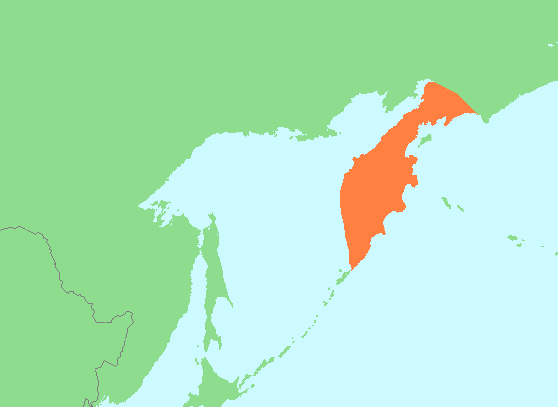
The Kamchatka Peninsula lies in far eastern Russia, roughly centered on the coordinates 57°N 160°E. In Russian it is known as полуо́стров Камча́тка. Stretching about 1,250 kilometres from north to south and covering roughly 270,000 km², Kamchatka separates the Pacific Ocean from the Sea of Okhotsk. Its remoteness and harsh climate have left much of the land wild and sparsely populated.
Image gallery
10 Images


Landscape and geology
The peninsula is a long, mountainous peninsula dominated by a volcanic belt and extensive river systems. Volcanism is the defining geological force: numerous stratovolcanoes, many of them active, rise from coastal lowlands to steep peaks. The area includes high volcanic cones, lava fields, fumaroles and geothermal springs that reflect the ongoing tectonic activity of the region.
Volcanoes, protection and World Heritage
A central feature of the region is the group known as the Volcanoes of Kamchatka, protected in parts as reserves and listed as a UNESCO World Heritage Site. These protected areas conserve volcanic landscapes, geothermal phenomena and important habitats for wildlife. They are also important natural laboratories for volcanology, seismology and ecology.
Flora, fauna and fisheries
Kamchatka supports a rich assemblage of northern Pacific wildlife. Coastal and river systems host huge salmon runs that sustain bears, sea birds and marine predators. Terrestrial fauna includes large brown bears, reindeer in the north, and numerous bird species. Vegetation ranges from tundra to dense boreal forest (taiga) on lower slopes.
Human presence and economy
Settlement is concentrated in a few towns and military or scientific outposts; indigenous peoples such as the Itelmens, Koryaks and Evens have lived in the region for millennia. Economic activity today centers on commercial fishing, fish processing, limited mining and growing seasonal tourism aimed at wildlife viewing, fishing and volcano trekking. Infrastructure remains limited by distance and climate.
Notable facts and visitor information
- Kamchatka is globally significant for active volcanism and intact northern ecosystems.
- Key attractions include volcano viewing, hot springs and dramatic coastal scenery.
- Conservation efforts combine federal reserves, scientific research and UNESCO recognition to balance use and protection.
For practical travel or research, visitors should plan carefully for challenging weather and limited services, and seek information from official conservation and tourism sources before visiting the peninsula.
Questions and answers
Q: What are the coordinates of the Kamchatka Peninsula?
A: The coordinates of the Kamchatka Peninsula are 57°N 160°E.
Q: What is the Kamchatka Peninsula?
A: The Kamchatka Peninsula is a peninsula located in eastern Russia.
Q: How long is the Kamchatka Peninsula?
A: The Kamchatka Peninsula is 1,250 km (780 mi) long.
Q: What is the land area covered by the Kamchatka Peninsula?
A: The Kamchatka Peninsula covers about 270,000 km2 (100,000 sq mi) between the Pacific Ocean and the Sea of Okhotsk.
Q: What is the UNESCO World Heritage Site located in Kamchatka?
A: The UNESCO World Heritage Site located in Kamchatka is the Volcanoes of Kamchatka.
Q: What is the significance of Volcanoes of Kamchatka?
A: The Volcanoes of Kamchatka is a UNESCO World Heritage Site that is significant due to its unique natural beauty.
Q: What is the official Russian name of Kamchatka Peninsula?
A: The official Russian name of Kamchatka Peninsula is полуо́стров Камча́тка, poluostrov Kamchatka.
Related articles
Author
AlegsaOnline.com Kamchatka Peninsula Leandro Alegsa
URL: https://en.alegsaonline.com/art/52030
Sources
- bykasov.com : Ошибка в географии
- britannica.com : "Kamchatka Peninsula"