
Exclave: definition, distinctions, examples and governance issues
An exclave is a portion of territory politically attached to a state or region but separated from its main area by foreign territory. This article explains definitions, types, causes, governance and notable examples.
Overview
An exclave is a portion of land politically attached to a larger entity such as a country or a subnational region but separated from that parent territory by the land of one or more other entities. Islands are usually excluded from this definition because the separation is by sea rather than by intervening land. Exclaves vary in size and importance from large, strategically significant territories to very small administrative pockets. A commonly cited example is Kaliningrad Oblast, a part of Russia around the city of Kaliningrad that is separated from the rest of Russia by territory of Lithuania and Poland and also borders the Baltic Sea.
Image gallery
2 Images
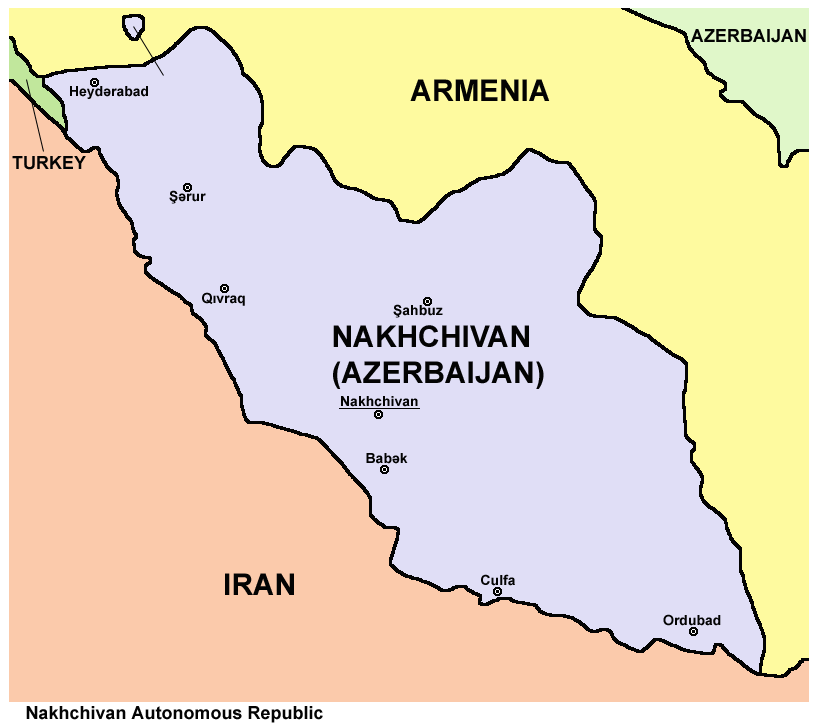
Definitions and distinctions
It is important to distinguish exclaves from enclaves. An enclave is territory entirely surrounded by a single other state; in practice an area can be both an exclave (relative to its parent) and an enclave (relative to its neighbours). For instance, the Spanish municipality of Llivia is an Spanish territory completely surrounded by France, making it both an exclave and an enclave. By contrast, Kaliningrad is not an enclave because it is bordered by more than one state and by the sea. See also the entry on enclave for related terms.
Types and typical causes
Exclaves may be international—separated by one or more foreign countries—or internal, separated from the main unit by other administrative divisions of the same state. Common historical causes include treaties, wars, dynastic inheritances, colonial-era borders and negotiated local compromises. Changes in sovereignty or the creation of new states can convert formerly contiguous areas into exclaves. Practical border demarcation sometimes produced small, irregular pockets that remain as administrative anomalies.
Governance, access and practical issues
Residents of exclaves often face practical challenges: travel and trade usually require crossing foreign territory, which raises issues of visas, customs, transit rights and infrastructure. States may negotiate transit corridors, visa-free transit, or special arrangements to facilitate movement. Exclaves can have strategic military importance or economic significance; they may also foster distinct local identities, and in some cases there are local discussions about autonomy or integration with neighbouring territory, occasionally described in terms of separatist or independence ideas.
Examples and notable cases
- Kaliningrad Oblast — Russian territory separated from mainland Russia by Lithuania and Poland, with maritime access to the Baltic Sea.
- Llivia — a Spanish (Spain) municipality that is an enclave within France.
- Alaska — part of the United States separated from the contiguous states by Canadian territory; often cited as an international exclave.
- Various small European pockets such as those in the Belgian–Dutch borderlands illustrate complex enclave–exclave patterns; see material on enclaves.
Legal and diplomatic arrangements
States usually handle exclave issues through bilateral or multilateral agreements covering border control, customs, and transit. Some arrangements are permanent and codified in treaties; others are pragmatic, temporary or subject to periodic negotiation. Where access is difficult, countries may invest in infrastructure and services to maintain links with the exclave population.
Other uses
Outside political geography, the term "exclave" is also used in medical contexts to describe a detached or isolated part of an organ, for example an accessory lobe of the thyroid or pancreas. When studying exclaves in geopolitics, it is useful to consider historical origins, legal status, and the lived experience of residents alongside strategic and economic factors.
Questions and answers
Q: What is an exclave?
A: An exclave is a strip of land that belongs to an entity but is not connected to it by land and is surrounded by other political entities.
Q: Can islands be considered exclaves?
A: No, islands are not counted as exclaves.
Q: What is Kaliningrad Oblast?
A: Kaliningrad Oblast is a region around the Russian city Kaliningrad that belongs to the Russian Federation but is separated from the rest of that country by territory belonging to Lithuania and Poland.
Q: Is Kaliningrad Oblast an enclave?
A: No, Kaliningrad Oblast is not an enclave because it is surrounded not by one state but by two: Lithuania and Poland. It also borders the Baltic Sea.
Q: What is an enclave?
A: An enclave is a region or territory that is completely surrounded by one other country.
Q: Can an exclave also be an enclave?
A: Yes, although both meanings are close, an exclave might also be an enclave.
Q: What is Llivia?
A: Llivia is a Spanish exclave in France, which is an enclave.
Tags
Related articles
Author
AlegsaOnline.com Exclave: definition, distinctions, examples and governance issues Leandro Alegsa
URL: https://en.alegsaonline.com/art/32892