
Arado Ar 234 — Germany's first operational jet bomber
Jet-powered reconnaissance bomber developed by Arado in WWII; first flown in 1943 and used by the Luftwaffe late in the war. Notable as the world's first operational twin‑jet bomber and an early jet reconnaissance type.
Overview
The Arado Ar 234 was the first operational twin‑turbojet bomber deployed in the world. Conceived as a high‑speed reconnaissance and light strike aircraft, it entered service with the German air arm very late in the conflict. The type was flown for the first time in 1943, though operational squadrons did not appear until 1944–45.
Image gallery
9 Images



Design and characteristics
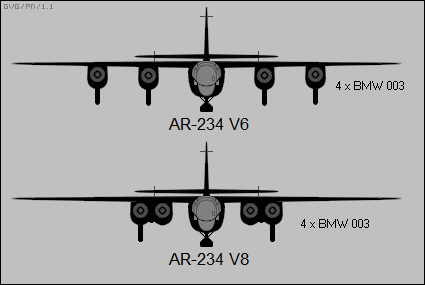
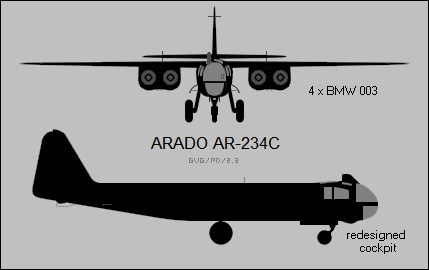
The Ar 234 was designed and manufactured by the Arado company in Nazi Germany. Its design emphasized clean aerodynamic lines, a slim fuselage and jet propulsion to achieve higher cruising speeds than contemporary piston‑engined types. It featured a two‑seat cockpit (or single glazed nose in reconnaissance versions), twin jet nacelles, and a characteristic bicycle‑style main undercarriage with small outrigger wheels.
Typical features
- Role: high‑speed reconnaissance and light bomber
- Configuration: twin‑engine turbojet, low‑wing monoplane
- Equipment: cameras in reconnaissance versions; limited bomb load in bomber versions
- Operational advantage: speed and altitude to reduce interception risk
Development and operational history
Work on the Ar 234 advanced quickly as German designers pursued jet propulsion in the early 1940s. Although prototypes appeared in 1943, only small numbers reached frontline units of the Luftwaffe before the end of World War II. Its late introduction and wartime resource limits meant that it had little chance to alter the course of the conflict, but it demonstrated the tactical possibilities of jet reconnaissance and strike aircraft.
Variants, use and legacy
Several variants were built or proposed, including reconnaissance‑focused models and bomber‑configured versions. Operators used the Ar 234 mainly for photo‑reconnaissance, fast raids and sporadic tactical bombing where its speed was an asset. Postwar, captured examples were studied by Allied engineers and the airplane influenced the development of early Cold War jet designs.
Notable facts
- The Ar 234 holds historical importance as the first operational jet bomber type.
- Production numbers were limited; only a handful reached combat units before Germany surrendered.
- Surviving airframes and fragments were collected by Allied nations and a small number remain in museums and collections.
For a concise technical overview, development chronology and photographs, see further resources: technical summary, role and armament, global context, design notes, manufacturer history, national context, service records, war impact, flight history, and first flight date.
Related articles
Author
AlegsaOnline.com Arado Ar 234 — Germany's first operational jet bomber Leandro Alegsa
URL: https://en.alegsaonline.com/art/5153