
Armed Forces of the Russian Federation
The unified military organization of the Russian state since the Soviet Union's dissolution. Describes structure, principal branches, historical development, roles, and distinguishing features.
Overview
The Armed Forces of the Russian Federation are the principal military services of the Russian state created in the years following the dissolution of the Soviet Union. They perform national defence, strategic deterrence and overseas operations, and include a mix of conscripted and professional personnel. The President of Russia serves as the country's Supreme Commander-in-Chief and holds ultimate authority over the military command (Supreme Commander). Official information is published by government and defense bodies (official sources).
Image gallery
10 Images


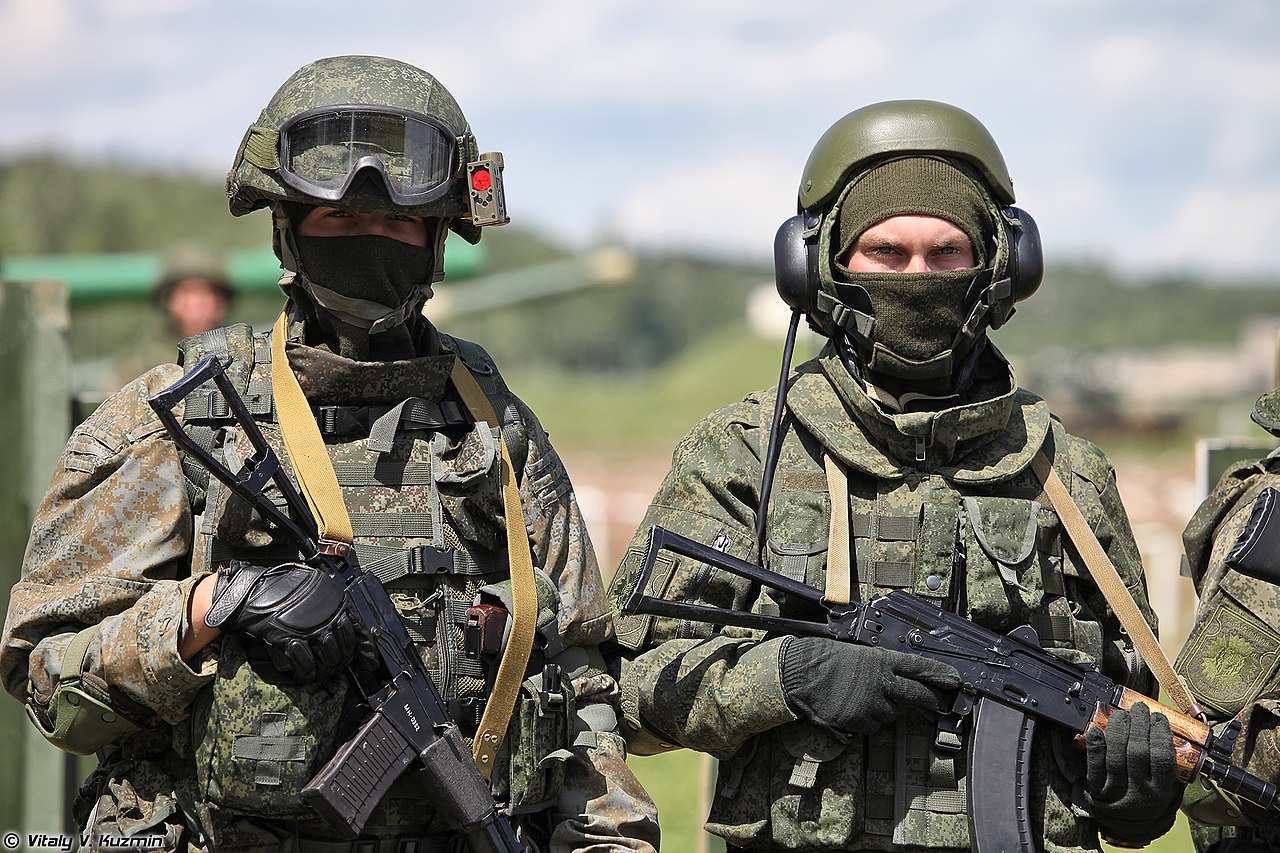


Main components and capabilities
The Russian military is commonly described in terms of several principal branches and specialized services. Modern reorganizations have combined and redefined some elements, but the core responsibilities remain: ground combat, naval operations, air and space control, and strategic nuclear forces.
- Ground Forces — the main land combat arm, organized into combined-arms armies, motorized rifle and tank units. (Ground Forces)
- Navy — surface fleets, submarine forces (including ballistic missile submarines), naval aviation and coastal units.
- Aerospace Forces — a formation that integrates air power and space-oriented capabilities; it incorporates air force roles and space support elements. Historical air and space formations are referenced separately in some sources (Air Force) (Space Troops).
- Strategic Rocket Forces — land-based intercontinental ballistic missile (ICBM) units responsible for a portion of Russia's nuclear deterrent.
- Airborne Forces (VDV) — specialized rapid-reaction and airborne assault troops used for strategic mobility and crisis response.
History and reform
The current armed forces emerged after the Soviet Union collapsed in 1991 and were built on former Soviet structures and personnel (post-Soviet transition). Since the 2000s, Russia undertook several waves of reform aimed at improving readiness, streamlining command, modernizing equipment and creating rapid-deployment capabilities. Notable organizational changes included the establishment of combined-arms commands, reforms to training and logistics, and the consolidation of air and space services into a unified aerospace branch.
Roles, employment and notable features
Beyond conventional defense, the Armed Forces maintain strategic nuclear forces as a central deterrent and develop indigenous arms and aerospace industries to equip their units. They conduct large-scale exercises, international deployments, and participate in alliance and security activities. Distinct from the Armed Forces are other security organizations such as the National Guard and border services, which have separate missions and command lines.
Further reading
For official statements and organizational charts consult government and defense publications (official), analytical studies (historical context) and branch-specific sources for the Ground Forces (Ground), Air and Aerospace topics (Air) (Space) and leadership information (Supreme Command).
Questions and answers
Q: What is the Armed Forces of the Russian Federation?
A: The Armed Forces of the Russian Federation is the armed forces of Russia, created after the breakup of the Soviet Union.
Q: How big is the Armed Forces of the Russian Federation?
A: The Armed Forces is known to be one of the biggest in the world with about 1,200,000 troops active.
Q: Does Russia make its own weapons?
A: Yes, Russia also makes its own weapons.
Q: How many branches does the Armed Forces of the Russian Federation have?
A: The Armed Forces has 6 branches: Russian Air Force, Russian Ground Forces, Russian Navy, Strategic Missile Troops, Russian Space Troops, and the Russian Airborne Troops.
Q: Who is the Commander-In-Chief of the Armed Forces of the Russian Federation?
A: The Commander-In-Chief is the President of Russia.
Q: When was the Armed Forces of the Russian Federation created?
A: The Armed Forces of the Russian Federation was created after the breakup of the Soviet Union.
Q: How does the size of the Armed Forces of the Russian Federation compare to other countries?
A: The Armed Forces of the Russian Federation is known to be one of the biggest in the world.
Tags
Related articles
Author
AlegsaOnline.com Armed Forces of the Russian Federation Leandro Alegsa
URL: https://en.alegsaonline.com/art/5685