
Japanese traditional dance: Odori, Mai, Kyomai and classical forms
An introduction to Japan’s classical dance traditions: origins, defining features of Odori and Mai, the refined Kyomai of Kyoto, performance contexts, instruments, training, and cultural significance.
Overview
Japanese traditional dance encompasses several interrelated forms that evolved over centuries of court, religious and popular culture. Two broad categories are commonly distinguished: odori, a more energetic, stage-oriented style developed in the early modern (Edo) era, and mai, a restrained, circular movement idiom rooted in Noh theater and earlier courtly practices. Modern classical dance in Japan is often taught and presented under the umbrella term Nihon buyo, which synthesizes elements of both odori and mai.
Image gallery
9 Images


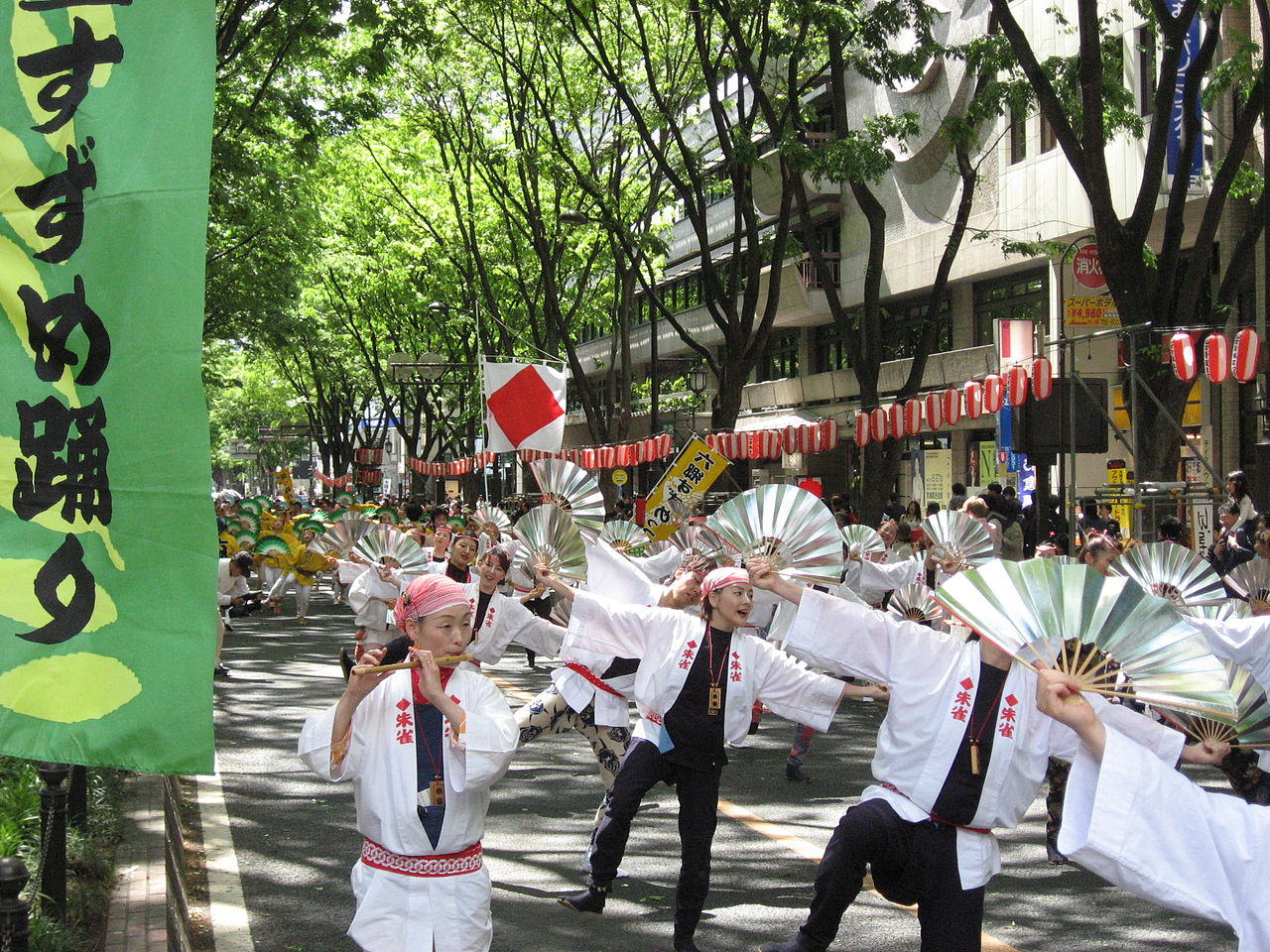


Characteristics and technique
Mai is typically characterized by slow, gliding steps, subtle shifts of weight, and an emphasis on the upper body and hands. Dancers cultivate quiet control and repeated, stylized patterns called kata. Odori contrasts with mai through more pronounced footwork, jumps and dynamic poses derived from kabuki theater, and frequently larger theater gestures. Costuming ranges from full kimono in many classical dances to the distinctive masks of Noh; musical accompaniment commonly includes instruments such as shamisen, flute and small drums.
Historical development
Both styles have deep roots: mai grew out of the ritualized movement of Noh and aristocratic court dances, developing a measured aesthetic that values restraint and suggestion. Odori emerged later with the rise of popular theater in the Edo period and is linked to kabuki, where bold physicality and spectacle were prized. In the 17th century and thereafter, regional refinements emerged; for example, the Kyoto variant known as Kyomai developed a refined, courtly grace associated with the capital.
Kyomai, regional schools and transmission
Kyomai (Kyoto-style dance) arose in the Tokugawa period as performers and teachers in Kyoto adapted courtly manners and the city’s elegant taste into a distinct repertoire. It is noted for small, precise footwork and a cultivated sense of modesty in movement. Japanese classical dance is preserved through formal schools (ryu) and long apprenticeships; students learn repertory, gestures and musical timing from masters in a lineage-based system.
Performance contexts and cultural role
Traditional dances appear on public stages, in temple and shrine ceremonies, and in more intimate settings. Historically, both Noh and kabuki were male-dominated, but over time many classical dances came to be performed predominantly by women, particularly in domestic or private performance contexts. Dance remains an important carrier of seasonal stories, historical narratives and cultural memory, and it continues to be taught for both professional and amateur practice.
Distinctive facts and further reading
Key distinctions to remember: mai emphasizes circularity and stillness; odori emphasizes rhythm and visible footwork. Kyomai represents a Kyoto refinement of mai aesthetics. For basic background and related topics see traditional dance overview, classical theater links and resources on regional styles. For kabuki-related context see kabuki theater and for Noh influences see Noh drama. Gender and social history of performance are discussed in articles such as gender in performance and performance venues. Specific Kyoto traditions and Kyomai lineages can be explored via Kyoto dance and Kyomai repertory. For musical accompaniment and instruments see traditional instruments, and for formal training systems and schools consult dance schools and apprenticeship traditions.
Related articles
Author
AlegsaOnline.com Japanese traditional dance: Odori, Mai, Kyomai and classical forms Leandro Alegsa
URL: https://en.alegsaonline.com/art/49547