
Joseph Beuys — German artist, performance pioneer and theorist of social sculpture
Joseph Beuys (1921–1986) was a German postwar artist known for performances, installations and the concept of 'social sculpture'. He blended materials, politics and pedagogy to reshape art's role in society.
Overview
Joseph Beuys (12 May 1921 – 23 January 1986) was a major figure in postwar European art whose practice ranged across performance, sculpture, drawing, teaching and public projects. He rejected narrow definitions of art, arguing that artistic activity should reshape political and social life. His work is often described through the phrase "social sculpture," the idea that society itself can be formed creatively and that everyone is an artist in the sense of contributing to collective life.
Image gallery
8 Images





Practice and materials
Beuys is recognizable for recurring materials and staged actions. He frequently used felt and animal fat as symbolic substances, along with copper, honey and everyday objects. These materials carried personal, mythic and practical resonances in his performances and installations. He worked in live actions (often termed happenings), assemblage, drawings, and large-scale interventions that combined pedagogy, ritual and political speech.
Major works and examples
Some of Beuys's best-known projects illustrate his range:
- How to Explain Pictures to a Dead Hare (1965) — an early performance mixing intimacy and theatricality.
- I Like America and America Likes Me (1974) — a New York action that involved prolonged contact with a coyote.
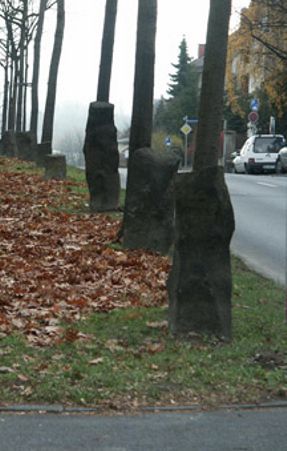
- 7000 Oaks (begun 1982) — a long-term ecological and civic project pairing basalt stones with oak plantings, merging art with urban planning.
For further biographical context see biography resources, for catalogues and exhibitions consult catalogue entries, and for examples of his sculptural work see sculpture references.
Teaching, politics and organizations
Beuys taught and lectured widely; his tenure at the Kunstakademie Düsseldorf brought a generation of students into collaborative projects and experimental pedagogy. He also founded or helped found institutions and initiatives intended to connect art with civic education and ecological concerns. Politically he supported grassroots democracy and environmental causes and sought to bring artistic methods into public debate.
Themes, influence and controversies
Beuys's work revolved around transformation: personal myth, healing, and the idea that creative action could restructure institutions. He influenced performance art, conceptual art and socially engaged practices across Europe and beyond. Some aspects of his biography and self-mythologizing—especially wartime anecdotes he recounted—have provoked scholarly debate, but his intellectual and practical impact on art and public discourse remains widely acknowledged.
Legacy
Today Beuys is studied both for his artworks and for his expansive theory of art's civic role. Museums, biennials and academic programs continue to assess his contributions to questions about the boundaries between art, pedagogy and politics, and projects inspired by his ideas—especially those linking ecology and community—remain active internationally.
Questions and answers
Q: Who was Joseph Beuys?
A: Joseph Beuys was a German artist who worked in various art forms including sculpture, performance art, video art, and installations.
Q: When was Joseph Beuys born?
A: Joseph Beuys was born on May 12, 1921.
Q: In which century did Joseph Beuys become an important artist?
A: Joseph Beuys became an important artist in the second half of the 20th century.
Q: What were some of the art forms that Joseph Beuys worked in?
A: Joseph Beuys worked in various art forms such as sculpture, performance art (happening, fluxus), video art, and installations.
Q: How do you pronounce Joseph Beuys's name?
A: Joseph Beuys's name is pronounced as "boyce".
Q: Did Joseph Beuys make any contributions to the art world?
A: Yes, Joseph Beuys was an important artist in the second half of the 20th century.
Q: When did Joseph Beuys die?
A: Joseph Beuys died on January 23, 1986.
Related articles
Author
AlegsaOnline.com Joseph Beuys — German artist, performance pioneer and theorist of social sculpture Leandro Alegsa
URL: https://en.alegsaonline.com/art/51208