
Aphelion — the point in an orbit farthest from the Sun
Aphelion is the point in an object's solar orbit where it is farthest from the Sun. The term, its orbital effects, Earth's aphelion timing, and related terminology are explained and contrasted with perihelion.
Overview
The aphelion is the location in an object's orbit around the Sun where its distance from the Sun reaches a maximum. It is the counterpart to perihelion, the point of closest approach. The English word aphelion comes from Greek roots — apo meaning "away" and Helios for the Sun — reflecting that separation.
Image gallery
4 Images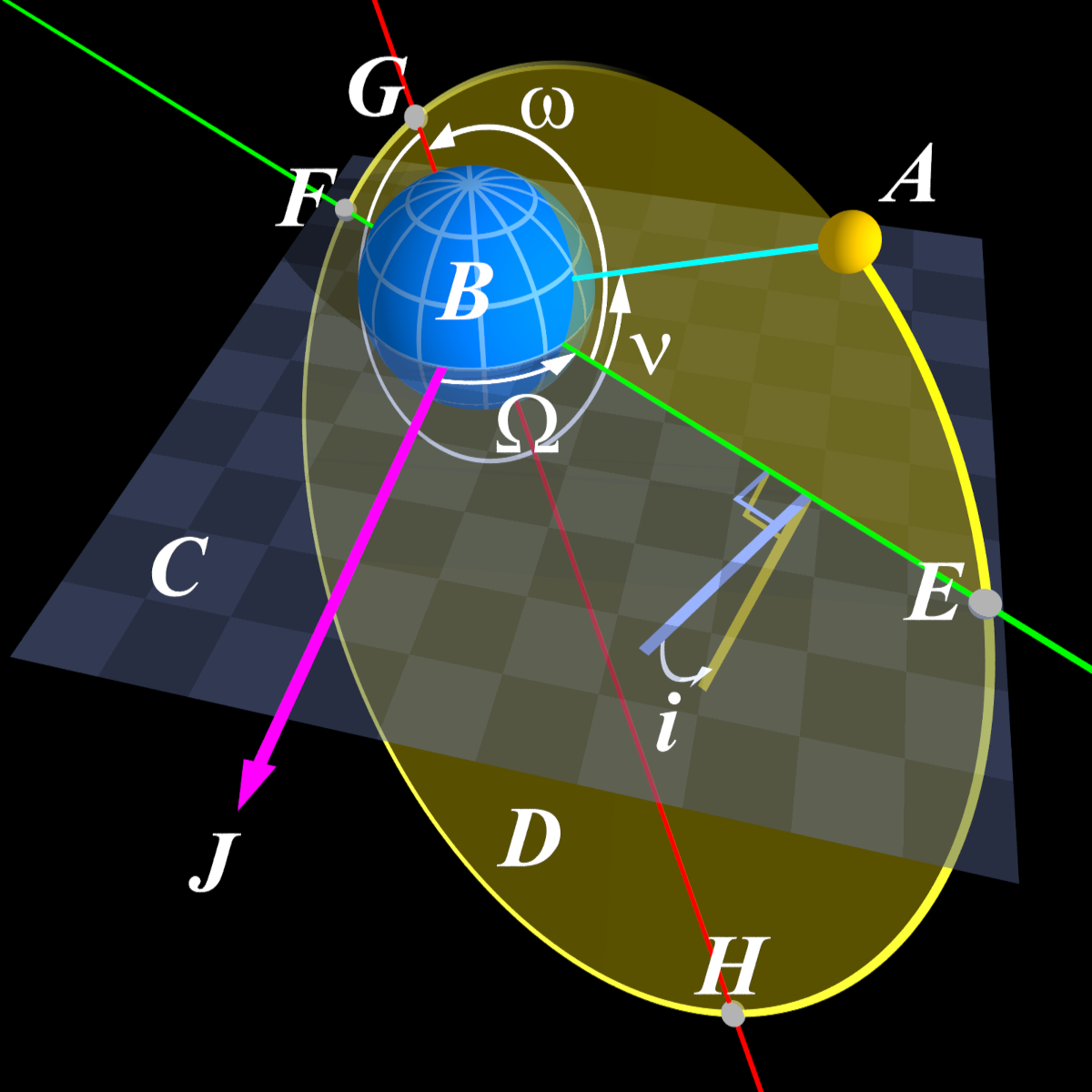



Orbital mechanics and characteristics
Aphelion occurs in any elliptical orbit described by two foci, one of which is the Sun. According to Kepler's laws, a body moves more slowly near aphelion and faster near perihelion because equal areas are swept in equal times; this variation in orbital speed is a direct outcome of conservation of angular momentum. The exact distance at aphelion depends on the orbit's semi-major axis and eccentricity: higher eccentricity produces a larger difference between perihelion and aphelion distances.
Earth's aphelion and examples
For Earth, aphelion falls in early July, typically around July 3, when the planet is about 152 million kilometers (about 94.5 million miles) from the Sun. Seasonal changes, however, are driven primarily by axial tilt rather than this modest distance variation. Other planets, comets and satellites have their own aphelia (or more generally apoapsides for non-solar primaries), which can differ dramatically: some comets have extremely distant aphelia, taking them far into the outer Solar System.
Practical importance and observations
Aphelion is a useful concept in celestial mechanics, mission planning and observational astronomy. Spacecraft trajectories, transfer orbits and timing of observations may be optimized by accounting for changing solar distance and orbital speed. Amateur and professional astronomers note aphelia when tracking brightness and apparent motion of objects because greater distance typically means diminished apparent brightness and slower apparent motion.
Terminology and calendar variations
- The generic term for the farthest orbital point around any primary is "apoapsis"; for the Sun specifically it is "aphelion."
- Exact calendar dates of aphelion can shift slightly each year because of the calendar system and gravitational perturbations; for example the Gregorian calendar places Earth's aphelion near early July but it can vary by a day or two.
- Datasets and ephemerides maintained by observatories and space agencies list yearly aphelion and perihelion times for accurate planning; consult specialized references such as those provided through astronomical data services (Earth's orbit resources) for precise values.
For further reading on orbital elements and related terms see general astronomy resources and technical references that explain how aphelion fits into orbital parameter sets and long-term orbital evolution (etymology and terminology, heliocentric concepts, and practical guides to orbit computation).
Related articles
Author
AlegsaOnline.com Aphelion — the point in an orbit farthest from the Sun Leandro Alegsa
URL: https://en.alegsaonline.com/art/4871