
Perihelion: the nearest point of an orbit to the Sun
Perihelion is the point in an object's solar orbit where it is closest to the Sun. This article explains its definition, orbital causes, effects on climate and visibility, historical significance and related terms.
Perihelion denotes the location along an object's orbit where that object lies closest to the Sun. It applies to bodies such as a planet, an asteroid or a comet. The complementary point farthest from the Sun is the aphelion. The term derives from Greek: peri (near) combined with Helios, the sun god.
Image gallery
4 Images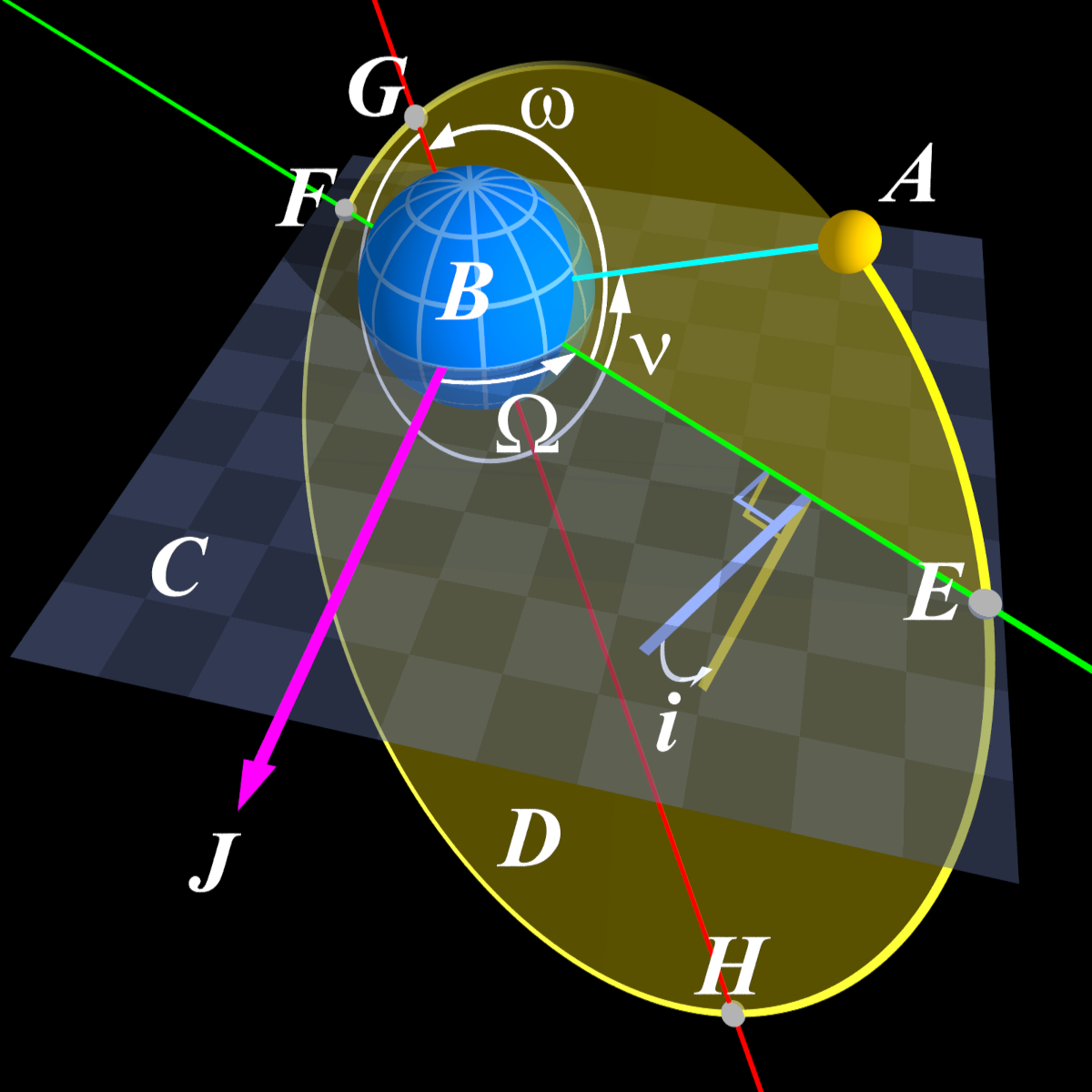


Definition and related terms
In celestial mechanics, perihelion is one specific location determined by the geometry of an orbit. For objects orbiting Earth the analogous nearest point is called perigee. Orbital parameters commonly used to describe perihelion include the distance at perihelion and the argument of perihelion, one of the classical orbital elements that fixes the orientation of the close approach within the orbital plane.
Orbital shape and causes
Most bodies in the Solar System follow approximately elliptical paths, so each orbit has a nearest and farthest point relative to the focus occupied by the Sun. The amount by which an orbit departs from a circle is measured by its eccentricity. A low eccentricity produces small differences between perihelion and aphelion; a high eccentricity produces large differences. In reality, orbits are not perfectly fixed: gravitational interactions among bodies and relativistic effects cause the perihelion to slowly shift or precess over time. That non-closure of the ellipse has consequences for long-term climate cycles such as the Milanković cycles.
Effects on planets, climate and comets
A change in distance at perihelion affects the amount of solar radiation received, but that effect must be weighed against axial tilt to understand seasons. For Earth (Earth), perihelion occurs near early January and aphelion near early July. The difference in solar distance between those dates is only a few percent: roughly 147 million km at perihelion versus about 152 million km at aphelion. Because the tilt of Earth's axis (its axial tilt) determines the angle and distribution of sunlight, the seasons—seasons such as winter and summer—are driven mainly by orientation, not by small annual distance changes. The opposite seasonal timing between hemispheres explains why the southern hemisphere is in summer when the northern hemisphere is in winter, even though Earth is closer to the Sun in January.
Observational importance and examples
- Cometary activity typically intensifies near perihelion as increased solar heating causes ices to sublimate, producing cometary comas and tails.
- Perihelion passages are key moments for planning spacecraft encounters and observations because proximity changes brightness and gravitational influences.
- Some planets and minor bodies have noticeably eccentric orbits; their perihelion distances can dramatically affect surface temperatures and seasonal extremes.
Historical and scientific significance
Precise measurements of perihelion precession have played important roles in physics. The anomalous precession of Mercury's perihelion, for example, provided one of the classic tests of general relativity by accounting for a small residual advance that Newtonian mechanics could not explain. More generally, tracking changes in perihelion over decades helps astronomers refine orbital models and predict long-term dynamical behavior.
Practical notes and distinctions
When interpreting statements about perihelion, it is useful to distinguish between the geometric definition (the closest point on the orbit) and instantaneous distance variations caused by perturbations. For many practical purposes—such as calendar dates of perihelion, spacecraft mission design, or predicting comet visibility—ephemerides provide the precise timing and distance for the perihelion event.
Further reading and technical references can expand on orbital elements, secular perturbations and how perihelion connects to climate cycles, spacecraft navigation, and observational astronomy. For definitions and deeper mathematical descriptions see specialized sources and mission ephemerides, or follow introductory material about orbital mechanics and celestial coordinates via resources linked above.
orbit planet asteroid comet Sun aphelion Helios perigee Earth elliptical eccentricity Milankovich cycles winter summer southern hemisphere seasons axial tilt
Questions and answers
Q: What is the perihelion?
A: The perihelion is the point in the orbit of a planet, asteroid or comet that is nearest to the sun. It is the opposite of aphelion, which is the point farthest from the sun.
Q: What does "peri" mean?
A: Peri comes from Greek and means "near".
Q: What does "Helios" refer to?
A: Helios refers to the Greek god of the sun.
Q: How do orbits differ from circles?
A: Orbits are approximately elliptical (a kind of non-circular) while circles are closed curves such as an ellipse.
Q: When does Earth come closest to the Sun?
A: Earth comes closest to the Sun every year around January 3.
Farthest from Sun every year around July 4.
Q: How much difference in distance between Earth's nearest and farthest points from Sun? A: The difference in distance between Earth's nearest point to the Sun in January and farthest point from Sun in July is 3.1 million miles (5 million kilometers).
Q: Does Earth's distance from Sun cause seasons change? A:No,Earth’s seasons come and go mainly because Earth does not rotate with its axis exactly upright with respect to plane of our world’s orbit around sun, rather than due to differences in distance between it and sun.
Related articles
Author
AlegsaOnline.com Perihelion: the nearest point of an orbit to the Sun Leandro Alegsa
URL: https://en.alegsaonline.com/art/75809