
Apollo Command and Service Module: design, history and missions
Comprehensive overview of the Apollo Command and Service Module (CSM): design, systems, operational role in lunar missions, development history, major missions and legacy in human spaceflight.
Overview
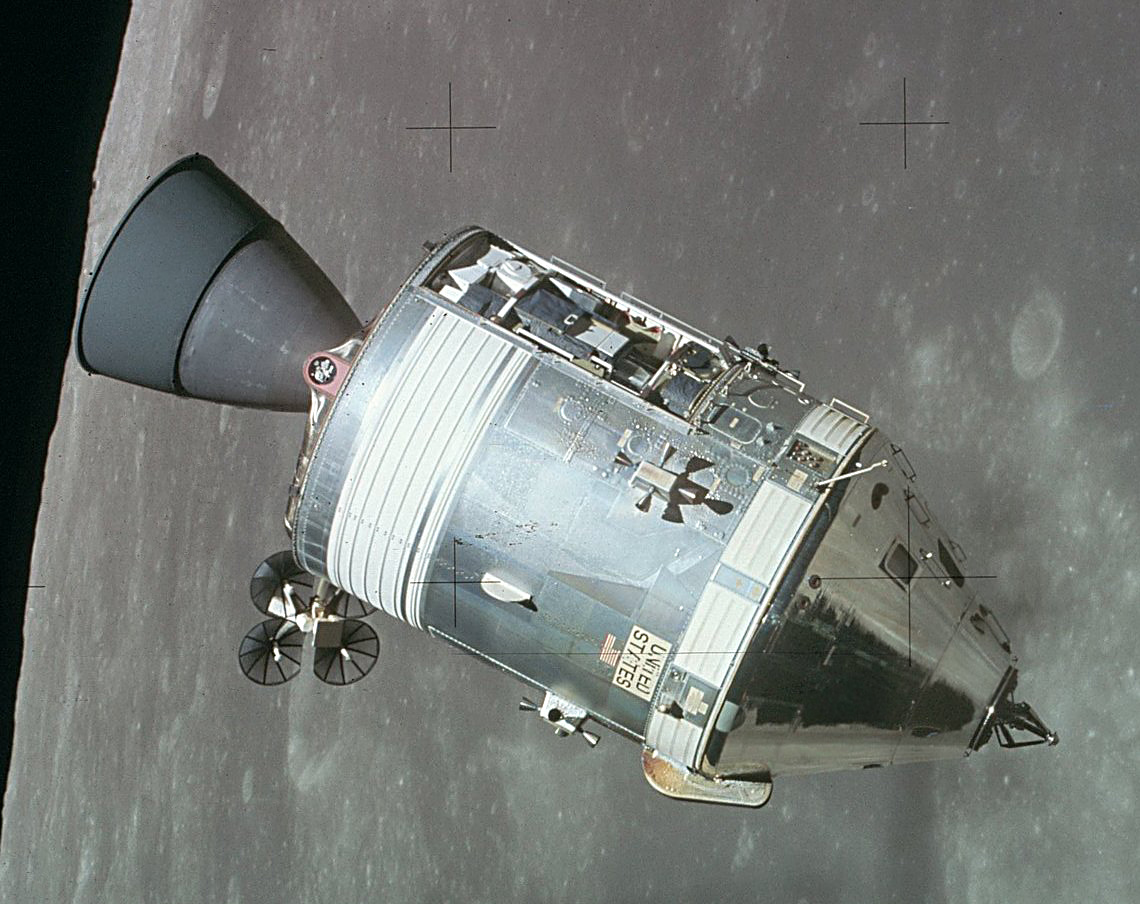
The Apollo Command and Service Module (CSM) was the crewed element of the United States Apollo lunar program and operated together with the Lunar Module during Moon missions. Built for NASA by North American Aviation, the CSM combined a pressurized Command Module for crew operations and reentry with an unpressurized Service Module that provided propulsion, consumables and electrical power. During lunar missions the CSM remained in lunar orbit while the Lunar Module descended to the surface; it supported rendezvous, docking, and the return trip to Earth.
Image gallery
10 Images



Design and major components
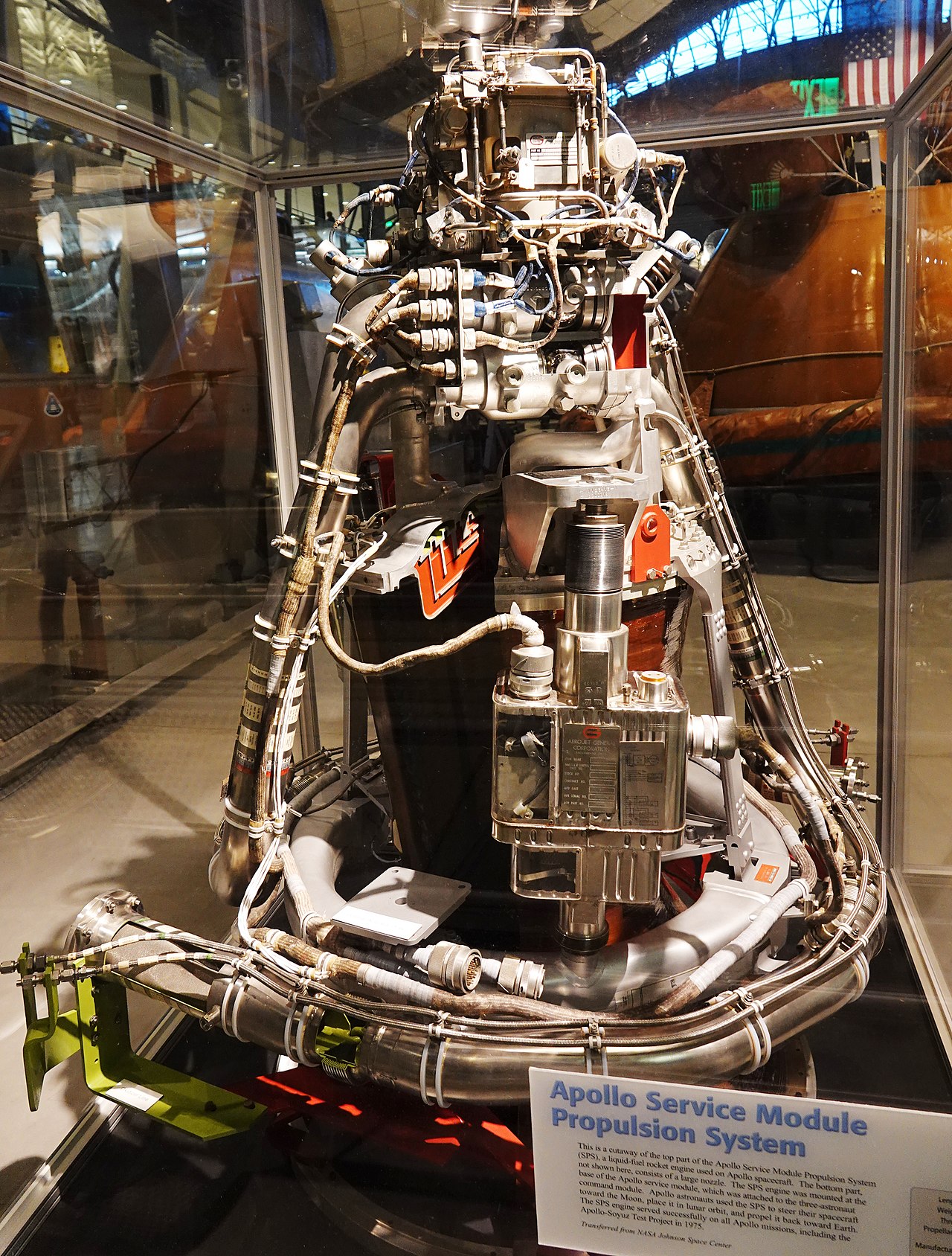
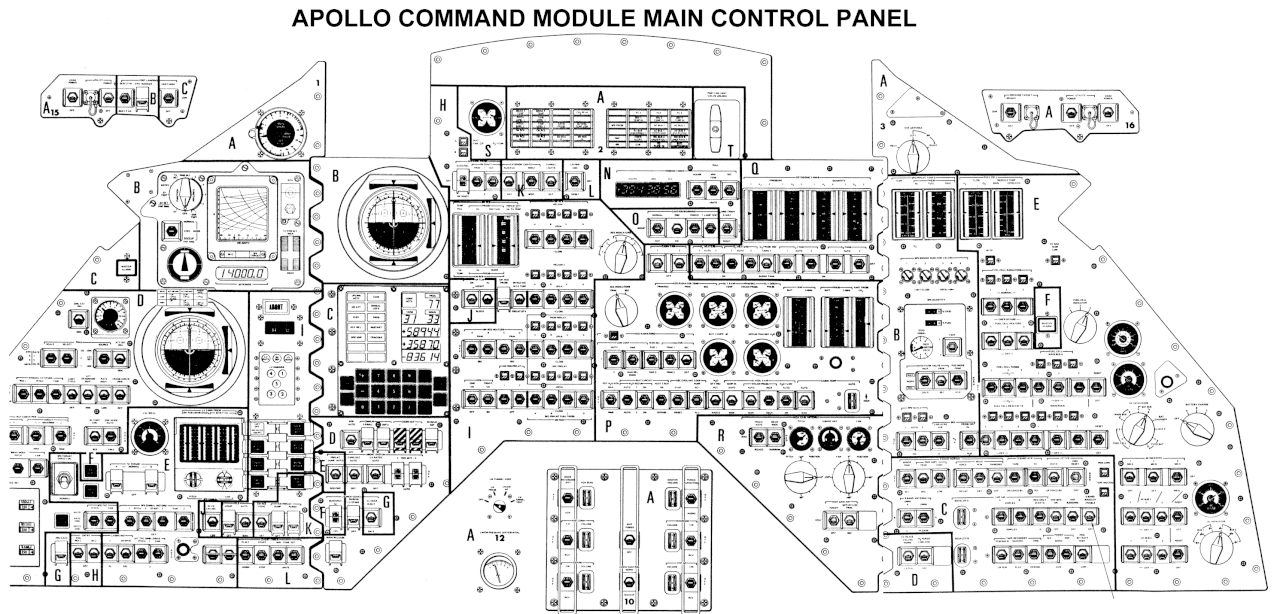
The two major sections performed distinct functions. The Command Module contained the crew cabin, flight controls, avionics, windows, and an ablative heat shield for atmospheric reentry. The Service Module housed the main service propulsion system (SPS) and propellant tanks, fuel cells that generated electrical power and water, radiators, and storage for oxygen and consumables. The docking mechanism and tunnel permitted transfer and docking operations with the Lunar Module. Redundant systems and emergency procedures were integral to the design to protect the crew during long translunar flights.
Propulsion, power and life support
The SPS engine in the Service Module provided large velocity changes needed for lunar orbit insertion and trans‑Earth injection. Smaller reaction control thrusters performed attitude control and fine maneuvers. Electrical power came from alkaline fuel cells that combined hydrogen and oxygen to produce electricity and potable water. Environmental control systems regulated cabin atmosphere, temperature and waste management for multi‑day missions and supported EVA preparations for lunar sorties.
Development, variants and testing
CSM development progressed through early test configurations and improvements; major production versions included an initial Block I for unmanned testing and a Block II series that incorporated crewed flight requirements and safety enhancements. Early flights tested the spacecraft in suborbital and low Earth orbit using the Saturn I booster, while operational lunar missions launched aboard the larger Saturn V. The program executed both uncrewed and crewed missions that validated hardware, procedures and mission architecture.
Missions and operational role
The CSM served as the primary transport for astronauts between Earth and lunar vicinity, performing translunar injection, lunar orbit insertion, and trans‑Earth injection burns. It also provided communications relay, navigation, and life support while the lunar landing party operated on the Moon. Several missions used the CSM alone for Earth‑orbital objectives and systems checkout prior to committing to crewed lunar attempts.
Legacy and preservation
The CSM is notable for its pragmatic engineering solutions, modular separation of command and service sections, and robust redundancy that enabled a series of successful lunar missions. Several command modules are preserved in museums and educational collections, where they illustrate mid‑20th century advances in crewed spaceflight and the broader Apollo program. For archival documentation and technical details consult official program histories and institution collections maintained by agencies and museums.
- Primary functions: crew transport, propulsion, electrical power, life support.
- Manufacturer: North American Aviation (prime contractor for the CSM).
- Launch vehicles used: Saturn I for early tests and Saturn V for lunar missions.
- Test and checkout flights occurred in low Earth orbit prior to lunar deployment.
Related articles
Author
AlegsaOnline.com Apollo Command and Service Module: design, history and missions Leandro Alegsa
URL: https://en.alegsaonline.com/art/4918