
Iran–Contra affair (1985–1987)
A political scandal in the United States involving clandestine arms sales to Iran and diversion of funds to Nicaraguan Contra rebels, leading to investigations, prosecutions, and lasting debate over executive oversight.
Overview
The Iran–Contra affair was a controversial political scandal in the United States that unfolded between 1985 and 1987. At its core were secret arms transfers to Iran, the stated purpose of which was to secure the release of American hostages held by groups with ties to Iran, and the parallel diversion of proceeds and other support to Contra rebels fighting the Sandinista government in Nicaragua. The events exposed covert policy channels inside the executive branch and prompted extensive public and congressional scrutiny. For a general summary, see the Iran–Contra scandal overview.
Image gallery
8 Images




How it worked
Officials arranged shipments of weapons and related materiel to Iran, and attempted to use influence or payments to win the release of hostages in the Middle East. At the same time, some participants sought to funnel funds and supplies to the Nicaraguan Contras despite legal restrictions passed by Congress. The scheme relied on intermediaries, foreign partners, and semi-covert channels to move money and matériel. The effort linked three separate policy goals—hostage recovery, engagement with Iranian intermediaries, and support for anti‑Sandinista forces—into a single, covert operation.
Principal figures and institutions
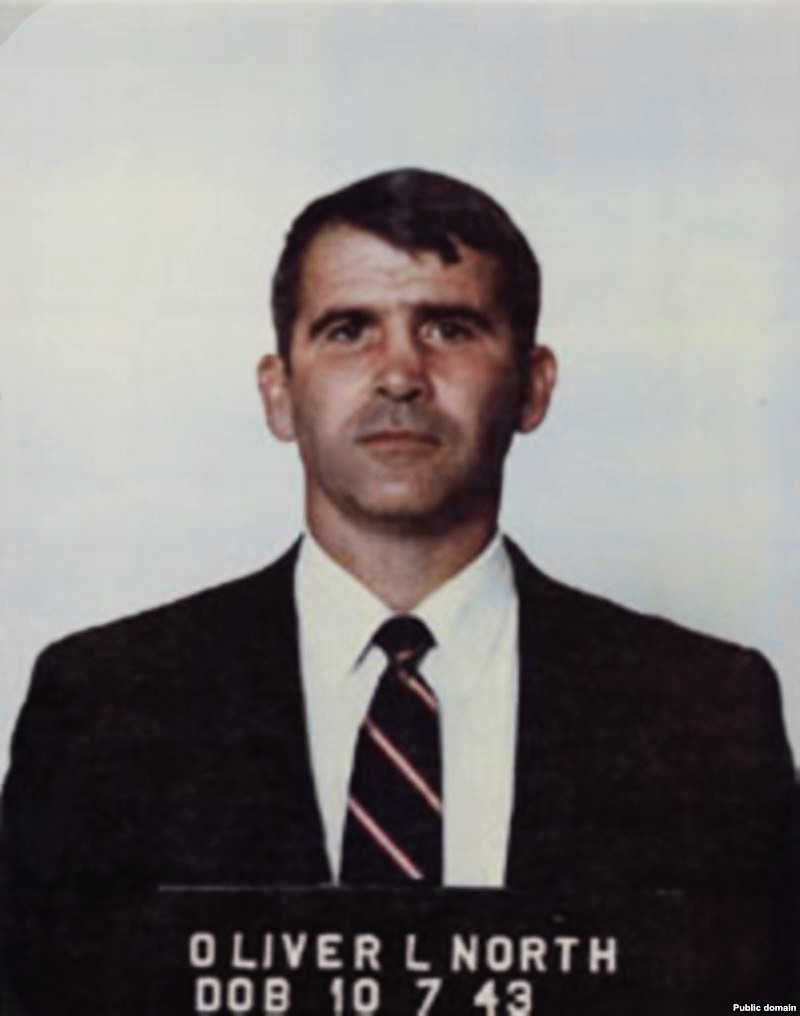
Key individuals and entities included senior White House staff, members of the National Security Council, and middlemen who arranged sales and transfers. Notable names widely discussed in public records and hearings were President Ronald Reagan and aides such as Oliver North. The controversy touched the State Department and the National Security Council, and it provoked debate about the President's role and responsibility for actions taken by subordinates. The affair also involved foreign actors in Iran and operatives handling the Contra connection.
Investigations, commissions, and hearings
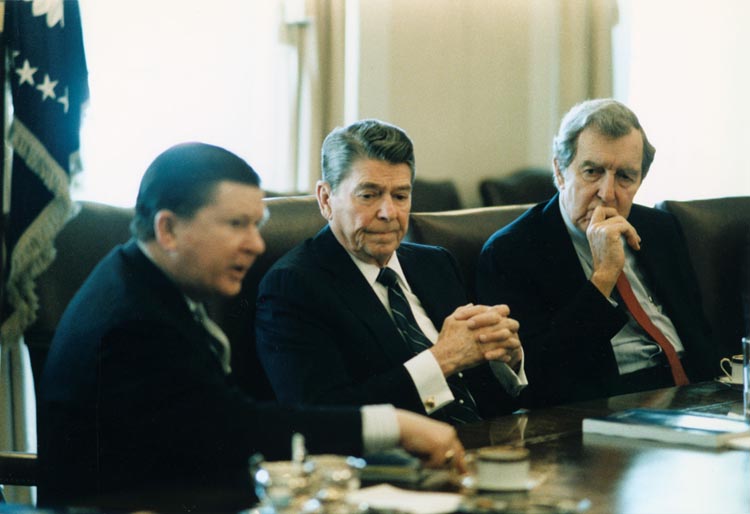
When the scheme became public, the administration faced multiple probes. President Ronald Reagan announced a special review and appointed an independent panel known as the Tower Commission, drawing members such as John Tower, Edmund Muskie, and Brent Scowcroft. Separate congressional hearings were held, televised and closely followed by the public. Those inquiries produced detailed accounts of internal communications and disputed recollections about who authorized or knew about specific operations. The official panels examined whether policy and legal limits had been bypassed and made recommendations about oversight and accountability.
Legal outcomes and pardons
Several administration officials were indicted or otherwise investigated. Some faced convictions that were later overturned, vacated, or rendered moot because of procedural issues, immunity claims, or appeals. Among the figures who became the focus of prosecutions was Oliver North, whose public testimony and legal fate attracted intense attention; differing records report both convictions and later reversals. A number of those charged received pardons or clemency from President George H. W. Bush, which further complicated final adjudication. The topic of accountability is often summarized with references to acquittals and pardons—examples include public commentary that some participants were effectively acquitted or later pardoned.
Political consequences and legacy
The affair had several lasting effects: it raised questions about the limits of executive power, the efficacy of congressional oversight, and the use of clandestine methods in foreign policy. It intensified debates about U.S. policy toward Iran and Central America and influenced subsequent reforms in national security procedures. Public reactions ranged from outrage over the apparent circumvention of law to concerns about national security and hostage diplomacy. Historians and legal scholars continue to discuss whether President Reagan had direct knowledge of specific operational details; inquiries found no conclusive proof that he personally authorized every element, but they did criticize management and supervision inside the White House.
Further reading and related topics
- Iran and U.S. relations in the 1980s
- Details about hostage situations and negotiations: hostages
- Context on U.S. policy toward the President and executive prerogatives
The Iran–Contra affair remains an instructive case about the complexities that arise when clandestine foreign-policy efforts collide with domestic law and congressional restrictions. Contemporary discussions often refer back to the episode when evaluating the balance between secrecy, accountability, and the multiple, sometimes conflicting, goals of U.S. foreign policy.
Related articles
Author
AlegsaOnline.com Iran–Contra affair (1985–1987) Leandro Alegsa
URL: https://en.alegsaonline.com/art/48102
Sources
- nytimes.com : "IRAN-CONTRA REPORT; Arms, Hostages and Contras: How a Secret Foreign Policy Unraveled"
- pbs.org : "Iran-contra affair"
- news.bbc.co.uk : "Reagan's mixed White House legacy"
- presidency.ucsb.edu : "The Iran-Contra Report"